
The Triton Tower in Bratislava rises as a bold, sculptural vision of future urban living. Designed by Delugan Meissl Associated Architects (DMAA), the 260-metre residential tower is imagined as a transformative landmark for the city’s evolving skyline — a single vertical community defined by fluid geometry, renewable-ready façades, and a strong urban presence.
Vision & Strategic Positioning
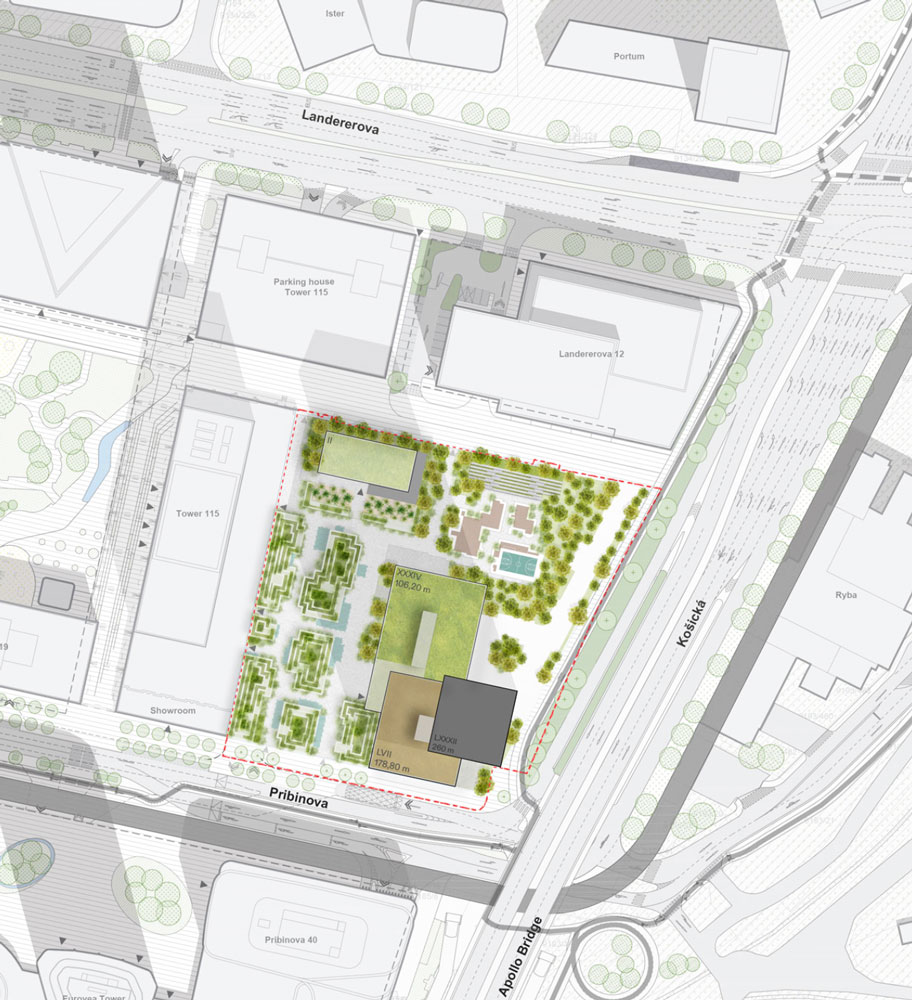
Triton Tower is conceived as a centerpiece of Bratislava’s emerging downtown district, transforming a former brownfield area into a dense, contemporary urban hub. The tower’s placement bridges the city’s historic core and its revitalized riverfront, positioning it as both a beacon of modernity and a connective element within the broader urban fabric.
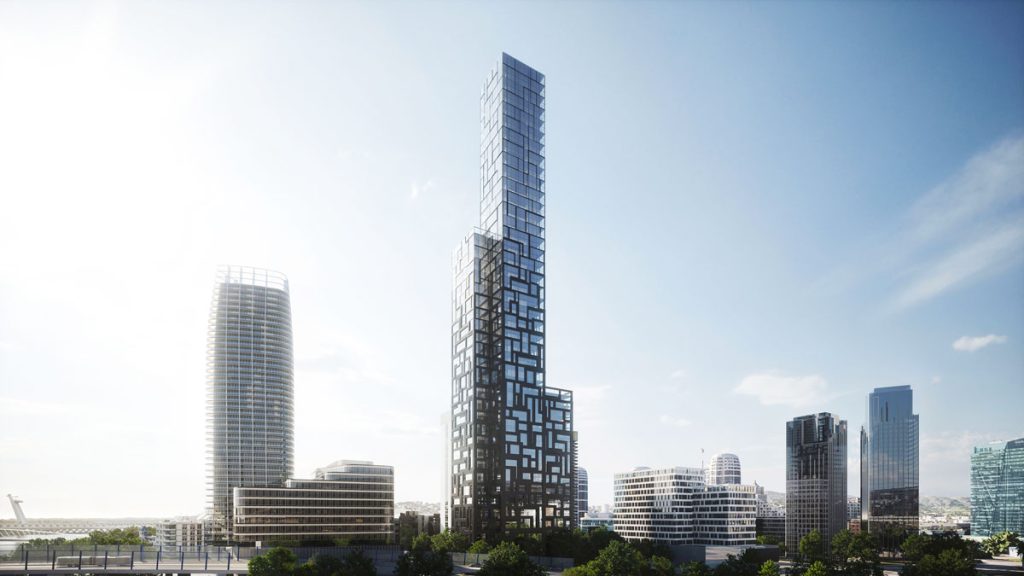
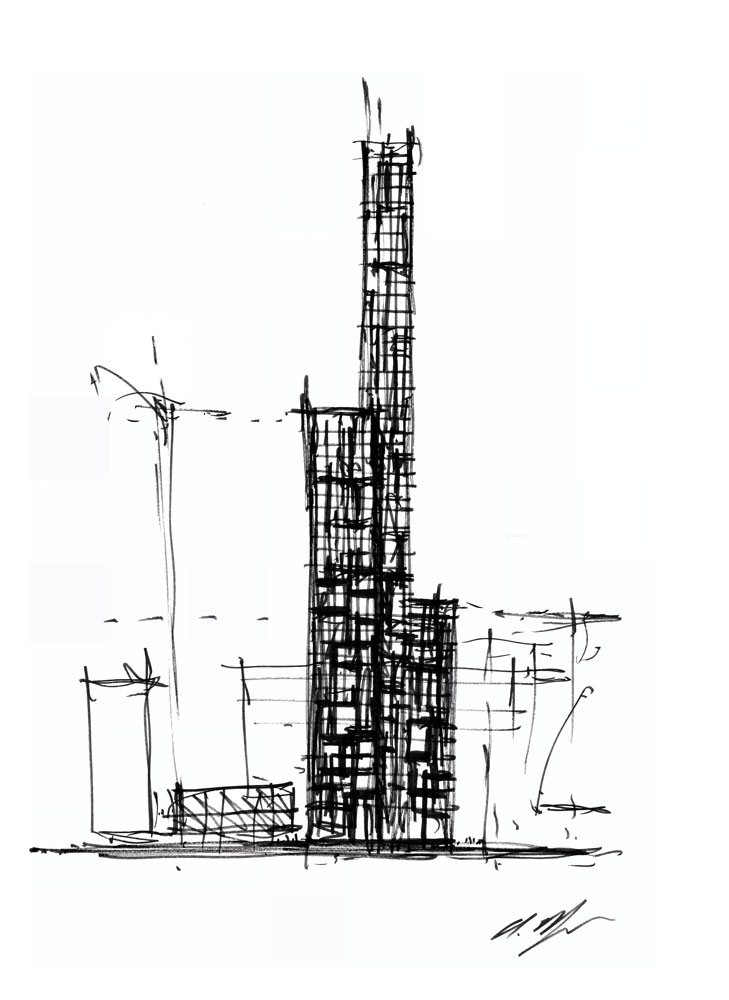
DMAA’s vision emphasizes balance: a high-rise statement that enhances, rather than overwhelms, its surroundings. The tower’s tapered form and shifting façade geometry amplify this goal, giving it a dynamic character that feels rooted yet aspirational.
Master Plan & Core Components
Triton Tower is designed as a self-contained vertical neighborhood, accommodating more than 900 residential units across 82 floors. A varied mix of apartment types supports a diverse resident base, while shared amenities enhance livability and community interaction.
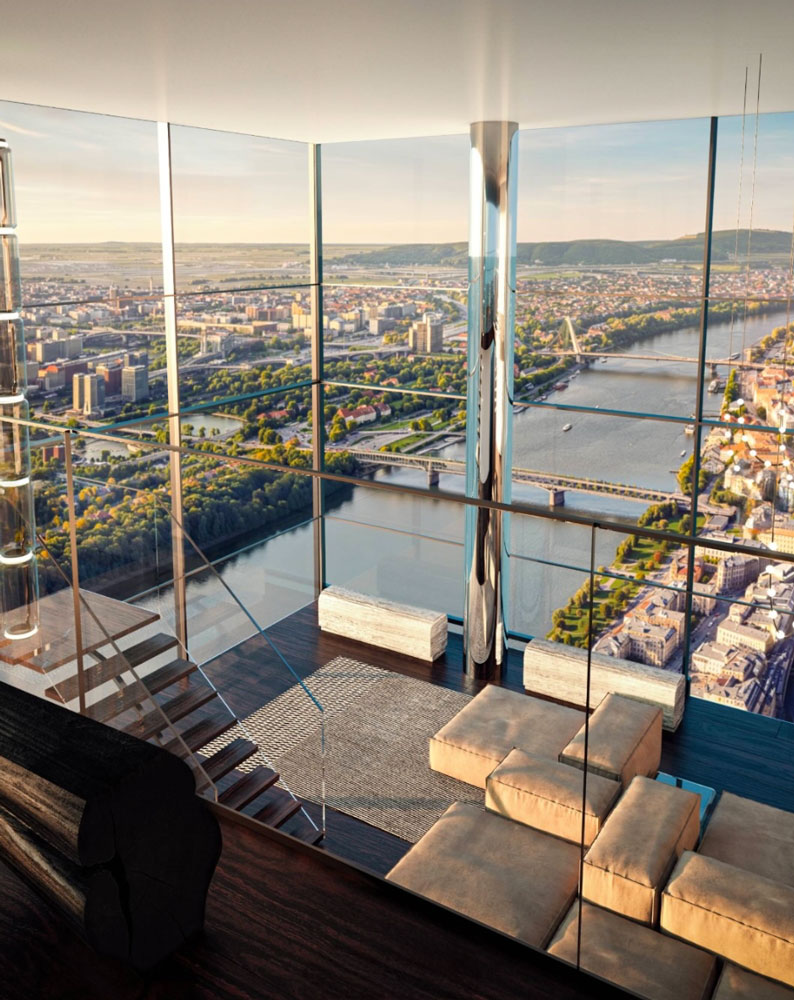
The architectural concept is defined by a parametric façade transformation. The tower begins with a grounded, dense base and gradually transitions into a visually lighter, more transparent upper form. Lower levels feature privacy-oriented façade elements, while higher levels open up to panoramic views of Bratislava and the Danube.
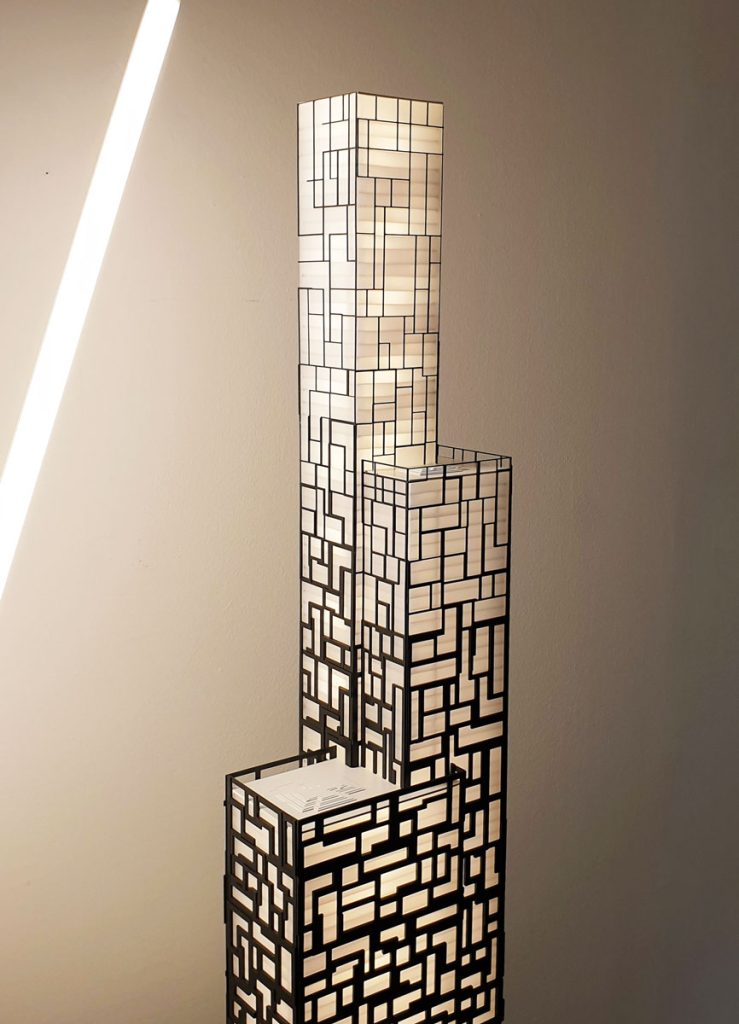
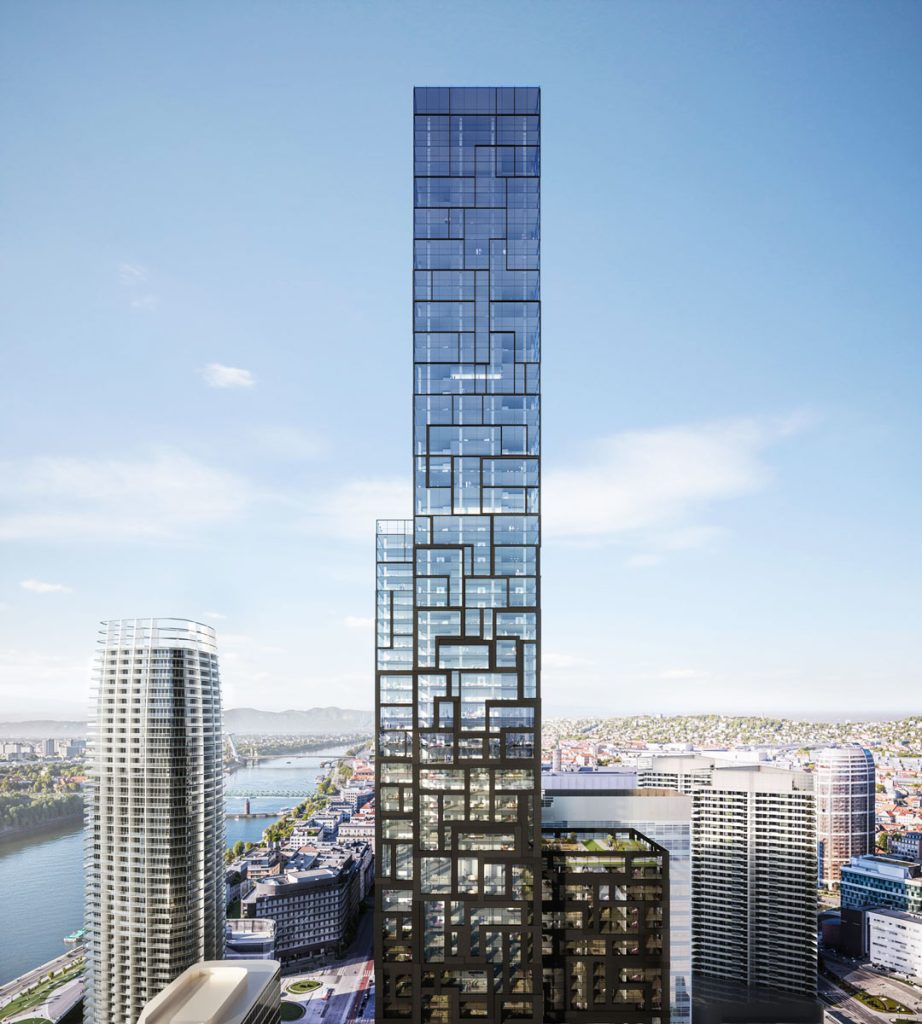
The façade incorporates non-transparent, fibre-based elements engineered for shading and capable of integrating solar panels — merging aesthetics with high-performance, renewable-ready design.
The project team includes DMAA’s architects and planners alongside structural engineering by Vasko+Partner and façade engineering by Bollinger+Grohmann, with building services and fire-safety also handled by Vasko+Partner.
Development & Investment Potential
By placing more than 900 apartments on a compact footprint, Triton Tower delivers exceptional land-use efficiency — a crucial advantage for a city aiming to grow without expanding outward. Its single-tower approach avoids hierarchy between multiple buildings and streamlines both construction and long-term operations.
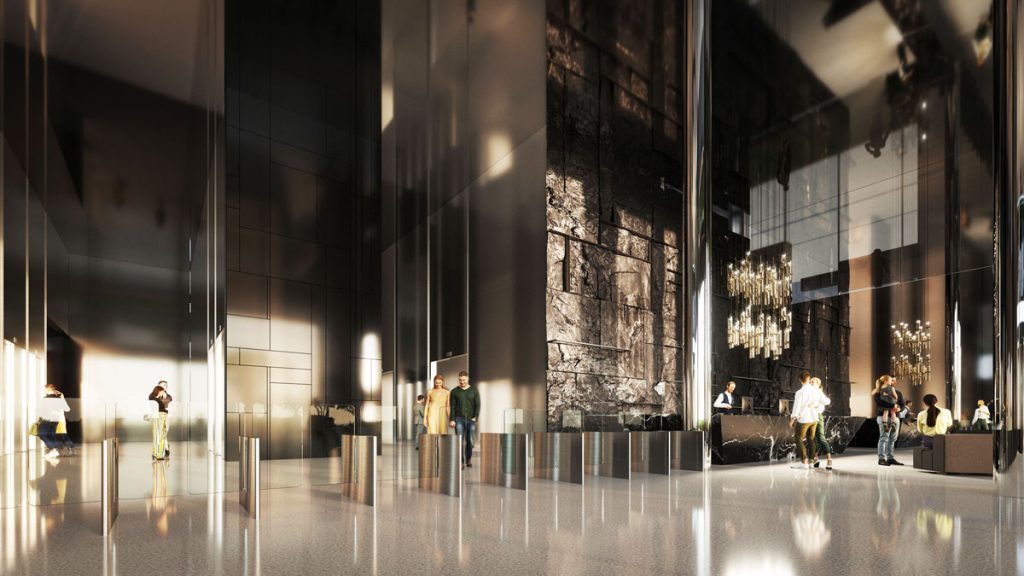
The scale, contemporary design language, and future-ready systems make the project attractive to institutional residential investors, long-term housing funds, and developers focused on dense, sustainable urban living.
Sustainability & Innovation
Triton Tower’s design integrates multiple layers of environmental strategy:
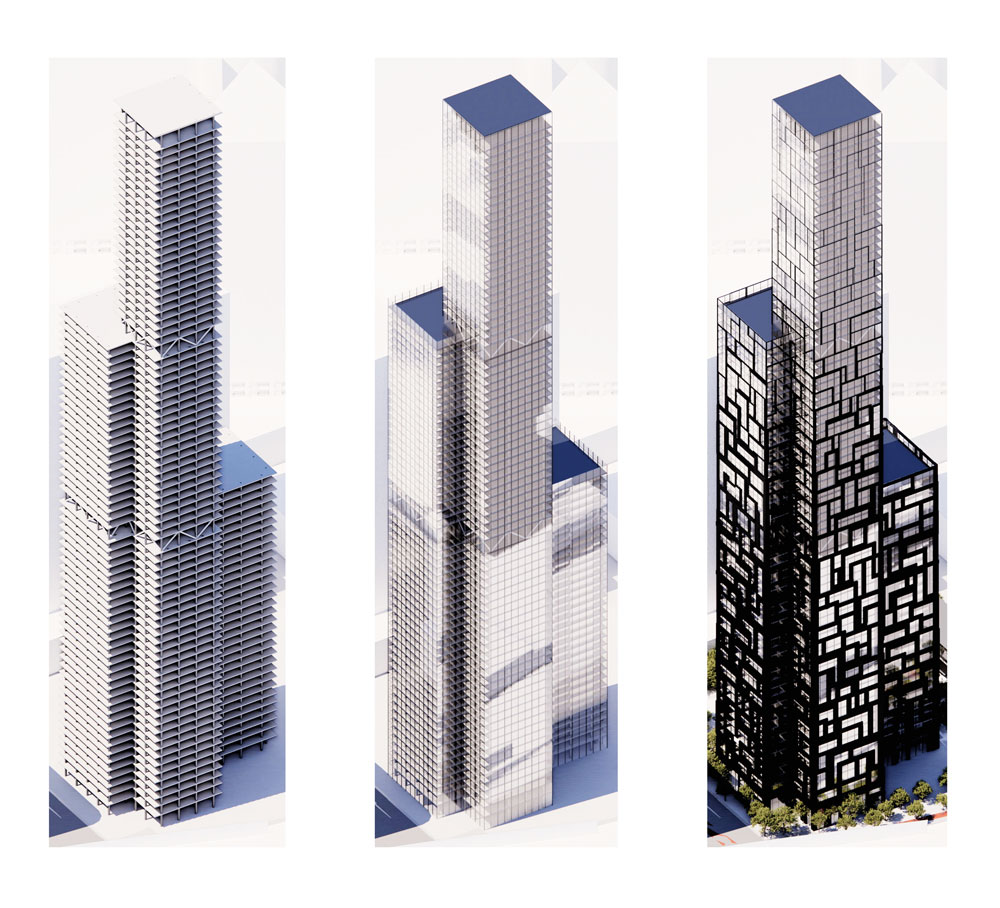
- Fibre-based façade elements provide passive shading and thermal performance.
- Façade geometry supports optional solar-panel integration for on-site renewable energy.
- Vertical density reduces urban sprawl and infrastructure strain.
- The tower’s tapered form optimizes daylight access and reduces wind load.
Together, these features position the project as a model for high-rise sustainability in Central Europe.
Challenges & Considerations
A super-tall residential tower introduces notable complexities:
- Structural demands at 260 m require advanced wind-load engineering.
- The parametric façade system, while visually striking, adds cost and maintenance complexity.
- Accommodating more than 900 households in a single tower calls for highly efficient elevator systems, circulation planning, and community-space management.
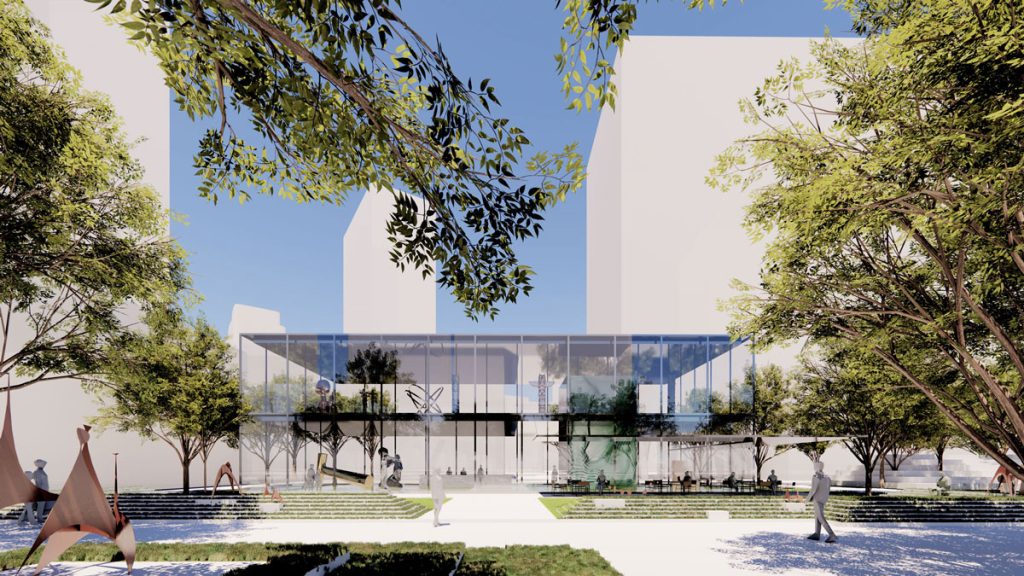
- Integrating the building into established neighborhoods requires careful attention to infrastructure capacity, overshadowing impact, and public-realm connection.
Urban Impact & Legacy
If completed, Triton Tower would become one of Bratislava’s tallest and most recognizable structures — a new symbol of the city’s growth and architectural ambition. Its design language could help define Bratislava’s transition toward a more vertical, modern skyline.
Beyond aesthetics, Triton Tower could influence future residential development standards, showcasing how dense high-rise living can be combined with sustainability, advanced façade engineering, and thoughtful urban integration.
Summary
Triton Tower by DMAA represents an ambitious and elegantly engineered vision for Bratislava’s future. With its transformative façade, integrated amenities, strong sustainability potential, and significant residential density, it charts a forward-looking path for urban living. If executed with care, it could become both a skyline icon and a benchmark for next-generation residential towers in the region.
Project Facts & Figures
- Location: Bratislava, Slovakia
- Height: 260 m
- Floors: 82 above ground, 4 basement levels
- Gross Floor Area: ~117,310 m²
- Residential Units: 900+
- Architect: Delugan Meissl Associated Architects (DMAA)
- Structural Engineering: Vasko+Partner
- Façade Engineering: Bollinger+Grohmann