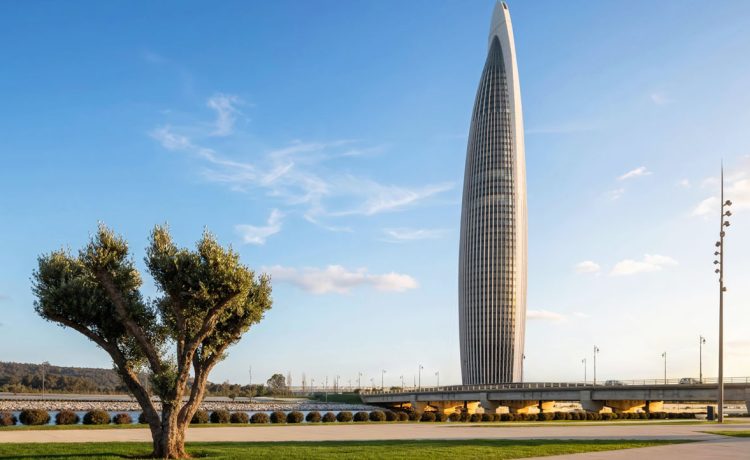
Rising above the Bouregreg Valley between Rabat and Salé, Mohammed VI Tower is Morocco’s most prominent new vertical landmark and one of the defining high-rise projects in North Africa. Designed by Rafael de La-Hoz in collaboration with Moroccan architect Hakim Benjelloun, the 250-metre tower introduces a new scale to the capital region while positioning Salé as part of a broader cultural, business, and hospitality corridor.
Its silhouette is intentionally symbolic: a tapered, rocket-like form that reads as both infrastructure and monument. The result is not simply a tall building, but a national statement—part financial address, part luxury destination, part urban beacon for Morocco’s next chapter.
Vision & Strategic Positioning
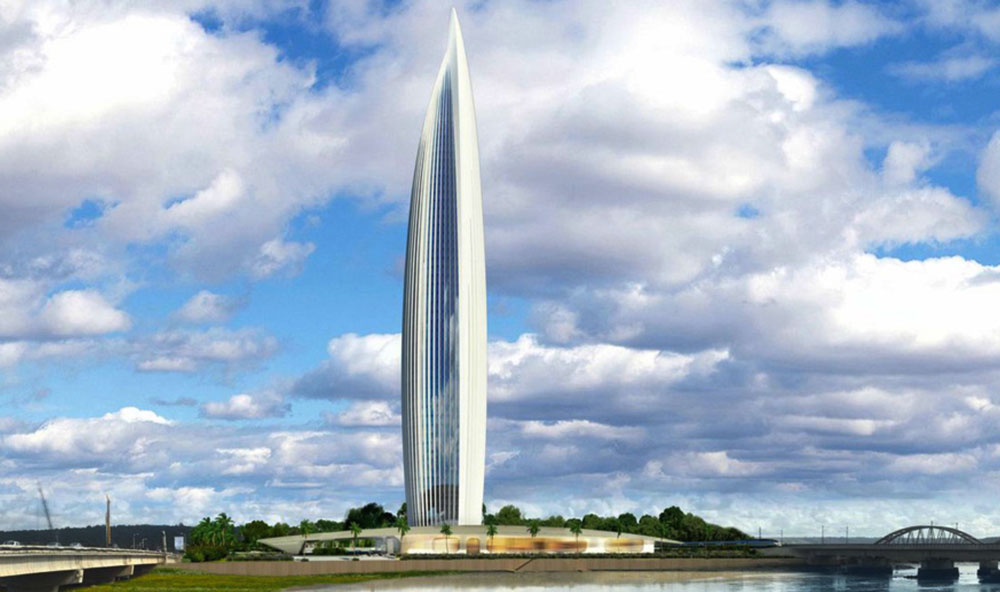
Mohammed VI Tower was conceived as a flagship project for the Bouregreg Valley, an area that has become central to Rabat-Salé’s transformation. The tower’s placement is strategic: it sits near key cultural and civic landmarks while overlooking the river, the Atlantic horizon, and the twin-city urban fabric.
For Morocco, the project carries a larger message. It reflects a push to elevate Rabat and Salé as international business, tourism, and cultural destinations, especially as the country continues investing in infrastructure, hospitality, transport, and major-event readiness. For North America, Europe, Saudi Arabia, and the UAE, the tower fits into a familiar pattern: cities using landmark architecture to sharpen global visibility, attract capital, and signal long-term confidence.
The project also extends Morocco’s architectural conversation beyond preservation and heritage. Rabat is known for its historic medinas, civic avenues, and cultural institutions; Mohammed VI Tower adds a contemporary vertical counterpoint—one that says the future can stand beside the past without pretending to be invisible.
Master Plan & Core Components
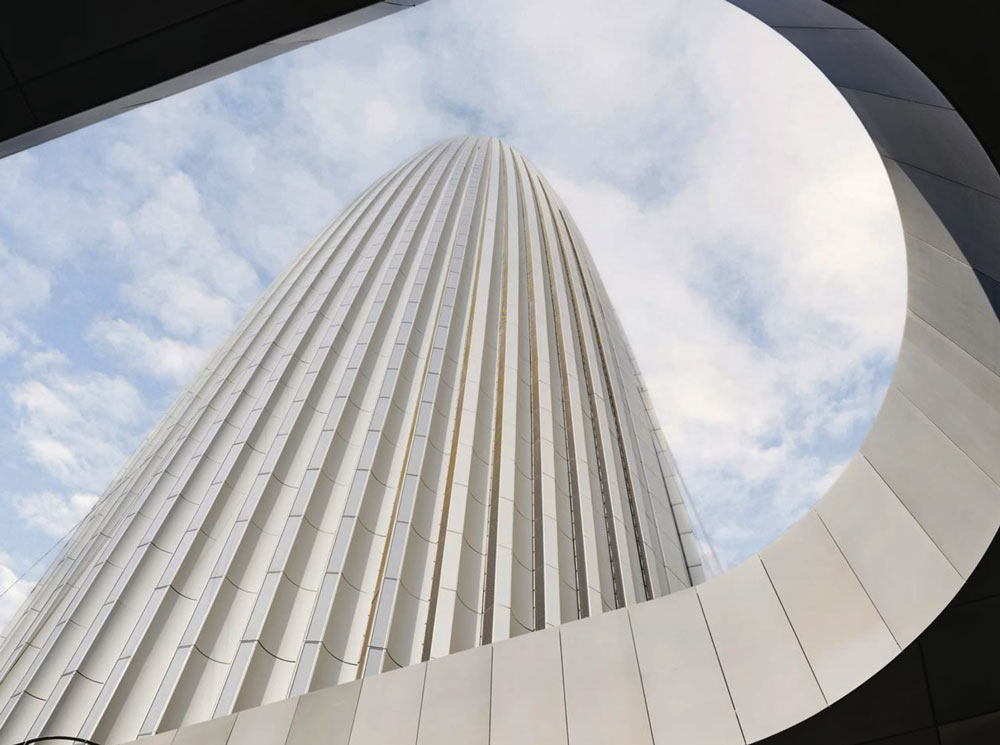
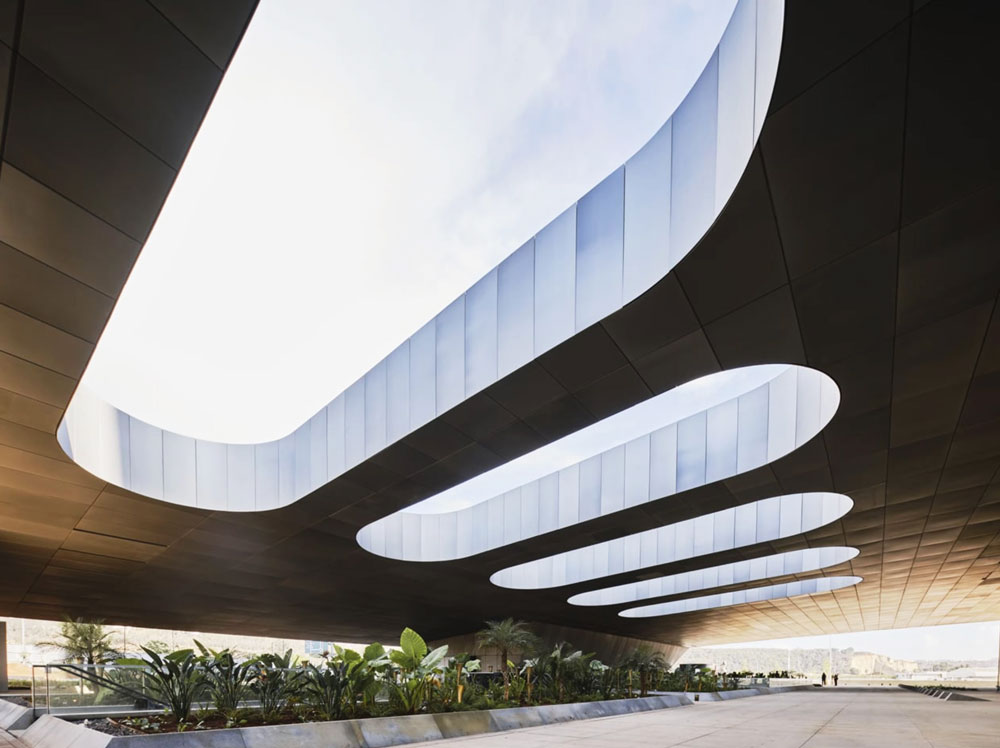
Mohammed VI Tower is a 55-storey mixed-use skyscraper designed around a combination of hospitality, offices, residences, retail, dining, and public-facing destination elements. Its program includes premium office space, high-end apartments, restaurants, shops, and a luxury hotel component, with Waldorf Astoria Rabat Salé occupying the upper levels of the tower.
The design was led by Rafael de La-Hoz, working in collaboration with Hakim Benjelloun. The project was developed by O Tower and associated with Moroccan financier Othmane Benjelloun’s broader investment vision. Construction involved major engineering and contracting partners, including BESIX and TGCC, with the tower requiring a high level of structural coordination due to its height, location, wind exposure, and river-valley setting.
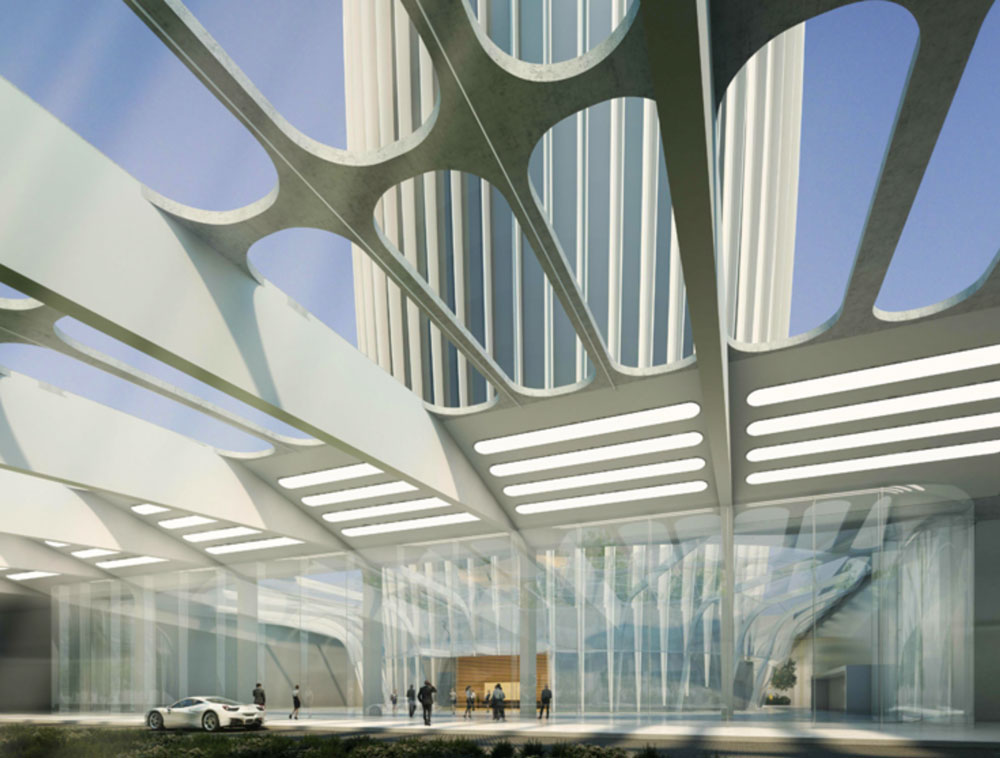
Architecturally, the building is defined by its narrow, tapering profile and launch-pad-like presence. The form is sleek rather than ornamental, giving the tower a disciplined verticality. Its height makes it visible across a wide radius, turning it into a navigational marker as much as a real estate asset—urban branding, but with concrete, steel, and a very tall posture.
Development & Investment Potential
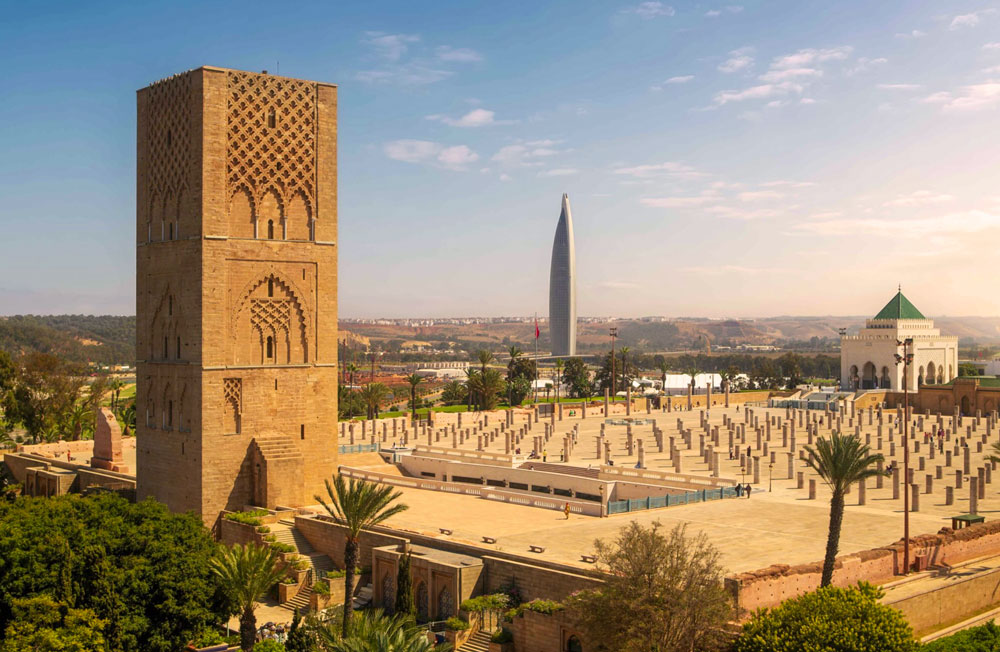
The tower strengthens the Rabat-Salé corridor as an investment address. By combining hotel, residential, commercial, and cultural functions within one landmark, Mohammed VI Tower creates a concentrated destination rather than a single-use office block. That matters for long-term value: mixed-use towers tend to perform best when they are connected to tourism, business travel, retail activity, and civic identity.
The arrival of Waldorf Astoria Rabat Salé adds an important hospitality layer. Luxury hotel brands are not just amenities; they help position buildings as international addresses. For investors and developers watching from the Gulf, Europe, and North America, the project shows Morocco’s ambition to compete for high-value tourism, corporate activity, and premium residential demand.
The tower also gives Salé a stronger role in the capital region’s identity. Rather than placing all prestige development on the Rabat side, Mohammed VI Tower reinforces the idea of a two-city metropolitan zone organized around the Bouregreg River.
Sustainability & Innovation
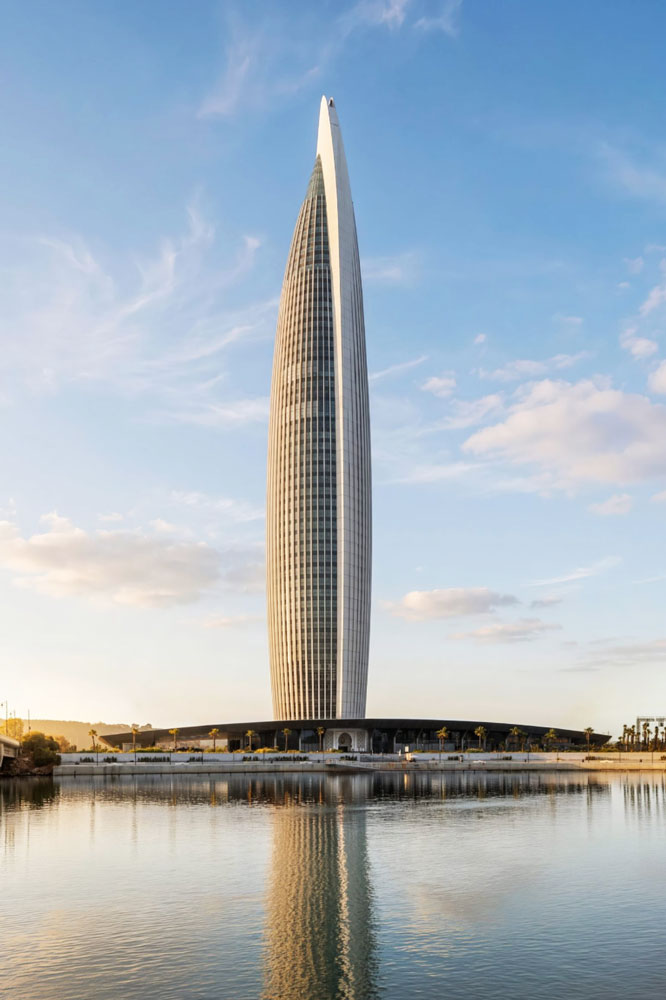
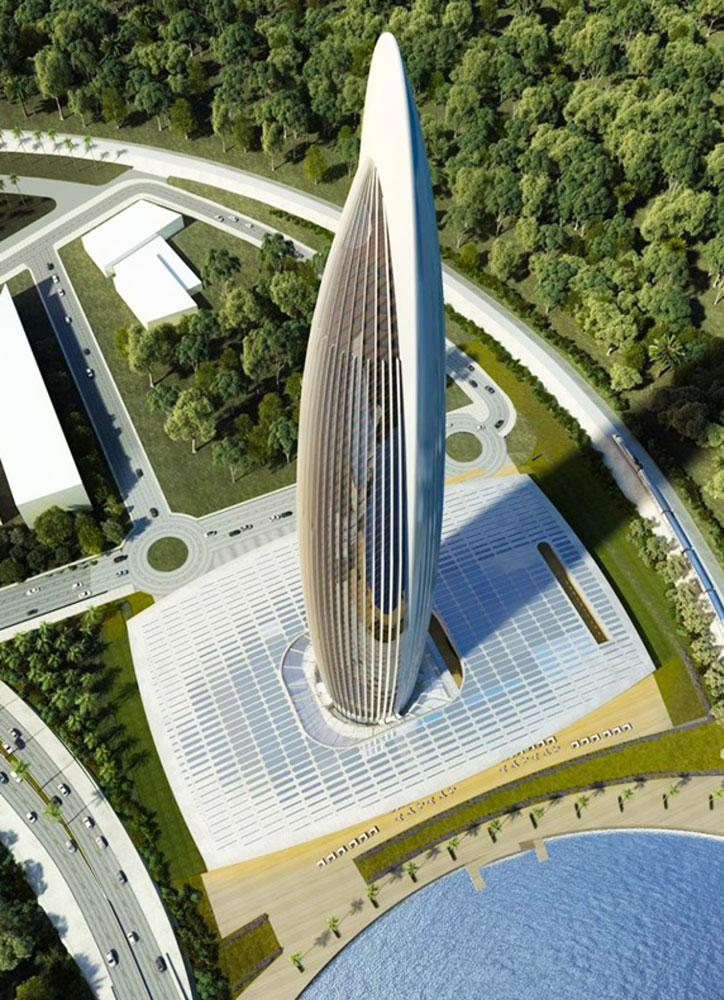
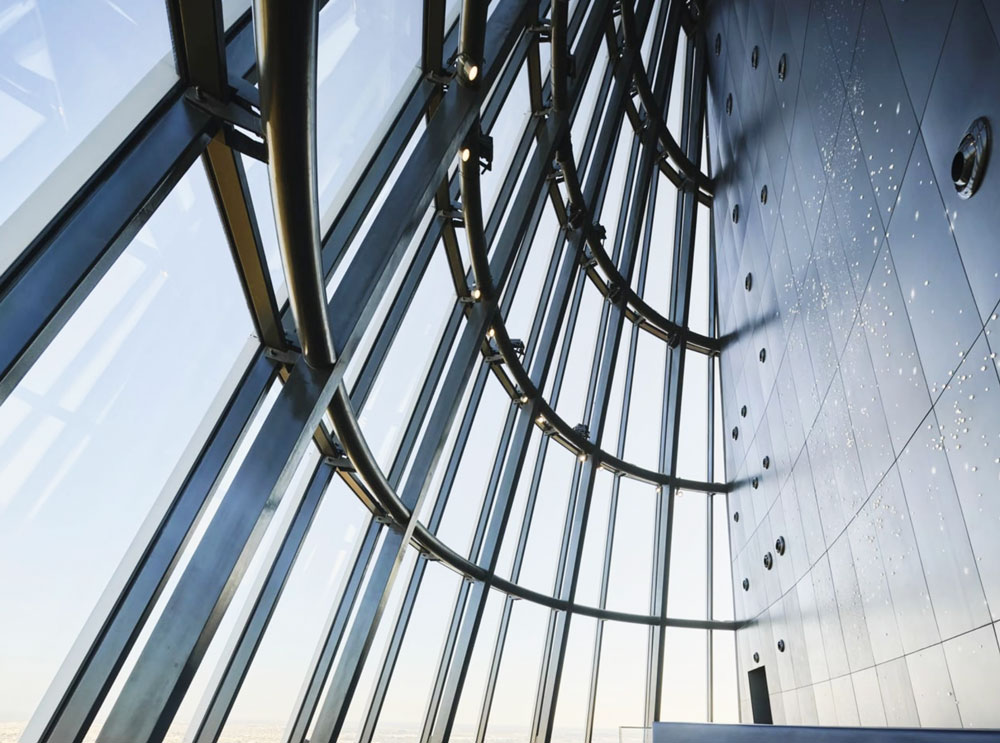
Mohammed VI Tower has been promoted as a high-performance building with environmental ambitions, including solar integration and modern building systems. Its south-facing façade incorporates photovoltaic panels, while the podium also includes solar elements, helping the project reduce its operational energy profile.
The tower’s engineering also responds to its setting. Built near the Bouregreg River, it required careful structural planning for wind, seismic conditions, and flood resilience. These considerations are especially important for tall buildings in visible waterfront or river-valley locations, where design is not just about height but endurance.
Its sustainability value is also symbolic. In regions such as Saudi Arabia and the UAE, supertall and landmark projects are increasingly judged not only by scale, but by performance, resilience, and urban contribution. Mohammed VI Tower enters that conversation from a Moroccan perspective: less mega-city spectacle, more capital-region positioning with a clear national identity.
Challenges & Considerations
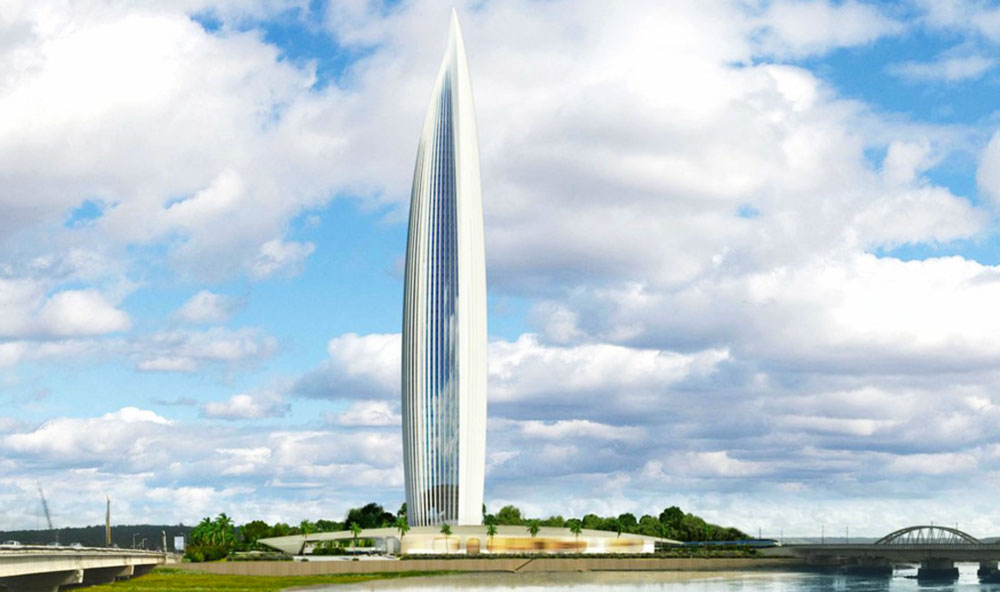
As with any major landmark tower, Mohammed VI Tower carries questions beyond design. Its cost, scale, and symbolic weight invite scrutiny over how landmark investment fits within broader urban priorities. Tall buildings can redefine skylines, but their true success depends on how well they connect to everyday urban life, transport, public space, and long-term economic demand.
The tower also sits within a sensitive cultural and geographic context. Rabat and Salé are layered historic cities, and any major vertical intervention must balance ambition with respect for heritage views, riverfront planning, and civic continuity. A building of this size cannot simply be “inserted”; it must earn its place over time.
The strongest test for Mohammed VI Tower will be whether it becomes more than a skyline image. If its offices fill, its hotel becomes a destination, its public-facing spaces activate, and its surrounding district continues maturing, the tower could become a genuine urban anchor rather than a solitary icon.
Urban Impact & Legacy
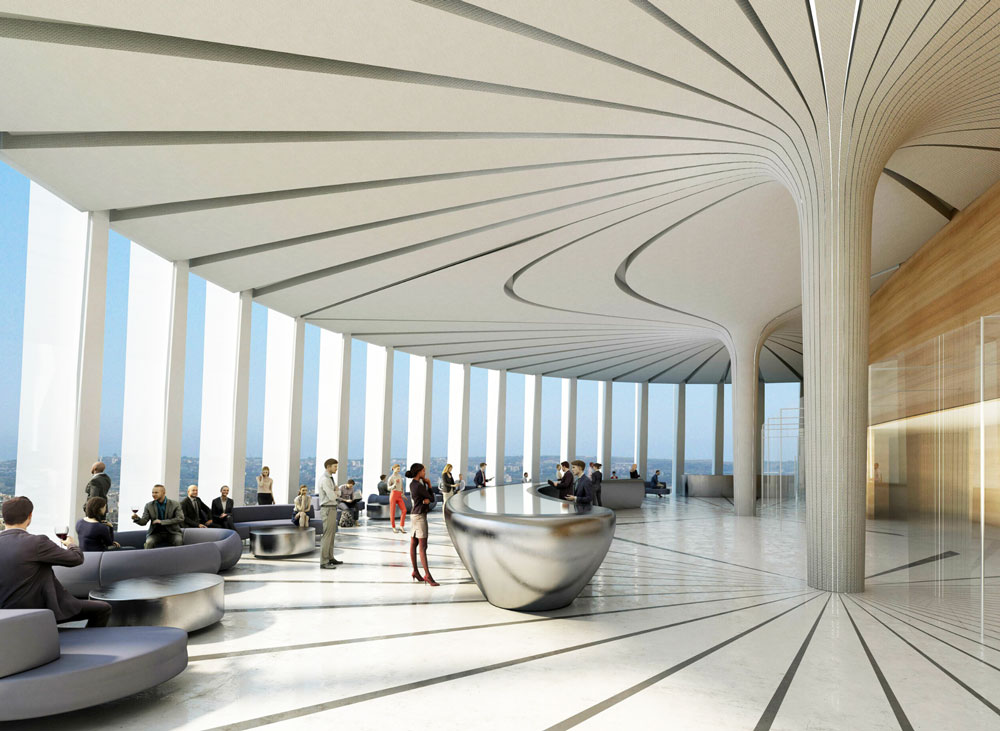
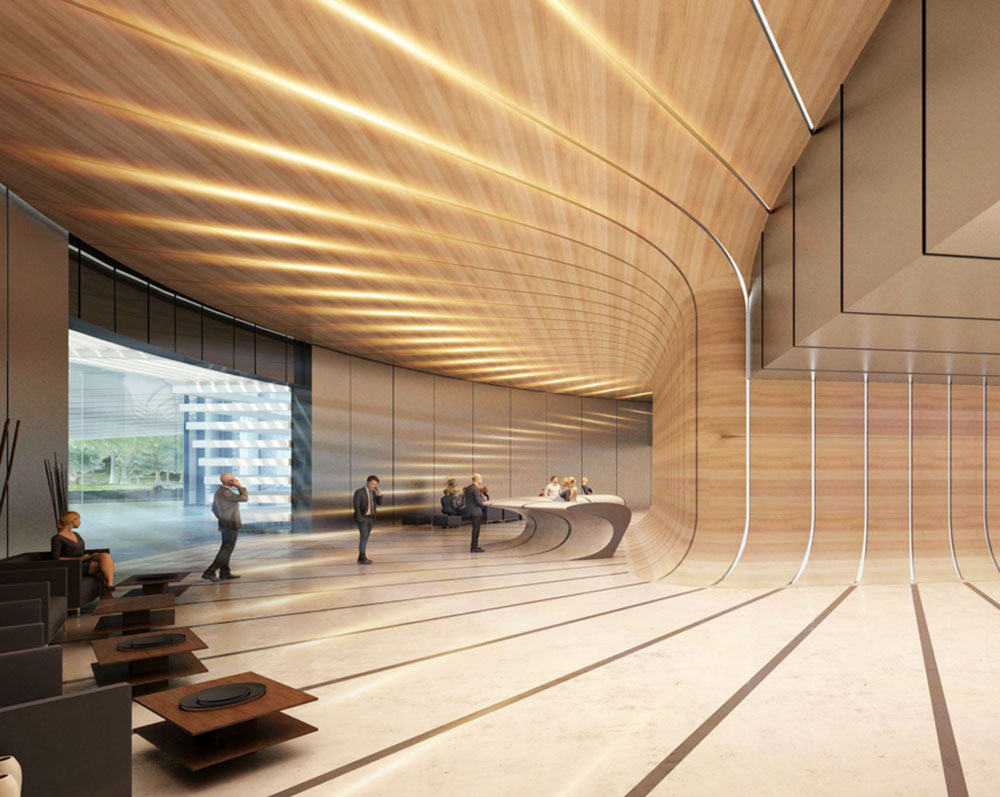
Mohammed VI Tower gives Morocco a new architectural reference point. It is the country’s tallest building and one of Africa’s most visible contemporary towers, placing the Rabat-Salé region more firmly on the map of global landmark architecture.
Its legacy may be less about height alone and more about what that height represents. The tower links finance, tourism, design, hospitality, and national image into one vertical project. It also shows how North African cities are increasingly participating in the same architectural dialogue shaping parts of the Gulf, Europe, and Asia: how to build icons that support economic ambition while still reflecting place.
For Rabat and Salé, the tower is a new punctuation mark on the skyline. For Morocco, it is a statement of confidence. And for GloBuilds readers, it is a reminder that the next wave of landmark architecture is not limited to the usual global capitals. Sometimes, the most interesting skyline shifts happen where heritage cities decide to look upward.
Mohammed VI Tower stands as a carefully branded symbol of Morocco’s modern ambition: tall, precise, internationally legible, and deeply tied to the evolving identity of the Rabat-Salé metropolitan region. Its success will depend on how well its architecture, hospitality, commercial program, and urban setting work together over time. But as a built statement, it has already done what landmark towers are meant to do—it changed the conversation around the city.
Project Facts & Figures
Project Name: Mohammed VI Tower
Location: Salé, Morocco, near Rabat and the Bouregreg River
Height: Approximately 250 metres
Storeys: 55
Architects: Rafael de La-Hoz and Hakim Benjelloun
Developer: O Tower
Key Uses: Luxury hotel, offices, residences, retail, restaurants, and observation/destination spaces
Hotel Component: Waldorf Astoria Rabat Salé
Construction Partners: BESIX and TGCC among the key construction participants
Status: Opened in 2026
Significance: Tallest building in Morocco and one of the tallest skyscrapers in Africa
Design Character: Tapered, rocket-inspired mixed-use tower
Urban Role: Landmark for the Rabat-Salé metropolitan corridor and Bouregreg Valley development area