Concept | Moon (South Lunar Pole)
As humanity edges closer to permanent life beyond Earth, architecture is no longer bound by gravity—or even atmosphere. Studio Hassell’s Lunar Habitat Master Plan proposes a bold, human-centered vision for living on the Moon, rethinking not just survival, but the creation of a thriving extraterrestrial society. Developed in collaboration with the European Space Agency, the concept positions architecture as a critical bridge between exploration and long-term habitation.
Vision & Strategic Positioning
The project reframes lunar settlement from a purely scientific outpost into a scalable, livable community. Designed to accommodate approximately 144 inhabitants, the master plan envisions a permanent settlement capable of supporting scientific research, commercial activity, and eventually tourism.
Rather than treating the Moon as a temporary frontier, Hassell approaches it as a future urban environment—one that must address psychological wellbeing, social interaction, and quality of life alongside technical survival. The strategy aligns with broader global space ambitions, including NASA, ESA, and JAXA missions aimed at establishing sustained lunar presence.
Master Plan & Core Components
At the core of the concept is a modular, expandable settlement system built for extreme adaptability. Developed by Studio Hassell in partnership with the European Space Agency and Cranfield University, the plan integrates architecture, engineering, and space science into a unified framework.
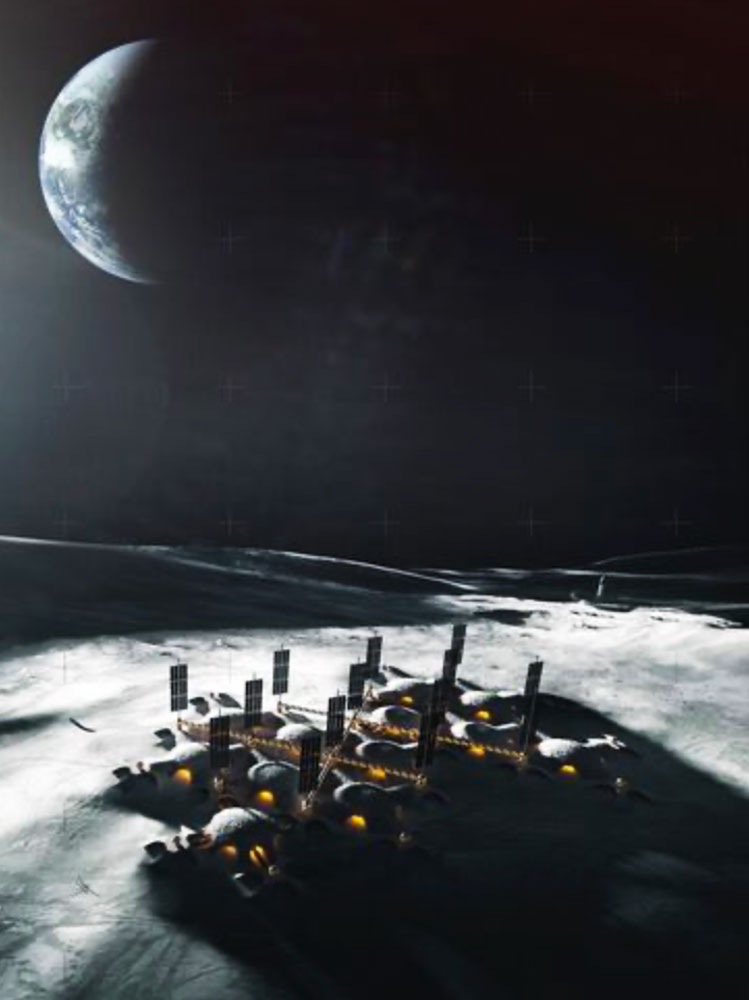
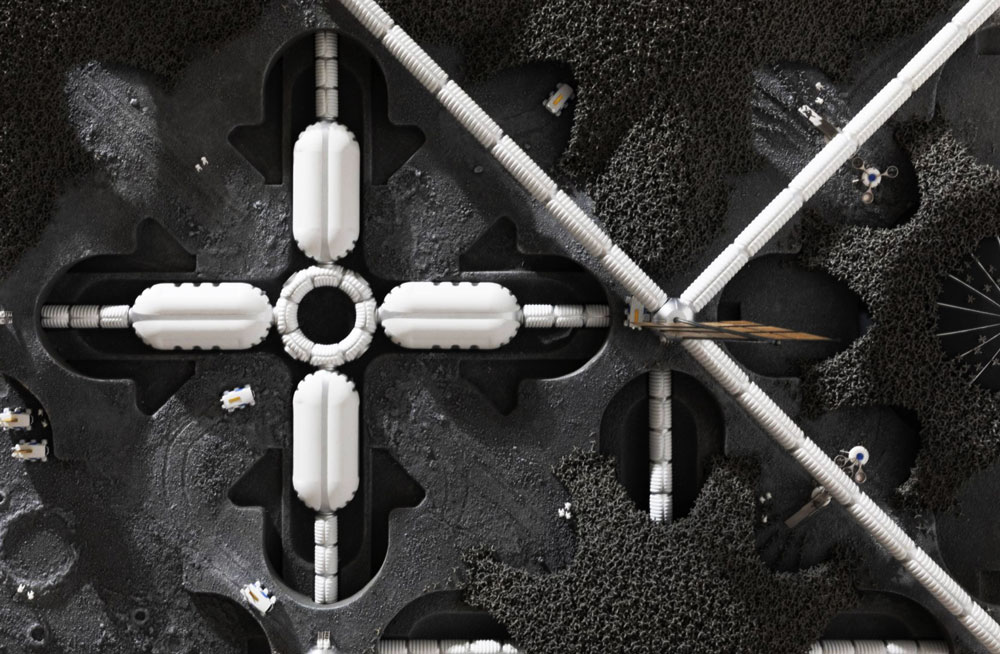
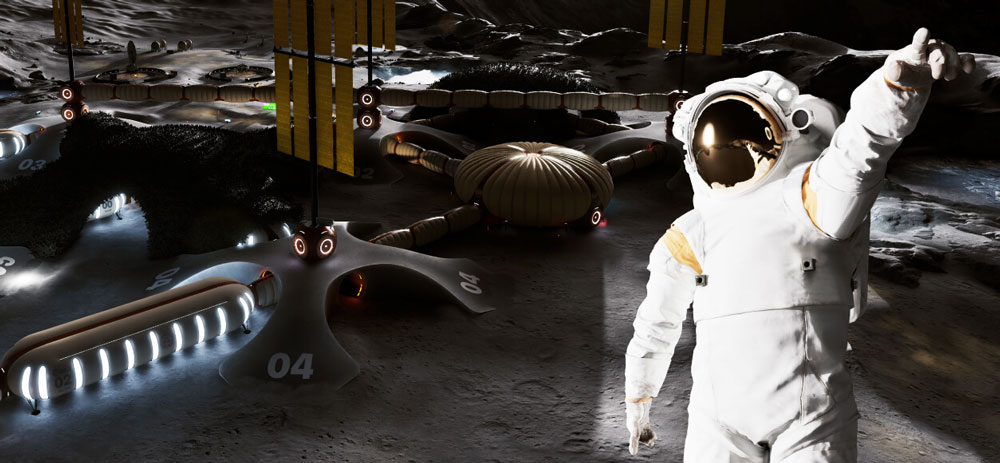
The habitat is composed of inflatable living modules—lightweight structures that can be transported efficiently from Earth—combined with a protective outer shell made from 3D-printed components using lunar soil. This dual-system approach minimizes payload costs while enabling on-site construction and long-term expansion.
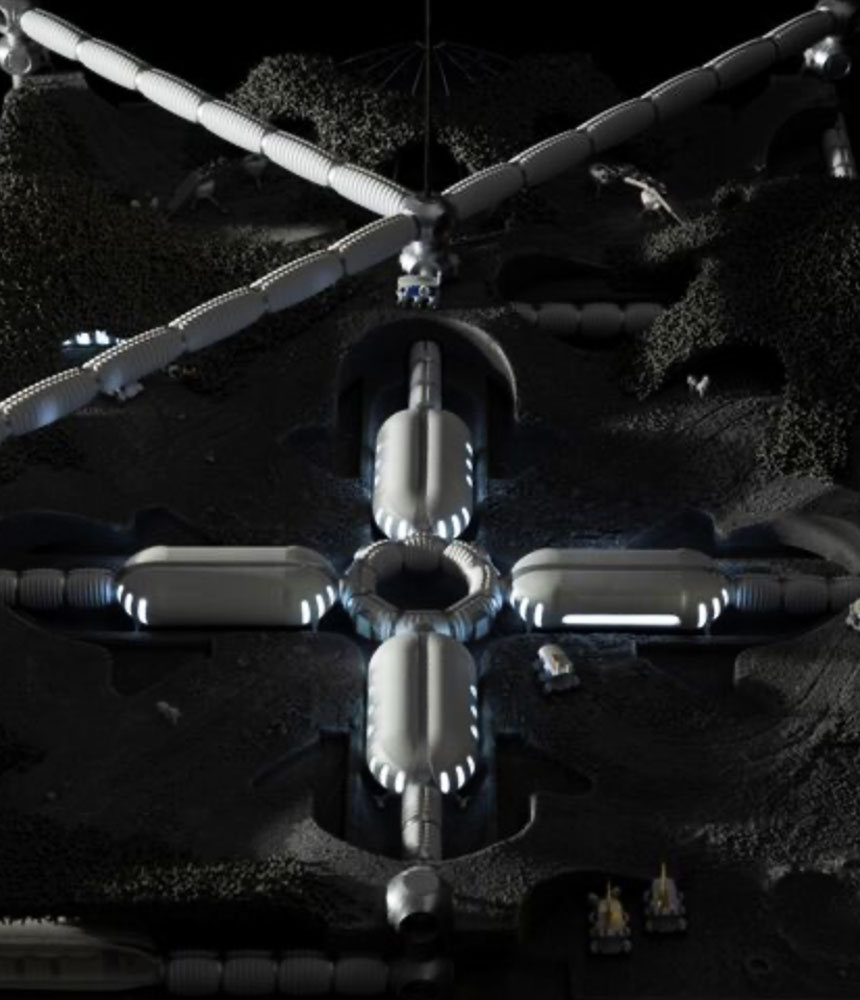
Key components include:
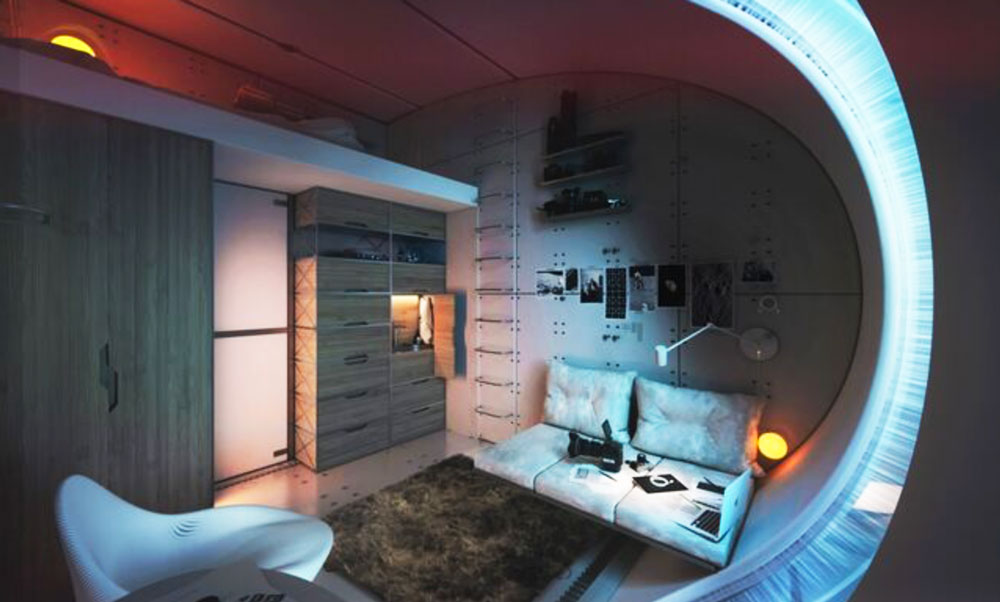
- Modular Habitat Pods: Inflatable units housing living quarters, labs, and communal spaces
- 3D-Printed Shielding System: Interlocking hexapod/tetrapod structures formed from lunar regolith to protect against radiation
- Greenhouses & Biophilic Zones: Large-scale plant environments to support food production and psychological wellbeing
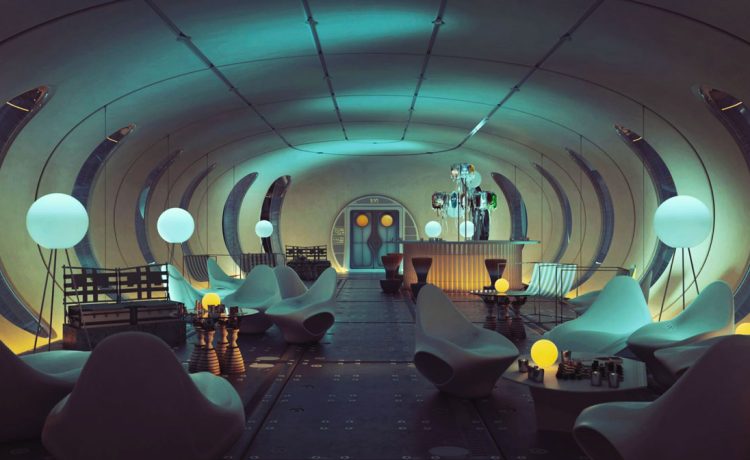
- Social & Recreational Spaces: Dining areas, sports zones, and communal hubs designed to sustain mental health
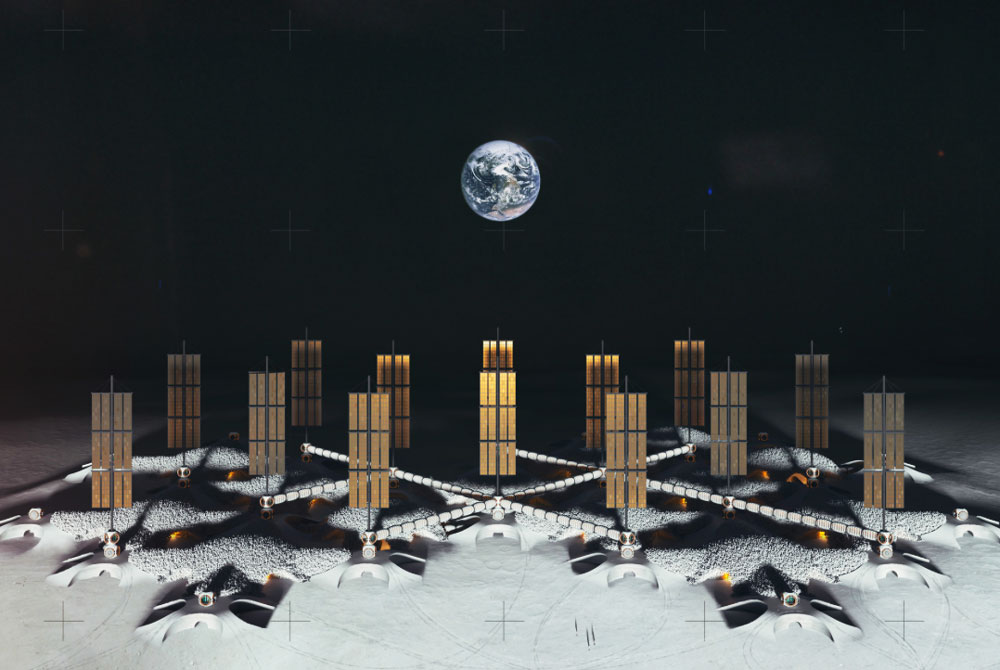
- Energy Infrastructure: Solar arrays positioned near the South Pole for near-continuous sunlight
- Subsurface Integration: Habitats partially buried beneath protective layers to stabilize internal environments
The proposed site—near the edge of Shackleton Crater at the Moon’s south pole—offers access to potential water ice and consistent solar exposure, making it one of the most viable locations for long-term habitation.
Development & Investment Potential
While still conceptual, the Lunar Habitat Master Plan reflects a rapidly emerging sector: space infrastructure and off-world real estate. The project anticipates a future where governments, private space companies, and commercial operators collaborate to fund and operate lunar facilities.
Its scalable design allows phased development—from small research bases to larger multi-use settlements—creating a flexible investment model tied to advances in launch technology, in-situ resource utilization, and space tourism.
Sustainability & Innovation
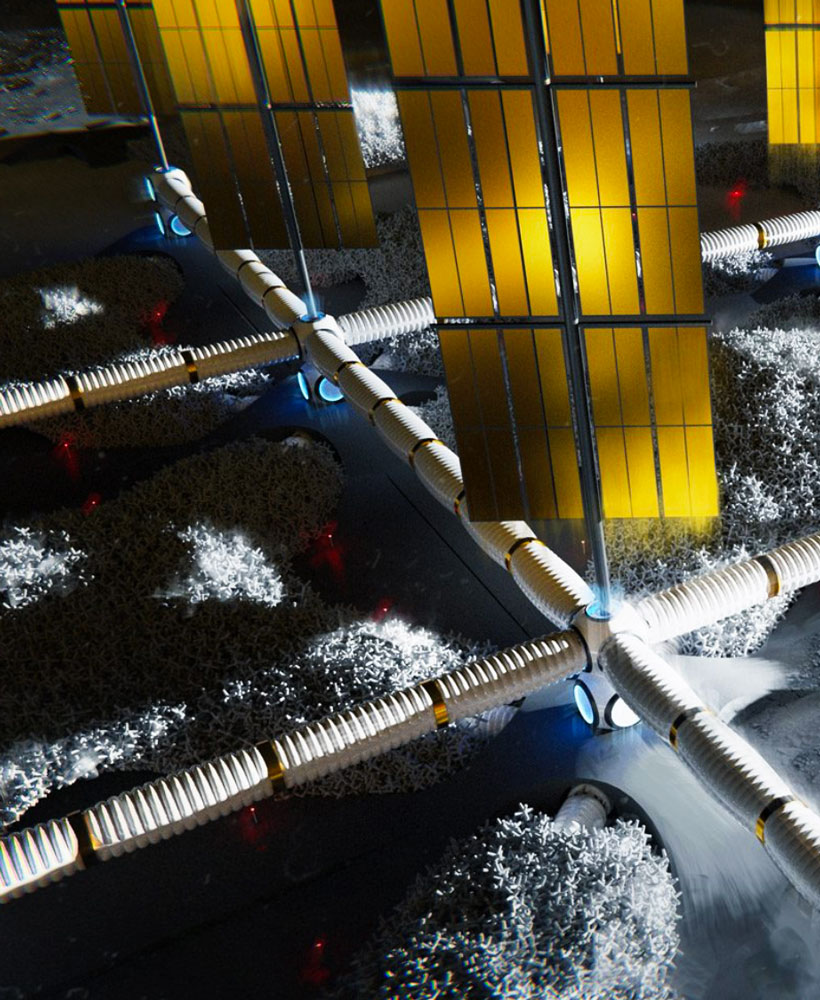

Sustainability in this context extends beyond Earth-based definitions. The design leverages in-situ resource utilization (ISRU)—using lunar soil to manufacture building materials on-site—dramatically reducing dependence on Earth supply chains.
Key innovations include:
- On-site 3D printing of structural components using lunar regolith
- Inflatable architecture to reduce launch mass and cost
- Modular expansion enabling long-term adaptability
- Integrated life-support ecosystems combining agriculture, habitation, and waste systems
The system is conceived as “anti-fragile,” capable of evolving and regenerating as conditions and population needs change.
Challenges & Considerations
Despite its forward-thinking design, the concept faces substantial barriers:
- Extreme Environment: High radiation, temperature fluctuations, and lack of atmosphere
- Logistics & Cost: Transporting initial infrastructure remains prohibitively expensive
- Material Engineering: Converting lunar regolith into reliable construction material requires further development
- Human Factors: Long-term psychological and physiological impacts of lunar living remain uncertain
These challenges highlight the gap between conceptual architecture and executable space infrastructure.
Urban Impact & Legacy
The Lunar Habitat Master Plan signals a shift in architectural thinking—from designing cities on Earth to designing civilizations beyond it. By prioritizing human experience alongside engineering constraints, Hassell introduces a new paradigm: space architecture as urban design.
Its influence extends back to Earth as well, offering insights into modular construction, closed-loop sustainability systems, and resilient design strategies applicable to extreme environments such as deserts, oceans, and polar regions.
Project Outlook
Studio Hassell’s Lunar Habitat Master Plan is not just a vision of living on the Moon—it is a blueprint for how architecture can shape humanity’s next frontier. Through modular design, local material use, and a strong focus on human wellbeing, the concept moves beyond survival toward the creation of a true off-world community.
Project Facts & Figures
- Project Name: Lunar Habitat Master Plan
- Location: South Lunar Pole (near Shackleton Crater)
- Status: Concept
- Year: 2024
- Lead Designer: Studio Hassell
- Key Partners: European Space Agency (ESA), Cranfield University
- Capacity: ~144 inhabitants
- Core Technologies: Inflatable modules, 3D-printed regolith structures
- Primary Materials: Lunar soil (regolith), lightweight Earth-based membranes
- Key Features: Modular expansion, radiation shielding, greenhouses, social infrastructure