King Fahad Sports City Stadium is entering a defining new chapter. One of Riyadh’s most recognizable sporting landmarks is being transformed by architecture studio Populous through a major renovation for the Saudi Ministry of Sports, positioning the venue for the 2027 AFC Asian Cup and the 2034 FIFA World Cup. Rather than treating the stadium as a disposable relic from another era, the project takes the smarter route: preserve the identity, upgrade the performance, and turn a national sports icon into a more flexible civic destination. In stadium terms, it is less demolition drama and more architectural surgery with a very steady hand.
Vision & Strategic Positioning
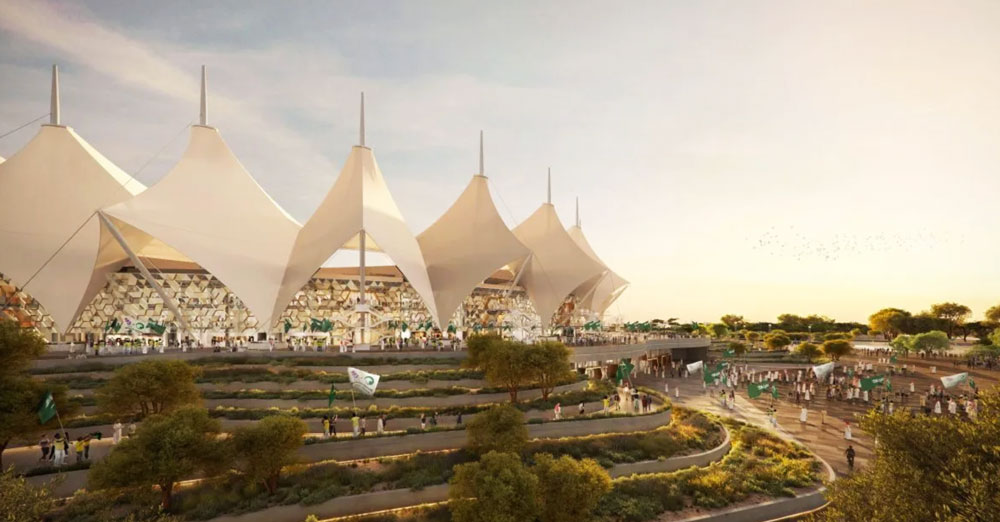
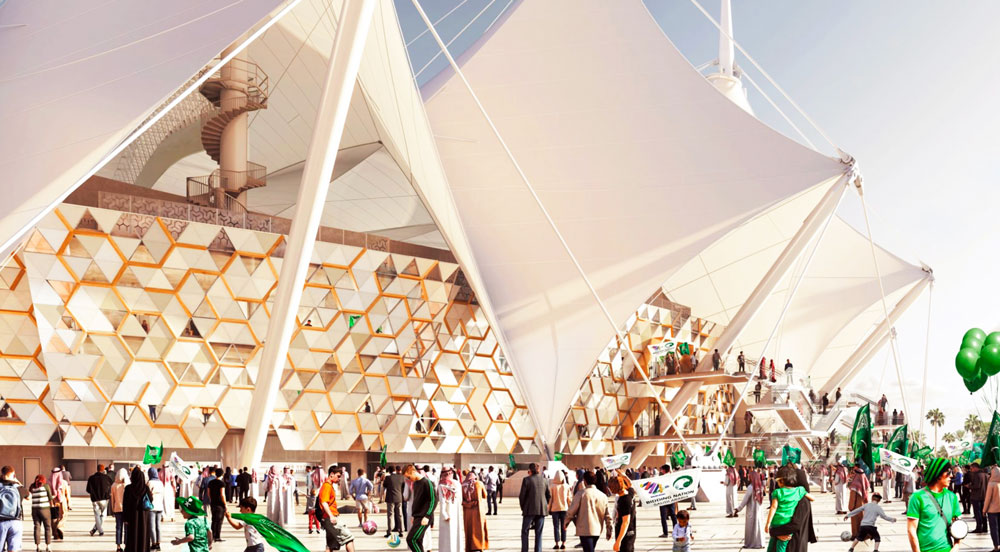
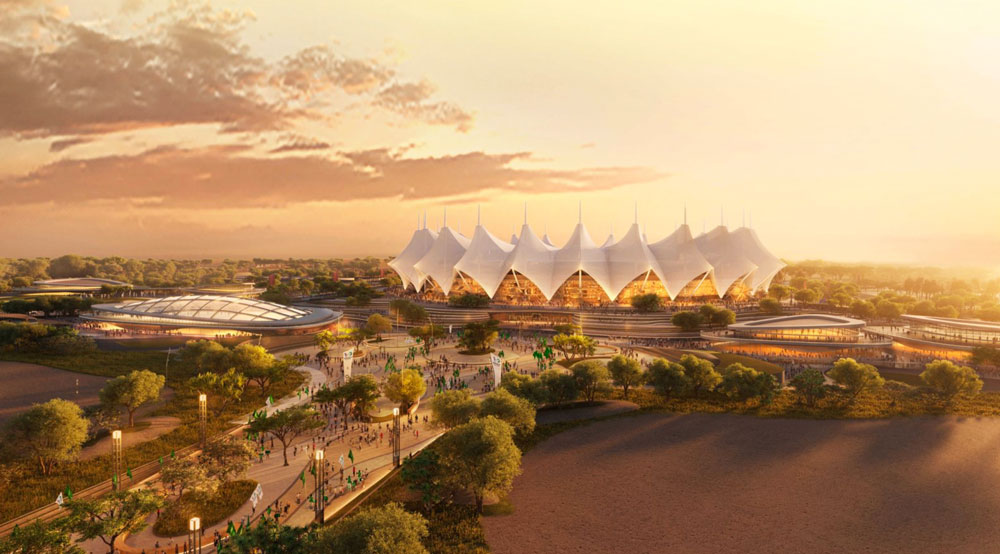
The revamp of King Fahad Sports City Stadium reflects Saudi Arabia’s larger ambition to use sport, architecture, and urban development as part of Riyadh’s global repositioning. The stadium already carries national weight as the home of the Saudi Arabia national football team and as one of the region’s landmark venues since the late 1980s. Its distinctive roof silhouette, inspired by traditional tent structures, has long made it one of the most recognizable stadium profiles in the Middle East.
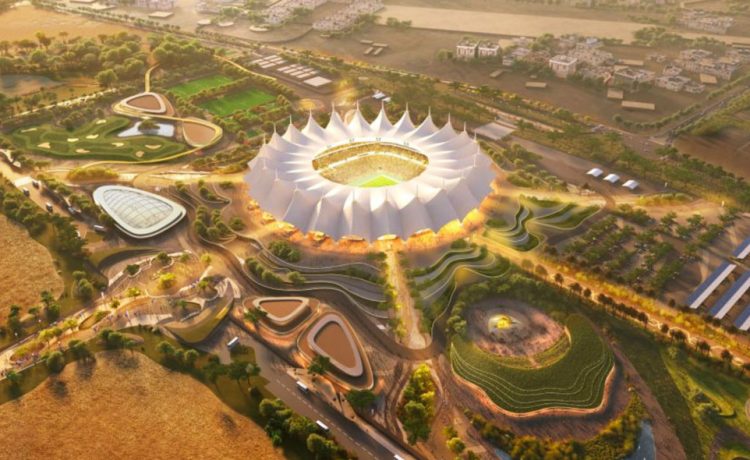
Populous’ intervention is significant because it does not erase that legacy. Instead, the design strategy focuses on adapting the existing structure for a new era of international tournaments, entertainment programming, media operations, hospitality, and fan experience. The result is intended to be a stadium that can host elite football while also functioning as a year-round venue for concerts, community activity, and mixed-use destination programming.
For Riyadh, the project strengthens the city’s role as the central hub of Saudi Arabia’s 2034 FIFA World Cup plan. For the wider Gulf, it reinforces a regional shift away from single-purpose arenas toward multi-layered sports districts that combine event infrastructure, public space, commercial uses, and long-term urban value.
Master Plan & Core Components
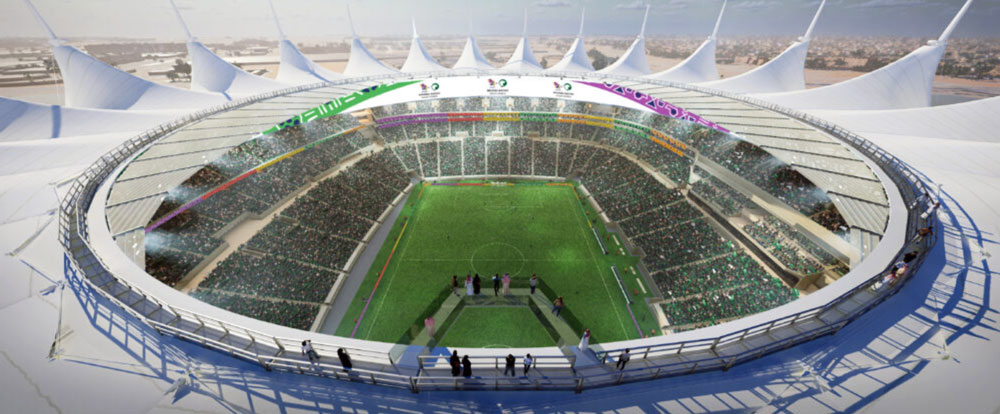
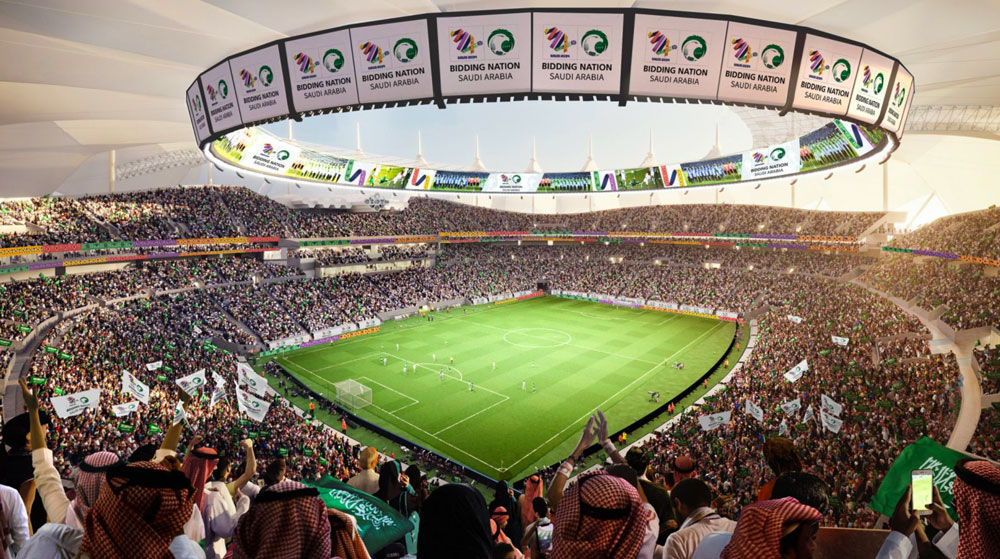
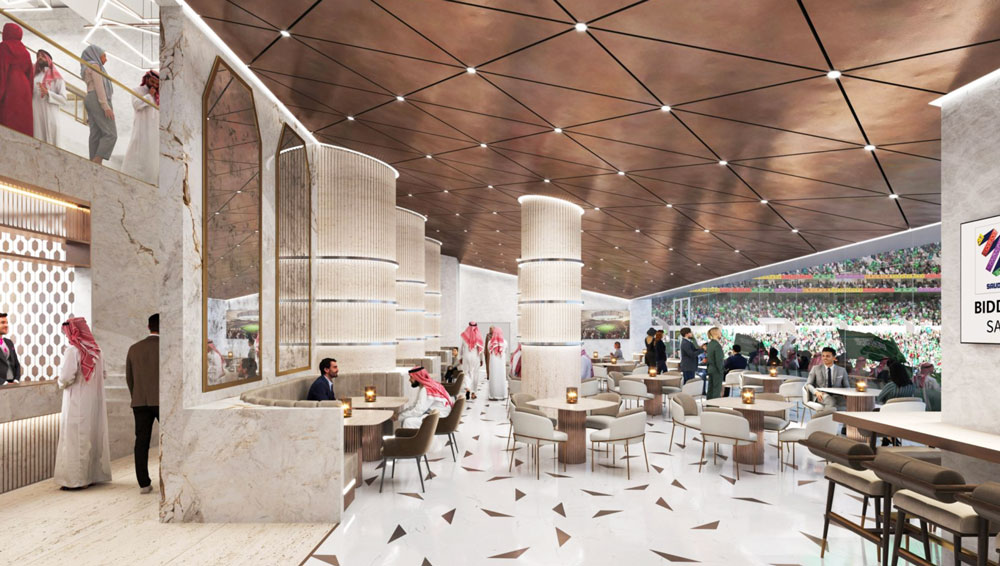
Designed by Populous for the Saudi Ministry of Sports, the renovation expands the stadium’s capacity to more than 70,000 seats while upgrading the venue for international tournament standards. The wider plan includes improvements to spectator facilities, operational back-of-house spaces, media infrastructure, hospitality areas, access systems, and event flexibility.
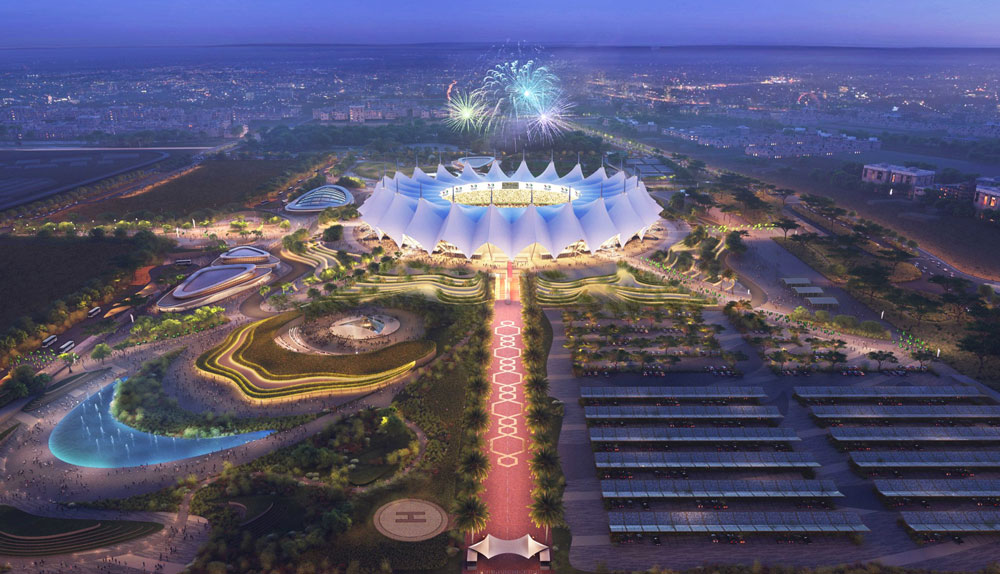
A major part of the project is the broader mixed-use masterplan around the stadium. The surrounding site is being reshaped to serve the local community beyond match days, with planned sports, leisure, and commercial components that support daily use rather than leaving the stadium dormant between major events. This is where the project becomes more than a bowl with seats; it becomes a piece of city infrastructure.
Key components include:
- Expanded seating capacity of more than 70,000 spectators
- A new lower seating tier created through excavation
- Upgraded media, hospitality, and operational facilities
- Renovated and retained portions of the existing stadium structure
- A modernized roof and shading strategy
- Photovoltaic shading structures over parking areas
- Training, recreation, and community-oriented facilities around the venue
- A broader landscape and public-realm strategy for the stadium district
Populous’ approach also retains important existing elements, including parts of the East Stand and the west-side “Hive” structure, helping preserve the venue’s architectural memory while introducing the systems required for modern global sport.
Development & Investment Potential
King Fahad Sports City Stadium is not simply being renovated for a one-month tournament in 2034. Its real value lies in what it can become before and after the World Cup. The stadium is expected to serve the 2027 AFC Asian Cup, continue supporting the Saudi national team, and operate as a major Riyadh venue for football, concerts, and large-scale entertainment.
This makes the project part of a broader investment logic now visible across Saudi Arabia’s sports infrastructure. Stadiums are no longer being treated as isolated event machines. They are being folded into mixed-use districts, visitor-economy strategies, and long-term city branding. That matters for Riyadh, where major projects such as Sports Boulevard, King Salman Park, Qiddiya, New Murabba, and multiple stadium developments are reshaping how the capital presents itself internationally.
For investors and developers, the King Fahad Sports City Stadium revamp signals three key opportunities:
- Event-led urban growth tied to football, concerts, and major cultural programming
- Hospitality and retail demand around high-capacity venues
- Long-term district activation beyond tournament windows
- Greater demand for transport, wayfinding, public realm, and fan-mobility infrastructure
The project also gives Riyadh a renovated heritage venue to sit alongside new-build stadiums. That balance is important. New icons create headlines, but renovated landmarks create continuity.
Sustainability & Innovation
The sustainability story is one of the most important parts of the Populous design. Instead of defaulting to full replacement, the project emphasizes preservation, reuse, and adaptation of existing building elements. That approach reduces waste, protects the stadium’s heritage value, and demonstrates how major sports venues can be upgraded without starting from zero.
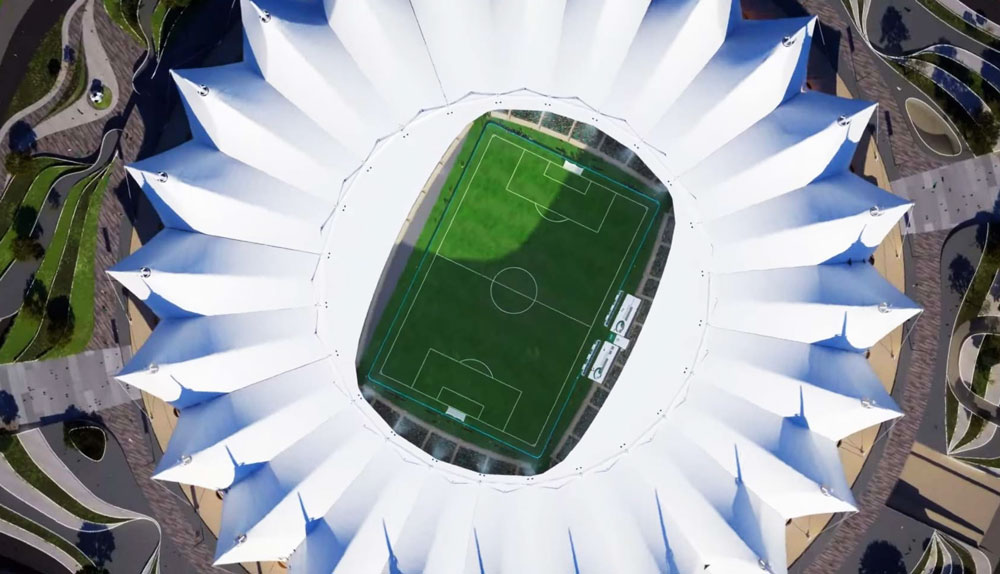
The original roof canopy had reached the end of its useful life, but the project reuses structural masts and cables to create photovoltaic shading structures over parking areas. These solar-shading elements are intended to support the stadium’s non-event energy needs, including car-charging stations on site. That is a practical move: take a piece of the old building, give it a new job, and make it earn its keep.
The redevelopment also repurposes excavated soil from the lower-tier expansion into new landscaped areas around the venue. Existing trees are being relocated and replanted as part of the wider park strategy, while salvaged stadium materials are being reused elsewhere on site and in community initiatives.
Inside the stadium, Populous has developed a cooling strategy aimed at improving comfort in Riyadh’s climate. Semi-automatic deployable terrace covers are planned to reduce heat build-up in the concrete seating bowl during the day, lowering radiant heat before spectators arrive. In a hot-weather stadium, this is not a nice extra. It is the difference between a venue that looks impressive and one that actually works.
Challenges & Considerations
The renovation faces several challenges common to major stadium redevelopment, especially when the venue carries national symbolism. Populous must modernize the stadium without stripping away the features that made it recognizable in the first place. That means balancing heritage preservation with current FIFA, AFC, broadcast, accessibility, security, and entertainment standards.
The engineering task is also complex. Adding capacity, creating a new lower tier, modernizing the roof system, improving cooling, and adapting retained structural elements all require careful phasing. Unlike a clean-sheet stadium built on an empty site, this project must work with existing geometry, legacy systems, and public expectations.
There is also the urban question. A stadium of this scale needs strong transport planning, crowd-management systems, shaded pedestrian routes, hospitality logistics, and clear links to surrounding districts. The venue’s success will depend not only on what happens inside the bowl, but on how smoothly tens of thousands of people can arrive, move, gather, and leave.
The broader test will come after the major tournaments. The best stadium projects are not judged only by opening ceremonies and camera angles. They are judged by whether the surrounding district stays useful on a normal Tuesday.
Urban Impact & Legacy
King Fahad Sports City Stadium already has legacy. The renovation is about extending it. As one of the first major stadiums of its kind in the region, the venue helped define Saudi Arabia’s modern sports architecture. Its new phase could define something else: how the Kingdom adapts existing national landmarks for a future shaped by global events, public space, and sustainable urban development.
For Riyadh, the stadium supports the city’s transformation into a larger sports and entertainment capital. For Saudi Arabia, it adds depth to the 2034 World Cup portfolio by showing that the tournament will not be delivered only through new-build spectacle. It will also involve the careful reworking of existing icons.
The project has relevance beyond the Kingdom as well. In the UAE, Qatar, Europe, and North America, stadium owners are facing similar questions about aging venues, carbon costs, event flexibility, and fan expectations. King Fahad Sports City Stadium offers a useful case study in how a major redevelopment can preserve identity while upgrading performance.
Project Outlook
The Populous revamp of King Fahad Sports City Stadium is one of the most important sports architecture projects currently underway in Riyadh because it connects past, present, and future in a single venue. It preserves a landmark, expands capacity, improves sustainability, strengthens tournament readiness, and turns the stadium district into a more active civic destination.
Ahead of the 2034 FIFA World Cup, the project gives Saudi Arabia more than another large stadium. It gives Riyadh a renewed architectural symbol with the flexibility to host football, entertainment, and everyday community use long after the final whistle. That is the real win: not just building for the world to arrive, but building for the city that remains afterward.
Project Facts & Figures
- Project: King Fahad Sports City Stadium Renovation
- Location: Riyadh, Saudi Arabia
- Client: Saudi Ministry of Sports
- Design Architect: Populous
- Original Opening: Late 1980s
- Status: Existing stadium under major renovation
- Planned Capacity: More than 70,000 seats
- 2034 FIFA World Cup Role: Proposed host venue for group stage, Round of 32, Round of 16, quarter-final, and semi-final matches
- Near-Term Event Role: Centrepiece venue for the 2027 AFC Asian Cup
- Key Design Moves: Capacity expansion, retained heritage elements, new lower tier, upgraded roof and shading systems, improved cooling, photovoltaic parking shade structures, enhanced spectator and operational facilities
- Broader Program: Mixed-use stadium district with community, sports, landscape, and commercial functions
- Strategic Significance: A major Riyadh sports landmark repositioned for international tournaments, long-term public use, and Saudi Arabia’s 2034 World Cup infrastructure program