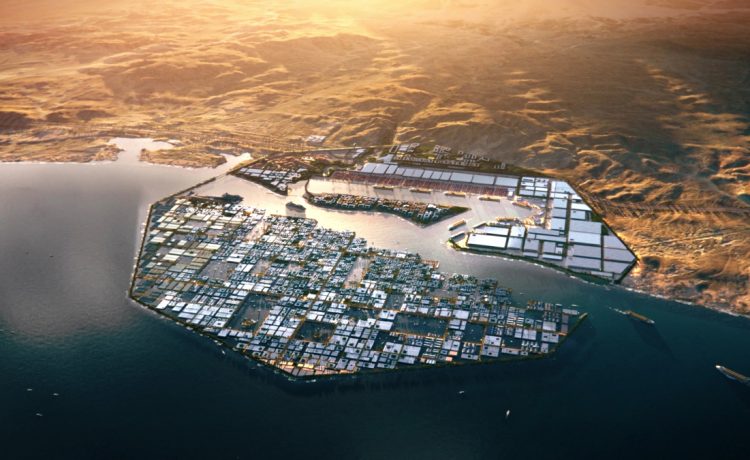
Emerging on the Red Sea coast in northwest Saudi Arabia, Oxagon is envisioned as one of the world’s most advanced industrial cities — part floating, part land-based, and entirely designed around high-tech manufacturing, automation and sustainability. As a cornerstone of the wider NEOM region, it signals the country’s shift toward clean industry, global logistics leadership and future-focused economic diversification.
Vision & Strategic Positioning
Oxagon serves as the industrial and logistics engine of NEOM, shaped to become a next-generation platform for advanced manufacturing, automated supply chains and renewable-energy-powered operations. Its strategic location along one of the planet’s busiest shipping corridors positions it to capture Red Sea trade flows while enabling seamless connectivity between Asia, Africa and Europe.
The broader vision aims to:
- Establish a high-tech industrial ecosystem integrating automation, AI and robotics.
- Create a global logistics gateway with deep-water access and ultra-efficient port operations.
- Operate through 100% clean energy, supporting new industries such as hydrogen, desalination, biotech and precision manufacturing.
- Anchor Saudi Arabia’s push toward future industries under Vision 2030.
Master Plan & Core Components
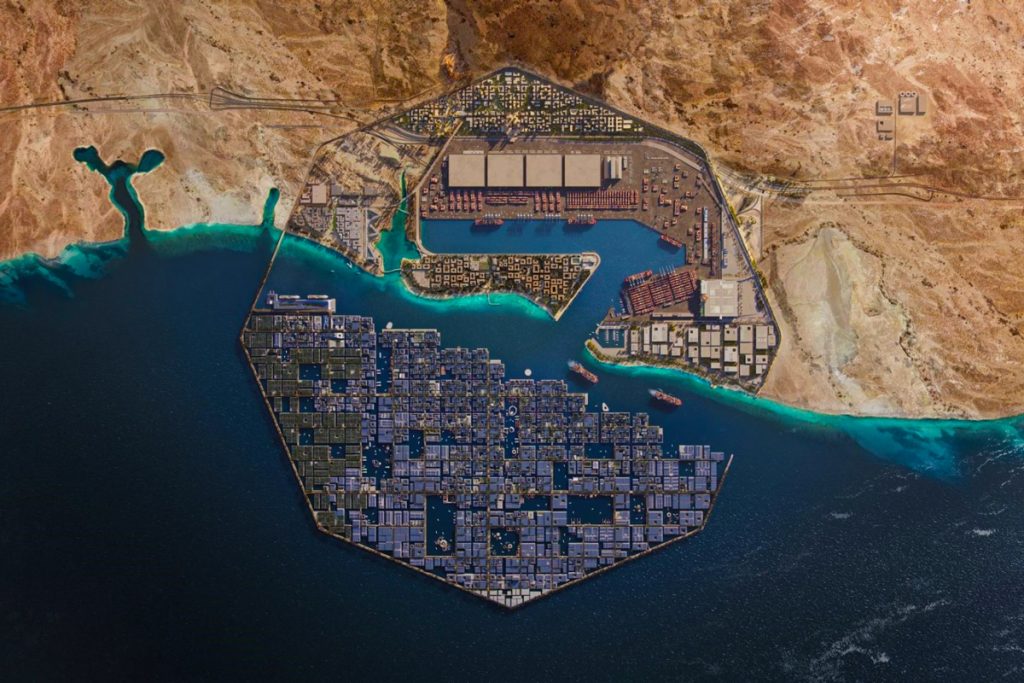
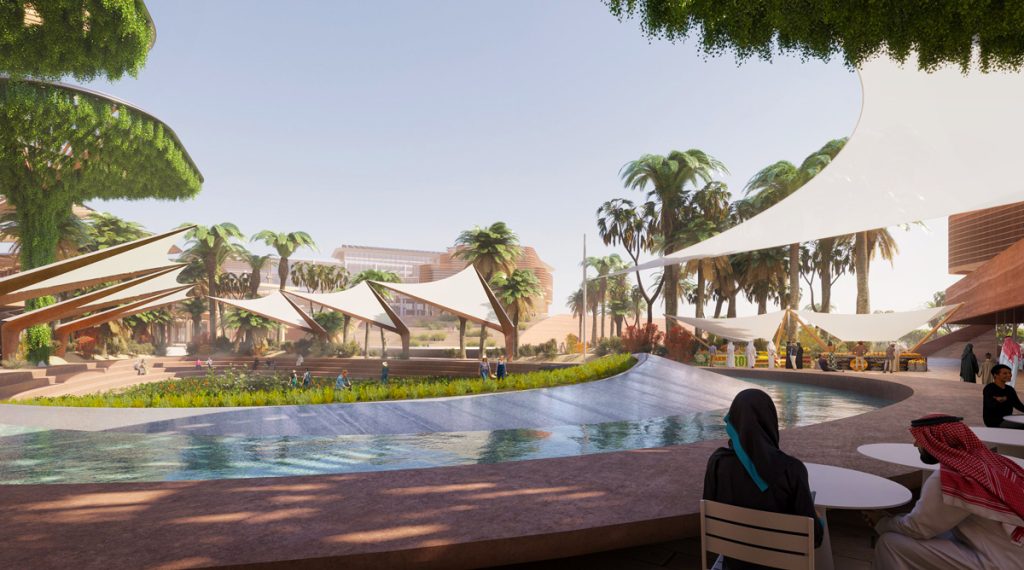
The Oxagon master plan is striking: a vast octagonal layout extending partially over water, making it one of the world’s largest planned floating structures. The design integrates industrial zones, research hubs, residential districts and a fully automated deep-sea port into a cohesive urban-industrial ecosystem.
Key components include:
- The high-efficiency Port of NEOM, featuring fully automated container handling, remote-operated cranes and AI-driven logistics.
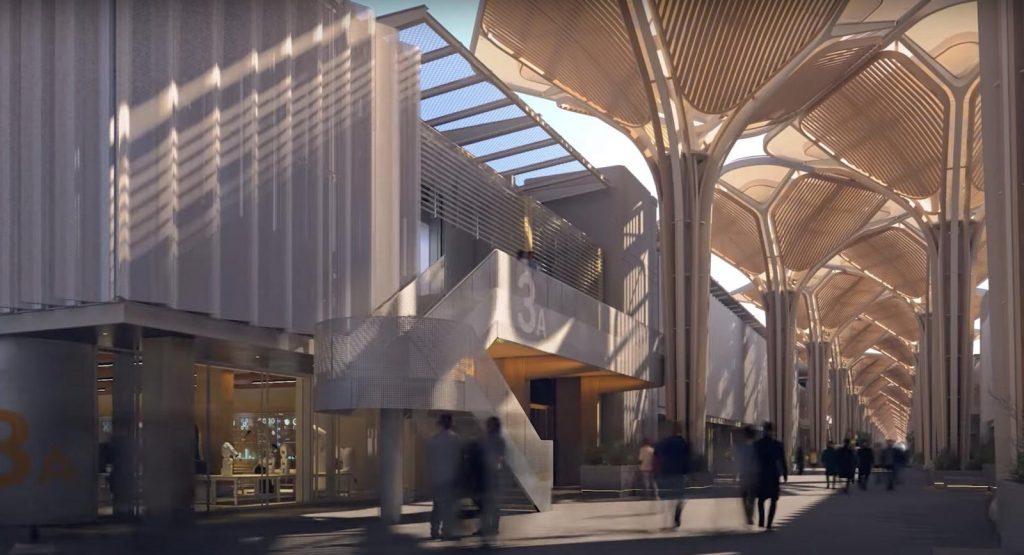
- Advanced manufacturing clusters tailored for clean tech, robotics, pharmaceuticals, and next-generation materials.
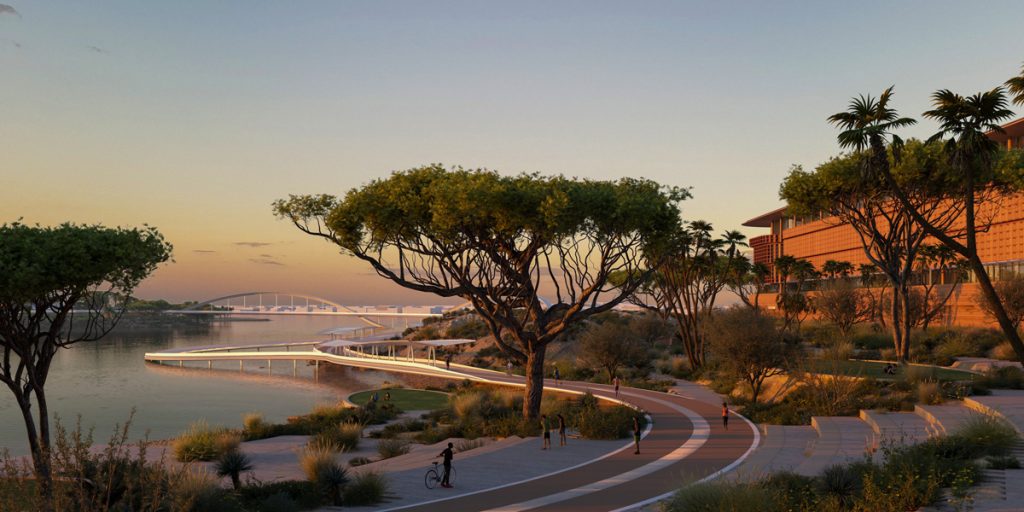
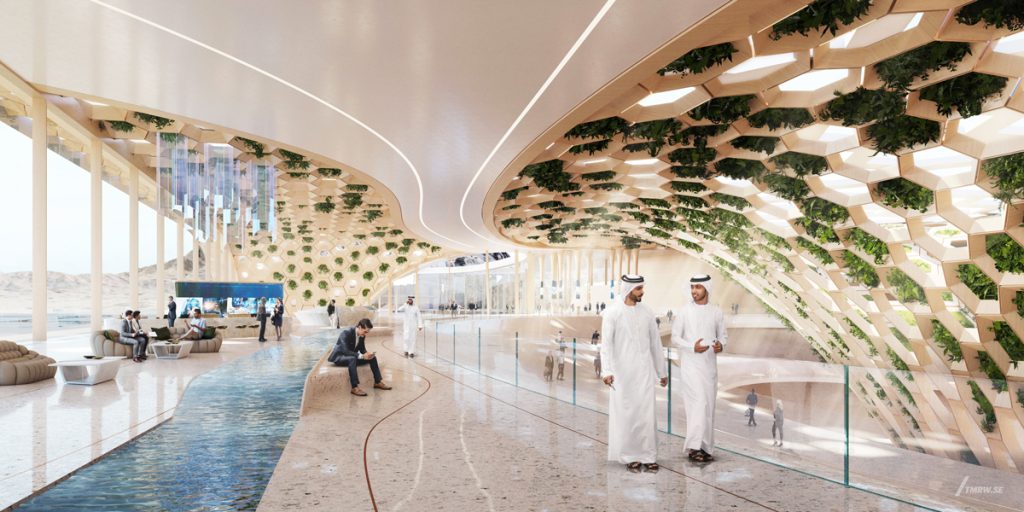
- Research centres focused on energy innovation, oceanography, water technology and industrial automation.
- Circular-economy-driven utilities, including green hydrogen production and zero-waste desalination.
The development involves major global engineering and infrastructure partners, including firms supporting port automation, energy systems, industrial planning and environmental design. These collaborators have been integrated into the master plan to ensure scalable logistics, modular construction capability and world-class industrial performance.
Development & Investment Potential
Oxagon positions itself as a future industrial powerhouse with strong appeal for long-term investors and technology leaders. Advantages include:
- First-mover presence in a purpose-built clean-industry hub.
- Long-term growth opportunities in robotics, biotech, renewables and smart manufacturing.
- A competitive regulatory and economic framework designed to attract global companies.
- Major logistics and real-estate potential supported by a next-generation port.
As NEOM expands, Oxagon is expected to generate significant employment, supply-chain opportunities and R&D demand, further solidifying its investment profile.
Sustainability & Innovation
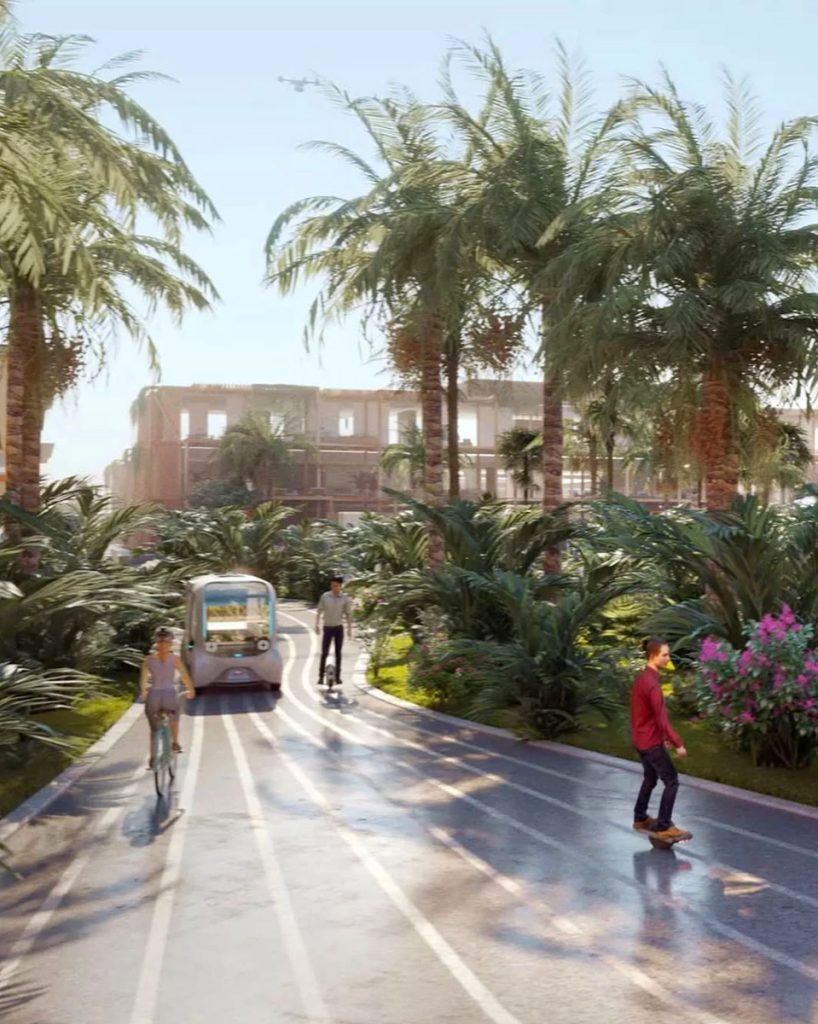
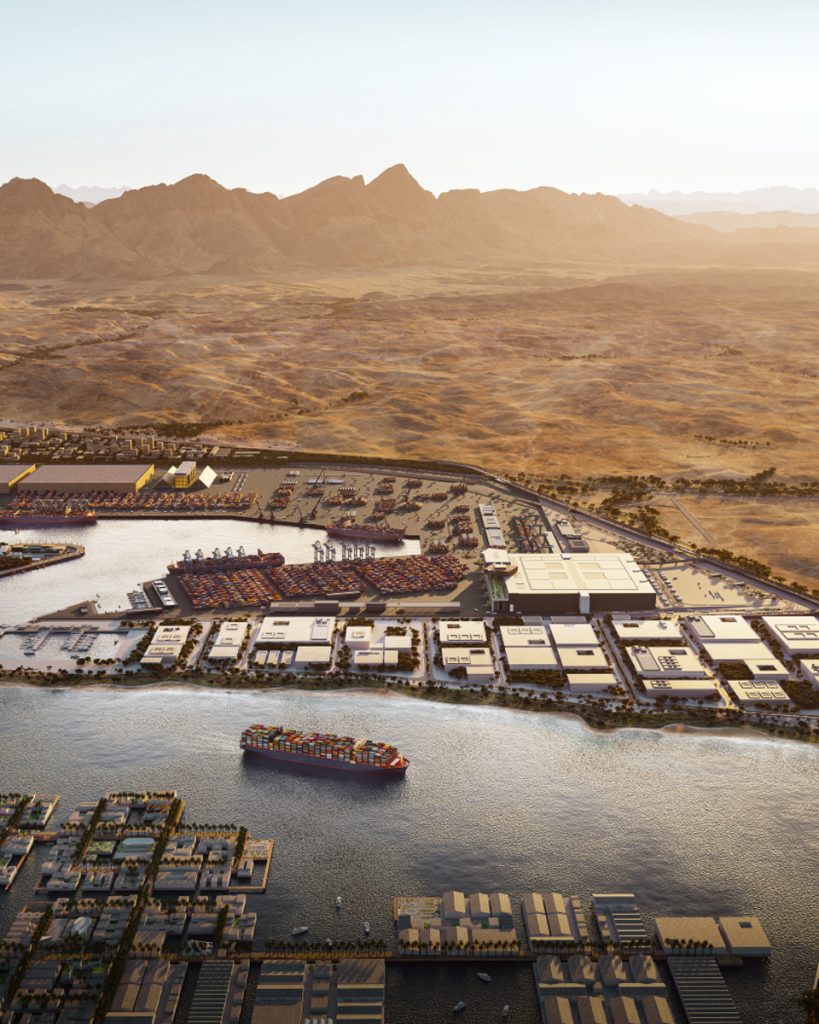
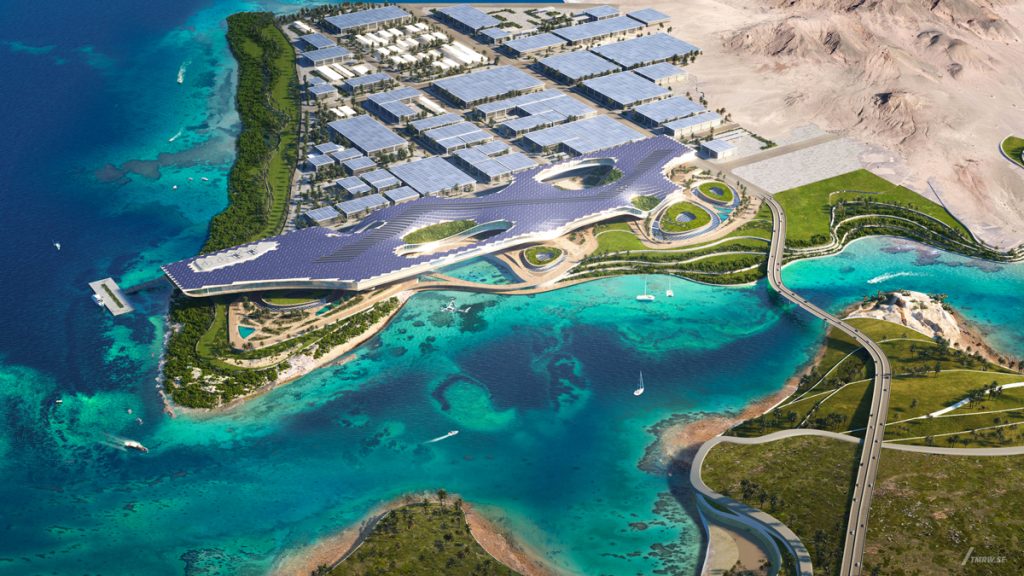
Sustainability forms the backbone of Oxagon’s identity. The city is designed to run on 100% renewable energy while embedding circular-economy principles in every system — from water treatment and waste management to manufacturing loops and automated logistics.
Innovation is woven into its DNA: digital twins, autonomous mobility, AI-driven manufacturing lines, and smart-grid energy systems are core city components. Its floating structure minimizes land impact while creating flexibility for future expansion.
Challenges & Considerations
Delivering a project of this scale presents several considerations:
- Engineering complexity tied to floating industrial infrastructure.
- Coordinating large-scale automation systems and energy networks.
- Ensuring environmental protections for sensitive Red Sea ecosystems.
- Securing long-term global tenant demand for emerging industrial sectors.
- Managing the cost, pace and integration of multi-phase development.
Despite these challenges, Oxagon remains one of the most ambitious industrial-city models ever attempted.
Urban Impact & Legacy
Oxagon has the potential to redefine how industrial cities operate in the decades ahead. By merging automation, clean energy and maritime connectivity into a unified framework, it could set new global benchmarks for sustainable manufacturing and resilient port-driven urbanism.
Within Saudi Arabia, Oxagon is expected to contribute substantially to high-skill job creation, technology transfer and economic diversification, leaving a legacy that reshapes regional industry for generations.

Summary
Oxagon is a bold and boundary-pushing industrial vision — part port city, part innovation hub, and wholly designed around the future of global manufacturing. Its success will depend on engineering precision, investor momentum and sustainability execution, but its ambition positions it as a transformative force on the Red Sea and a defining element of NEOM’s long-term identity.
Project Facts & Figures
- Location: Red Sea coast, northwest Saudi Arabia
- Role: Industrial and logistics hub of NEOM
- Structure: Part floating city, part land-based industrial zone
- Energy model: 100% renewable, including green hydrogen and smart-grid systems
- Key components: Automated deep-sea port, R&D clusters, manufacturing zones, clean-tech utilities
- Design priorities: Automation, circular economy, AI-driven logistics, environmental regeneration
- Scale: One of the world’s largest planned floating cities