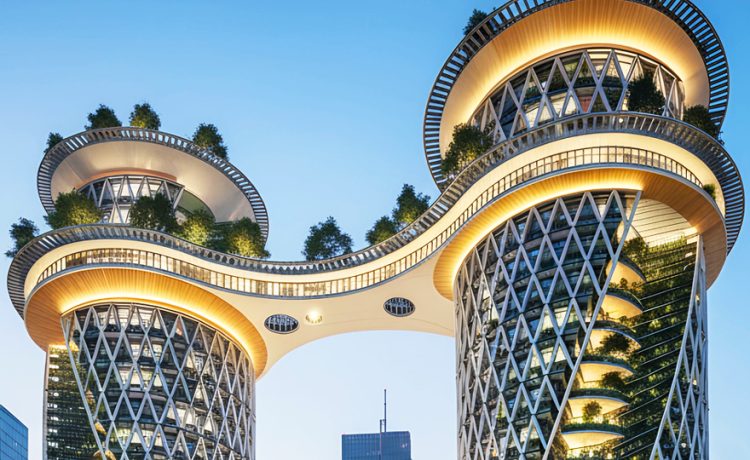
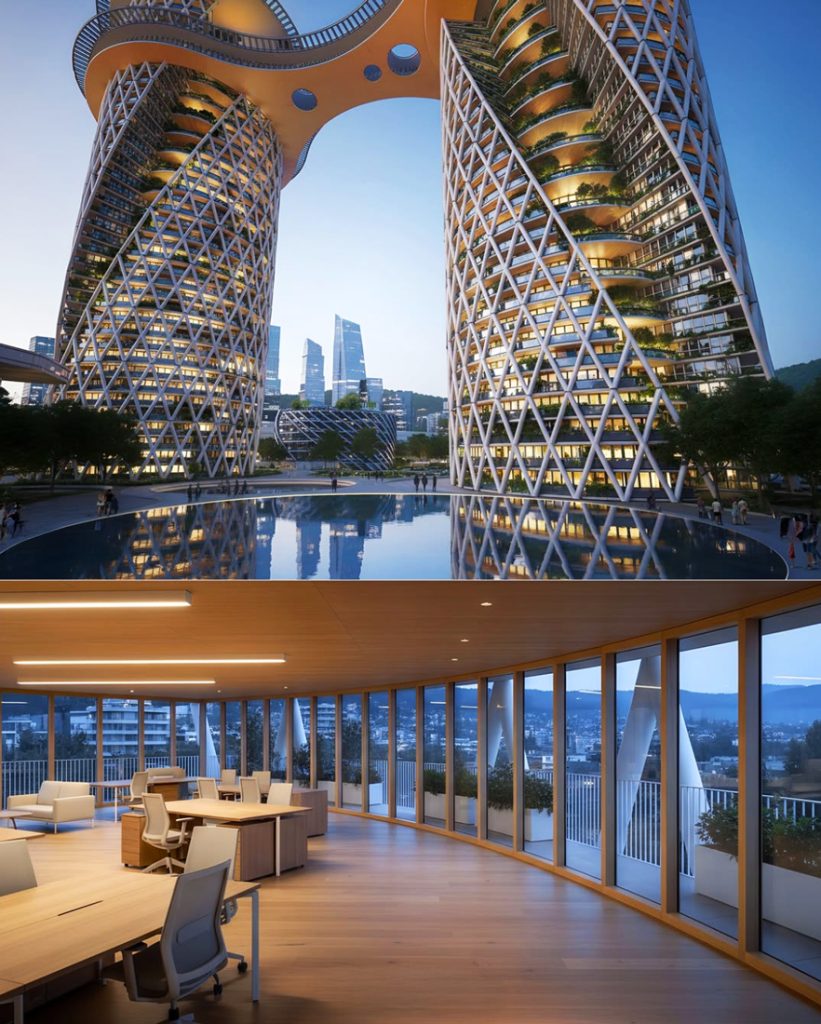
Set on a plateau overlooking the Rhône, ARCHIBORETUM introduces a forward-looking mixed-use district designed as an “urban forest” for central Geneva. With two sculpted timber towers rising above a lush, multi-level landscape, the project blends residential, hospitality, workplaces, and cultural functions into a living ecosystem where nature is fully integrated into the architecture. The development aims to align with Switzerland’s low-carbon ambitions while offering a new benchmark for ecological density that resonates across Europe, North America, Saudi Arabia, and the UAE.
Vision & Strategic Positioning
ARCHIBORETUM is envisioned as a regenerative district model that redefines how high-density urban cores can coexist with meaningful public nature. Positioned between Geneva’s historic center and an emerging new district, the project strengthens the city’s transition toward sustainable, transit-oriented growth while protecting the qualities that make Geneva globally admired: landscape, walkability, and environmental leadership.
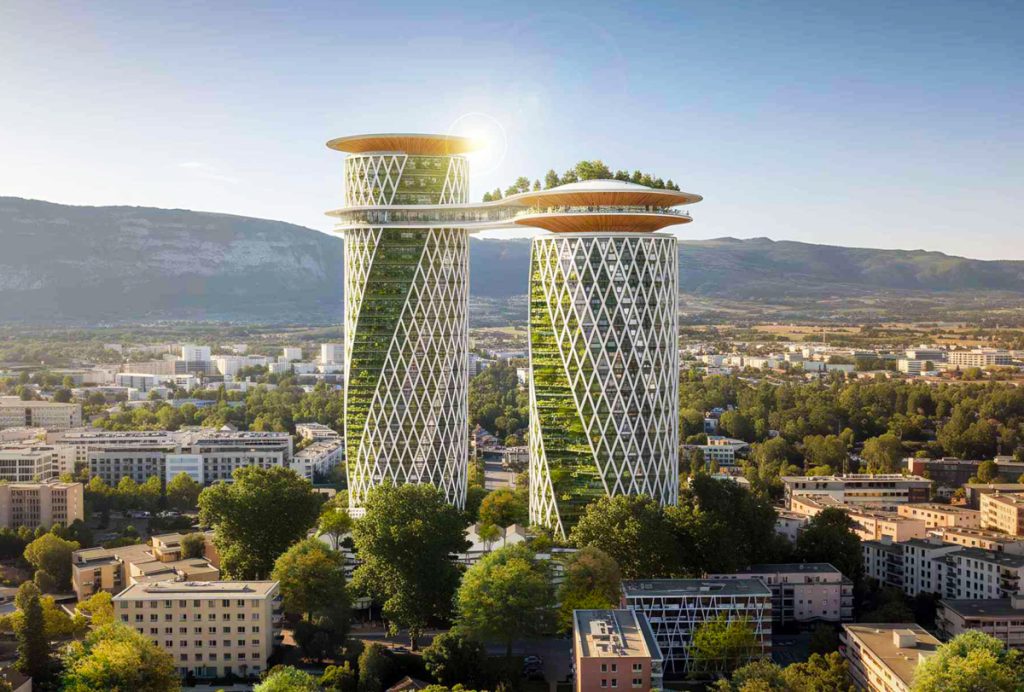
The strategic approach opens the traditional closed urban block into a permeable structure of plazas, gardens, terraces, and elevated parkland. Instead of a singular object, the development becomes an interconnected ensemble that elevates greenery both vertically and horizontally. For Geneva—a city with growing demand for housing, hospitality, and innovation spaces—ARCHIBORETUM delivers density without compromising identity or human scale.
Master Plan & Core Components
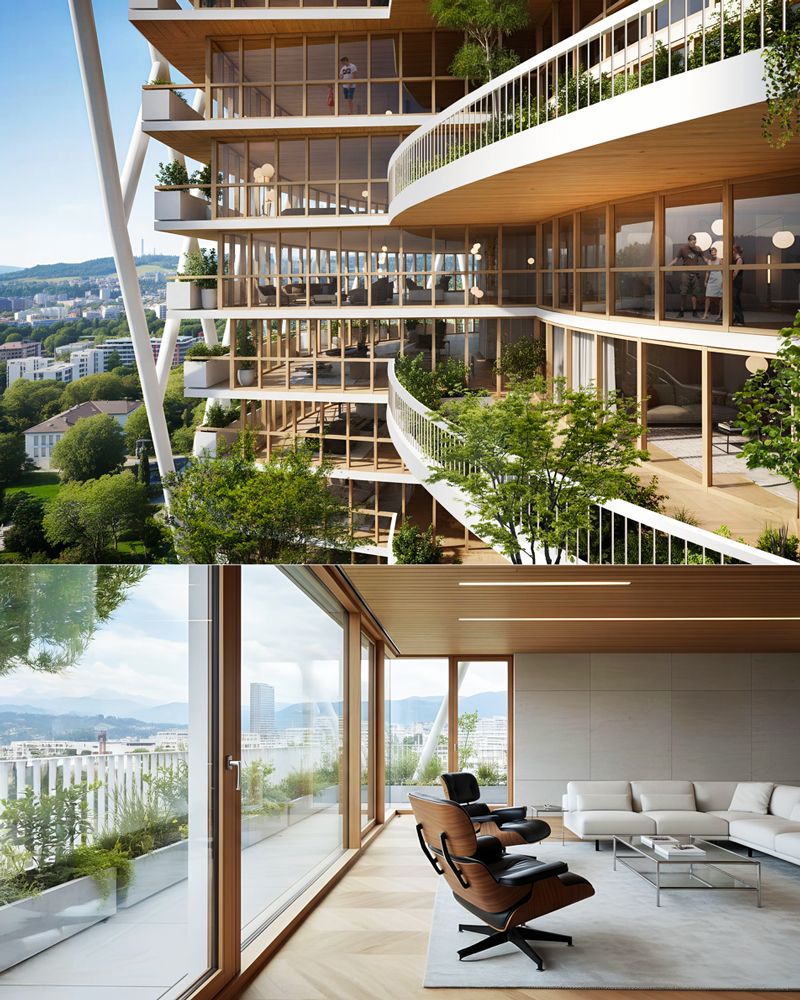
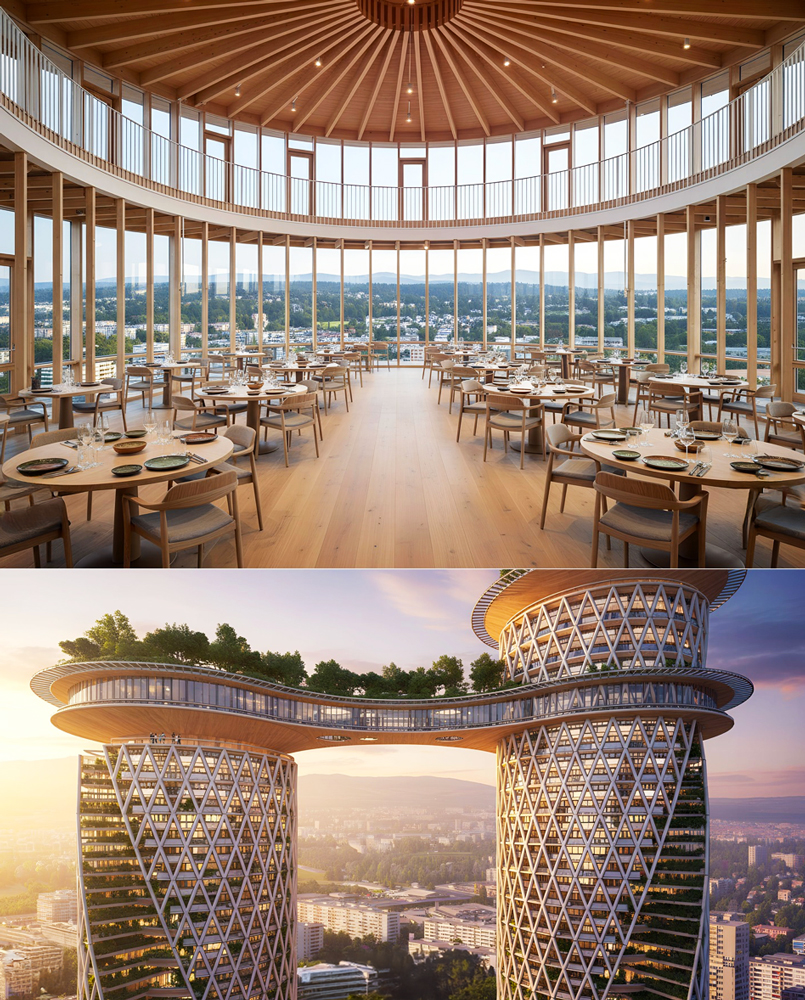
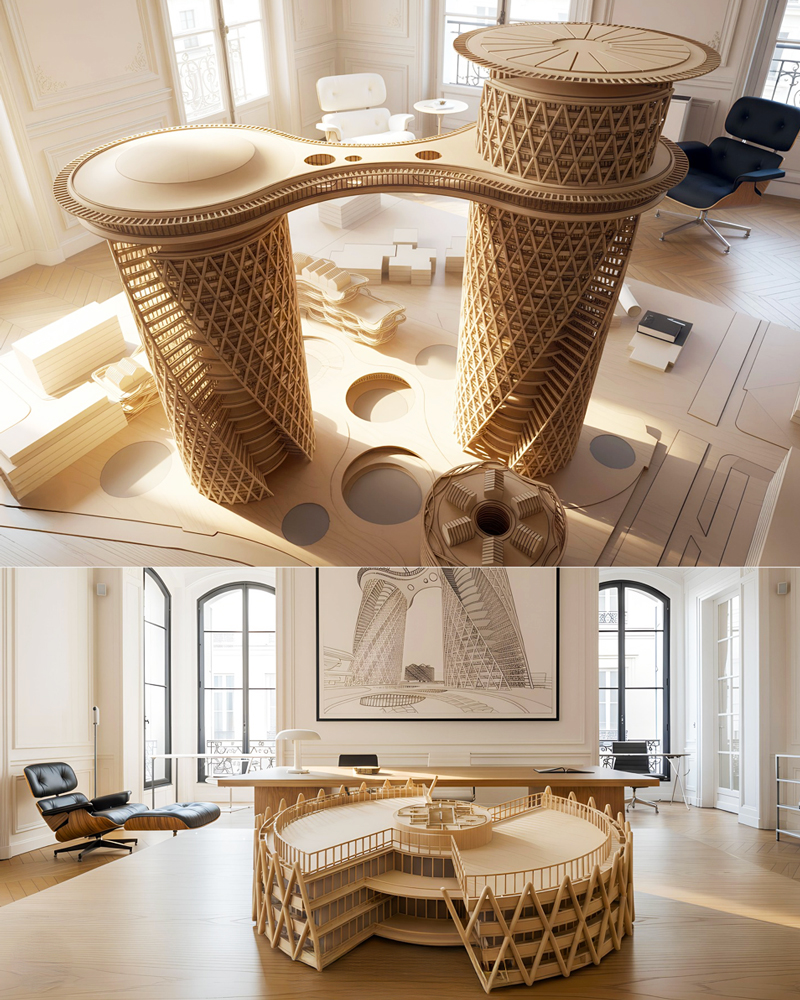
ARCHIBORETUM covers approximately 90,000 m² across two hybrid timber towers and a landscaped podium, all linked by a publicly accessible SkyPark. The program mixes residential, hotel, workplace, retail, and cultural uses to create a complete urban ecosystem.
Program Overview
- Residential: ~61,000 m², offering over 600 dwellings
- Hotel: ~16,500 m² for a next-generation hospitality offering
- Offices: ~12,500 m² of flexible workspaces
- Retail & Culture: local shops, services, and a performance hall integrated into the active lower levels
Public realm design is foundational: approximately 30% of the footprint is dedicated to plazas, while 45% becomes a metropolitan park with forested areas, gardens, and community agriculture. Terraces, loggias, and roof gardens extend this greenery across the towers, forming vertical ecological corridors.
Design Team & Partners
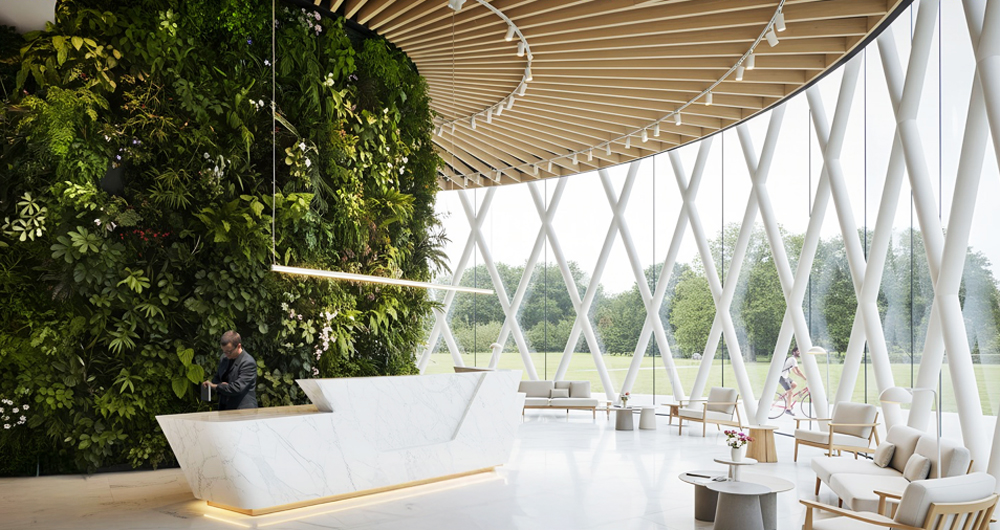
The concept is led by Vincent Callebaut Architectures, a practice known internationally for biomimetic, vegetation-integrated architecture. While the project is currently in an advanced design-study phase, it is structured around Swiss sustainability and planning frameworks, which implies coordination with environmental engineers, forestry experts, and energy consultants specialized in low-carbon districts.
Development & Investment Potential
ARCHIBORETUM positions Geneva for the next chapter of sustainable metropolitan growth. Its mixed-use profile provides diversified revenue across residential, hotel, office, and cultural sectors, appealing to institutional investors and sovereign wealth funds seeking long-term, ESG-compliant assets.
Key market advantages include:
- A prime site linking historic and emerging districts
- Strong demand for certified low-carbon real estate
- A hospitality component aligned with Geneva’s global-diplomacy and events economy
- A high-quality public realm that strengthens long-term value and visitor appeal
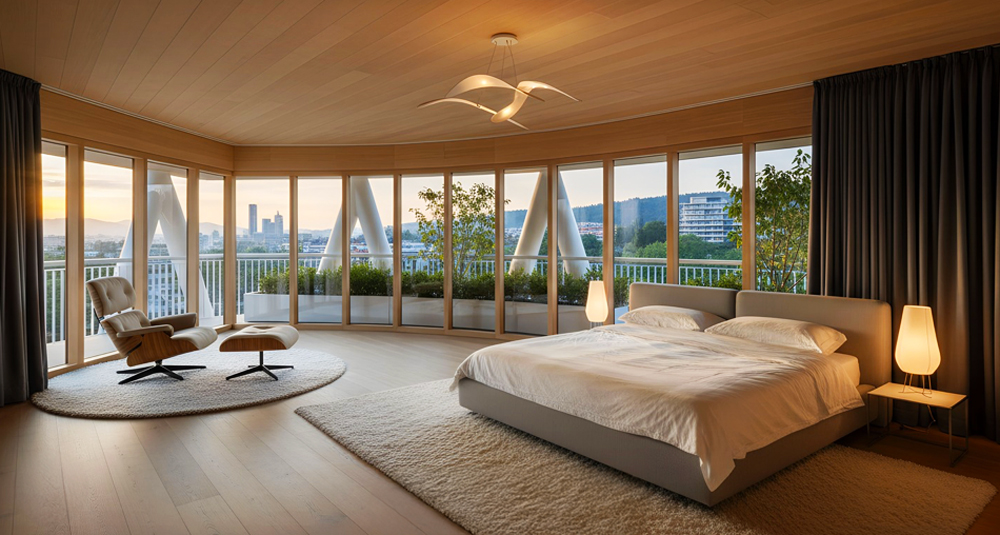
For global investors, especially from Saudi Arabia, the UAE, Europe, and North America, ARCHIBORETUM demonstrates how sustainable density can become a premium asset class—where environmental performance enhances both desirability and long-term resilience.
Sustainability & Innovation
Sustainability defines every layer of the project, from structure to energy to landscape.
Low-Carbon Structure
- Hybrid mass-timber system using certified local wood
- Reduced concrete volumes limited to podium and structural cores
- High-performance steel integrated only where structurally necessary
- Bio-sourced insulation and recyclable façade materials
Positive-Energy Logic
- Solar-electric and solar-thermal integration on roofs and façades
- Geothermal earth probes for low-carbon heating and passive cooling
- Biomass boilers and district-level energy loops
- Circular organic-waste systems producing biogas
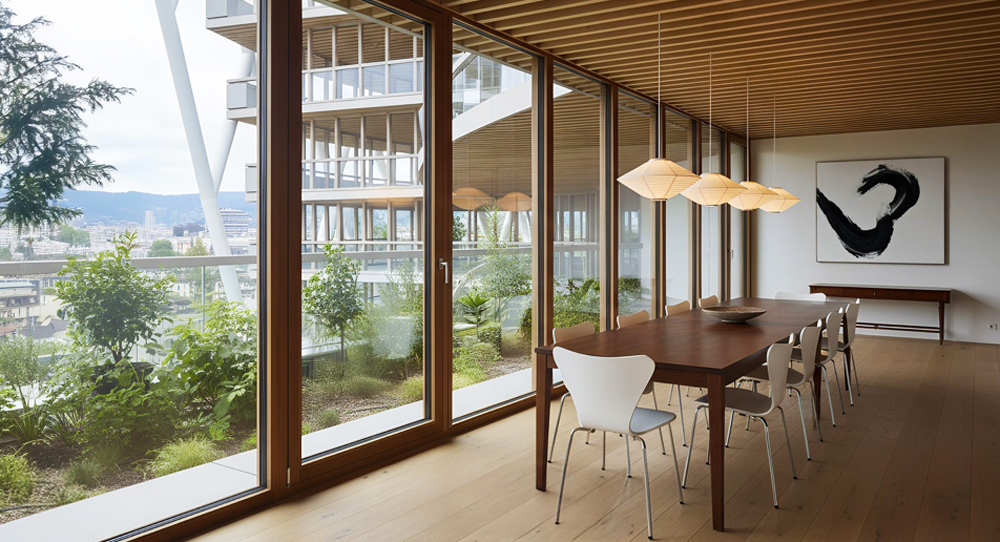
Closed-Loop Water Management
- Rainwater harvesting
- Phytopurification basins
- Greywater recycling
- Highly efficient irrigation for planted terraces and rooftop farms
Urban Ecology & Food Production
- Vertical vegetation across balconies, terraces, and sky gardens
- Urban agriculture including greenhouses, community gardens, and edible landscaping
- Habitat-supportive features such as insect houses and pollinator zones
The project aims to function as a positive-energy, biodiversity-generating district—a model adaptable for new-build developments in fast-growing Gulf cities and dense European capitals alike.
Challenges & Considerations
Delivering ARCHIBORETUM will require careful coordination and long-term governance:
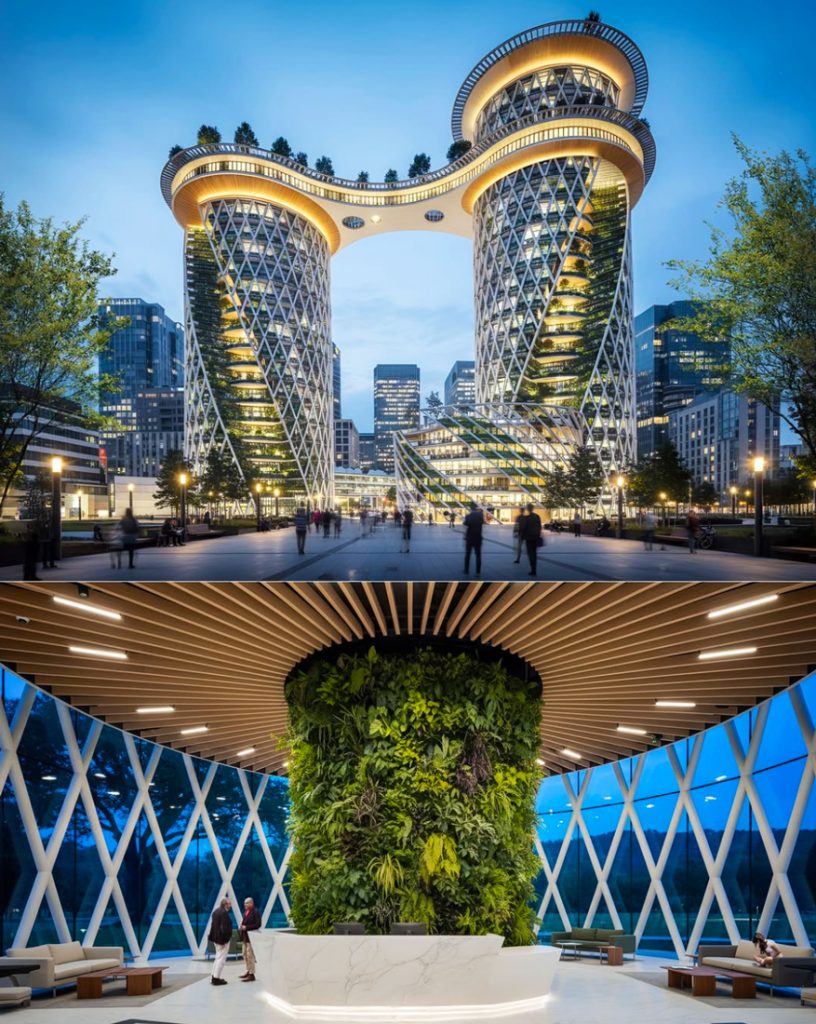
- Regulatory Pathways for high-rise timber structures in Switzerland
- Maintenance Commitments for extensive vertical greenery and urban agriculture
- Phasing Strategies to align delivery with market cycles
- Public Realm Management, ensuring plazas and park areas remain active, safe, and well-maintained
- Community Integration, balancing new housing and density with neighborhood expectations
These challenges mirror those faced by cities embracing sustainable, high-density timber development worldwide.
Urban Impact & Legacy
ARCHIBORETUM’s most significant contribution lies in its redefinition of what a central urban district can be. Instead of choosing between density and landscape, it merges the two into a multi-tiered public nature network. This creates new recreational and cultural destinations, elevates the city’s sustainability profile, and positions Geneva as a leader in regenerative urbanism.
For international audiences—from New York to London to Riyadh—the project offers a replicable blueprint: a high-density, low-carbon district where architecture and ecology operate as one system.
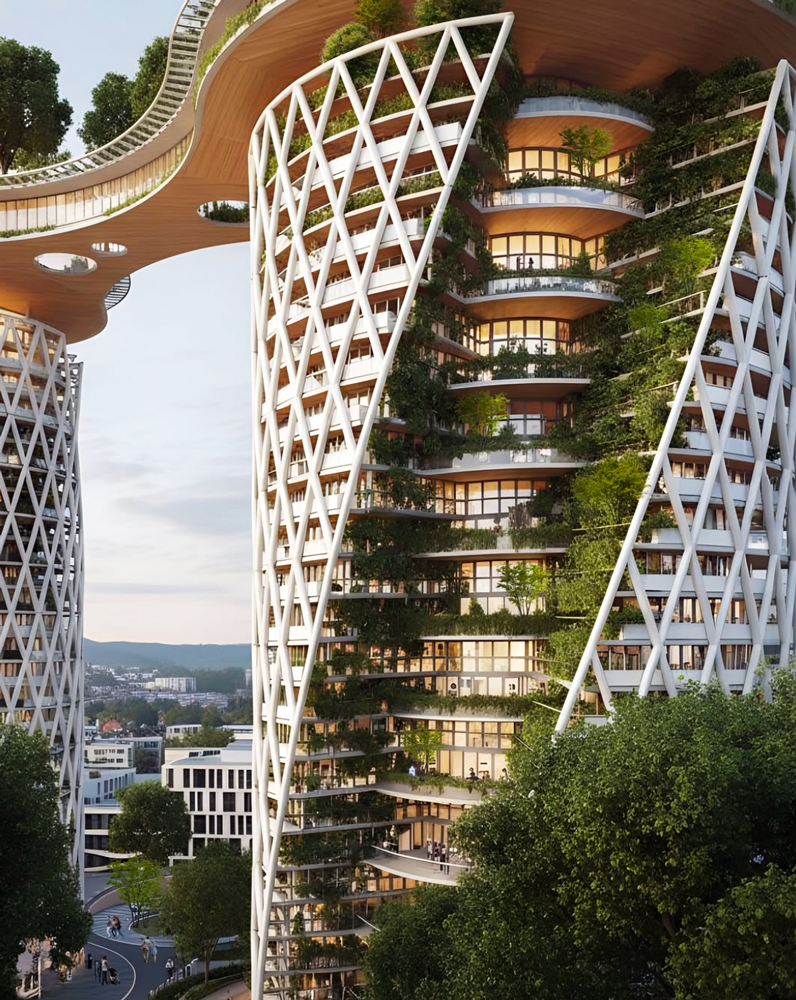
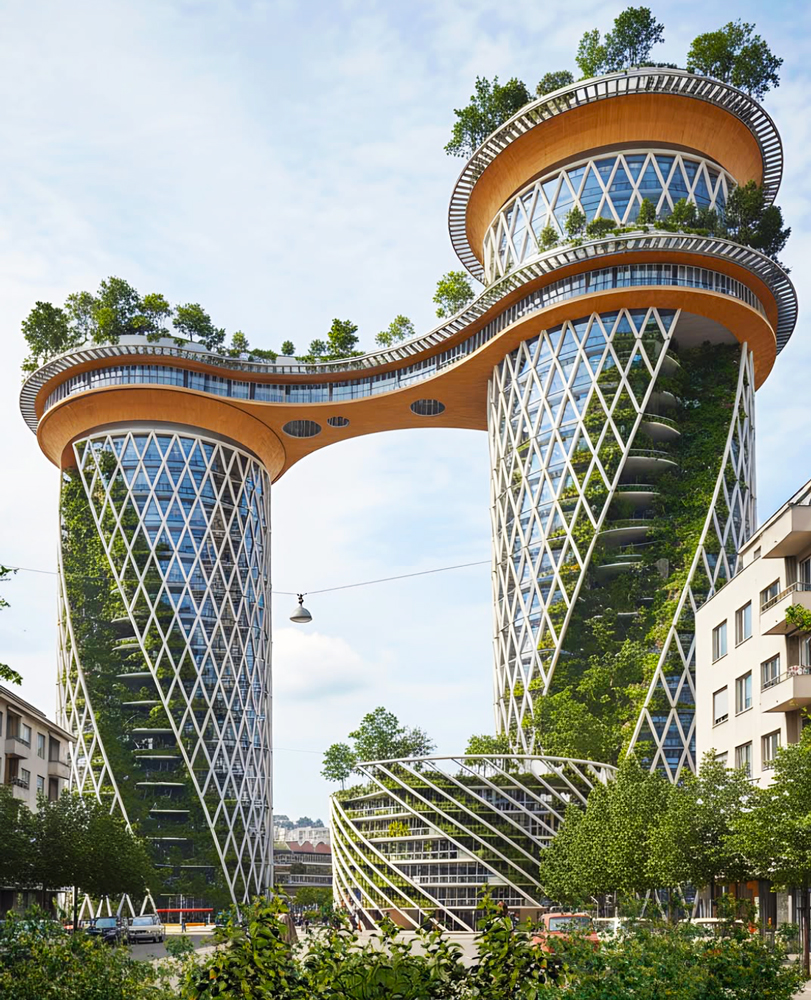
ARCHIBORETUM stands as a compelling vision for Geneva’s next urban chapter. Its hybrid timber towers, immersive landscape strategy, and integrated public spaces create an environment where housing, hospitality, workplaces, and nature coexist seamlessly. By focusing on renewable materials, positive-energy systems, and generous green infrastructure, the project offers a future-proof model rooted in ecological responsibility and long-term investment value. If delivered as envisioned, it will become one of Europe’s clearest demonstrations of regenerative development—an urban forest rising above the Rhône.
Project Facts & Figures
- Project: ARCHIBORETUM
- Location: Geneva, Switzerland
- Type: Mixed-use sustainable district
- Status: Advanced concept and design study
- Total Area: ~90,000 m²
- Program Mix:
- Residential: ~61,000 m²
- Hotel: ~16,500 m²
- Offices: ~12,500 m²
- Retail, cultural spaces, and community services integrated at podium level
- Public Realm:
- ~30% plazas and pedestrian links
- ~45% metropolitan park and landscaped terraces
- Architect: Vincent Callebaut Architectures
- Structure: Hybrid mass timber with selective concrete and steel
- Environmental Features: Solar-electric and thermal systems, geothermal probes, biomass energy, circular water cycles, vertical greenery, rooftop and terrace agriculture
- Key Themes: Regenerative urbanism, biodiverse landscapes, low-carbon construction, transit-linked density