In the foothills of Hebei Province, China, the recently completed Hermit Resort by Domain Architects emerges not simply as a hospitality venture but as a conscious reinterpretation of ancient heritage. Completed in 2025, on a site adjacent to the 1,500-year-old Xing Kiln Ruins, the project blurs the boundary between architecture, archaeology, and the natural world.
Vision & Strategic Positioning
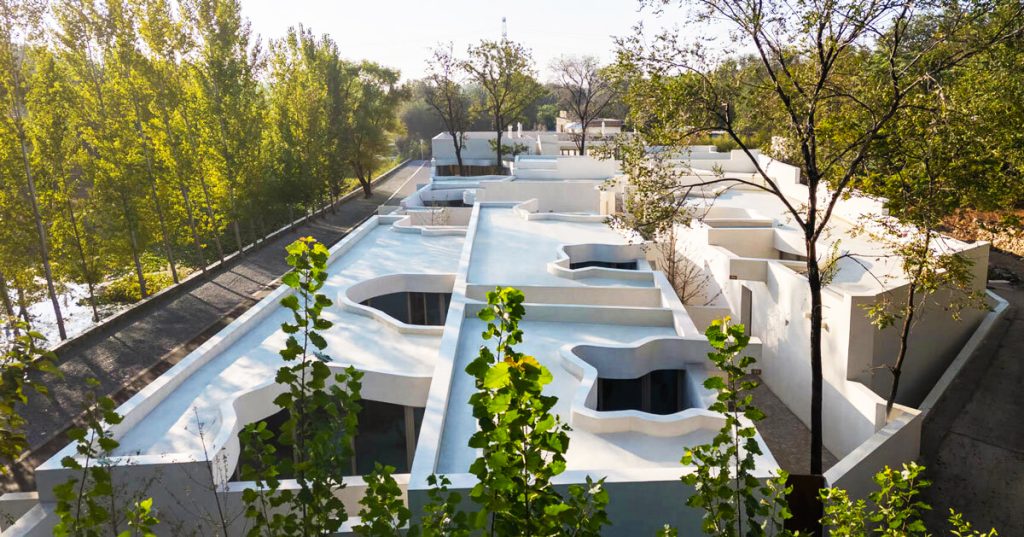
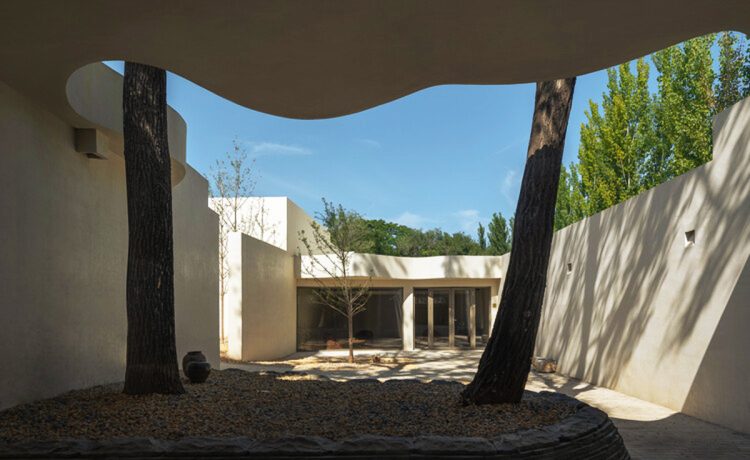
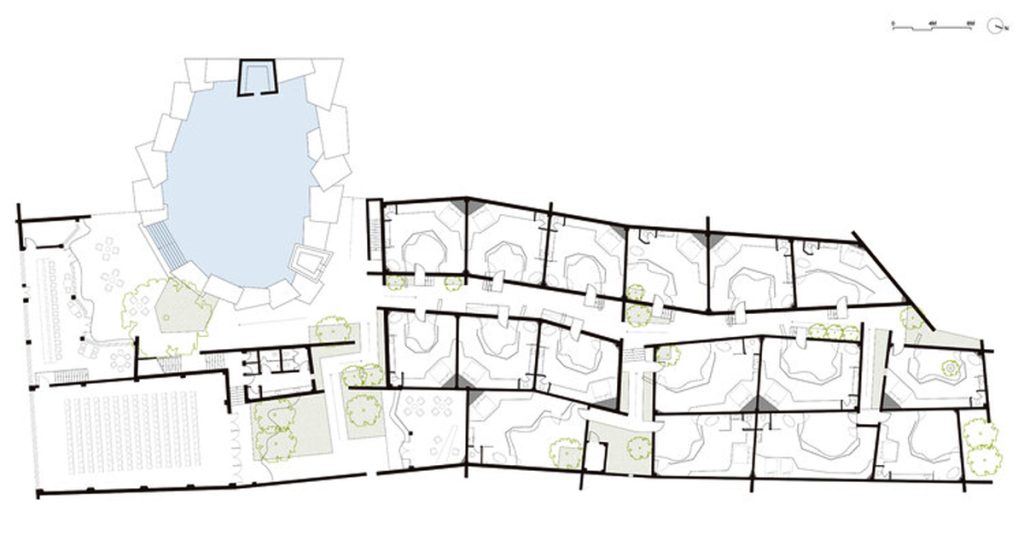
The resort’s concept is rooted in site specificity and temporal layering. Situated atop a gently sloped patch of land that once hosted a relocated village and beside an ancient kiln remnant, the architectural narrative explores how built form can evoke the passage of time, decay, and renewal. Because the layout of the original kilns featured semi-enclosing horseshoe arrangements of chambers around small courtyards, the architects echoed this form for guest accommodation units — positioning the development not only as a luxury retreat, but as a cultural landscape in dialogue with its past.
Master Plan & Core Components
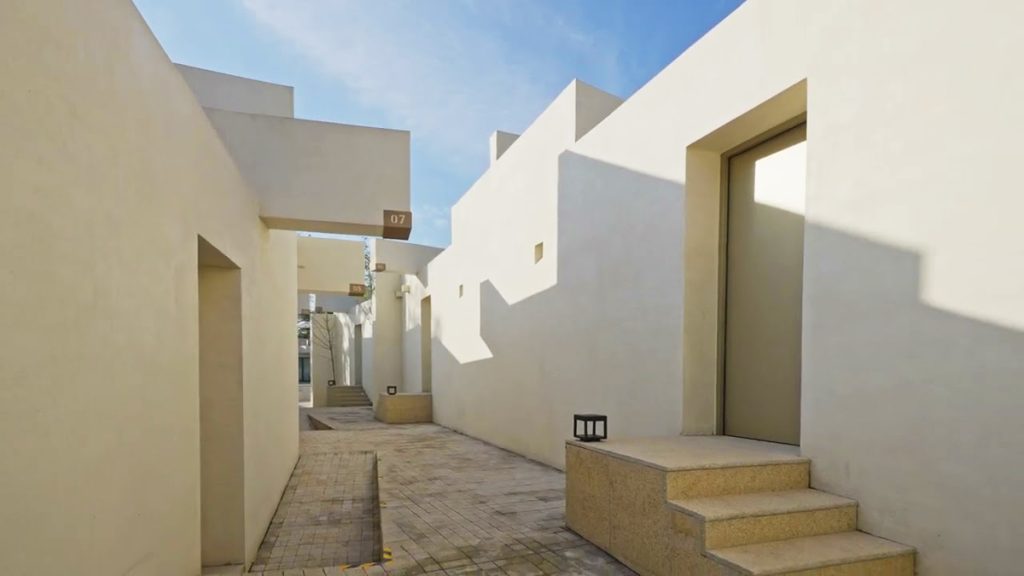
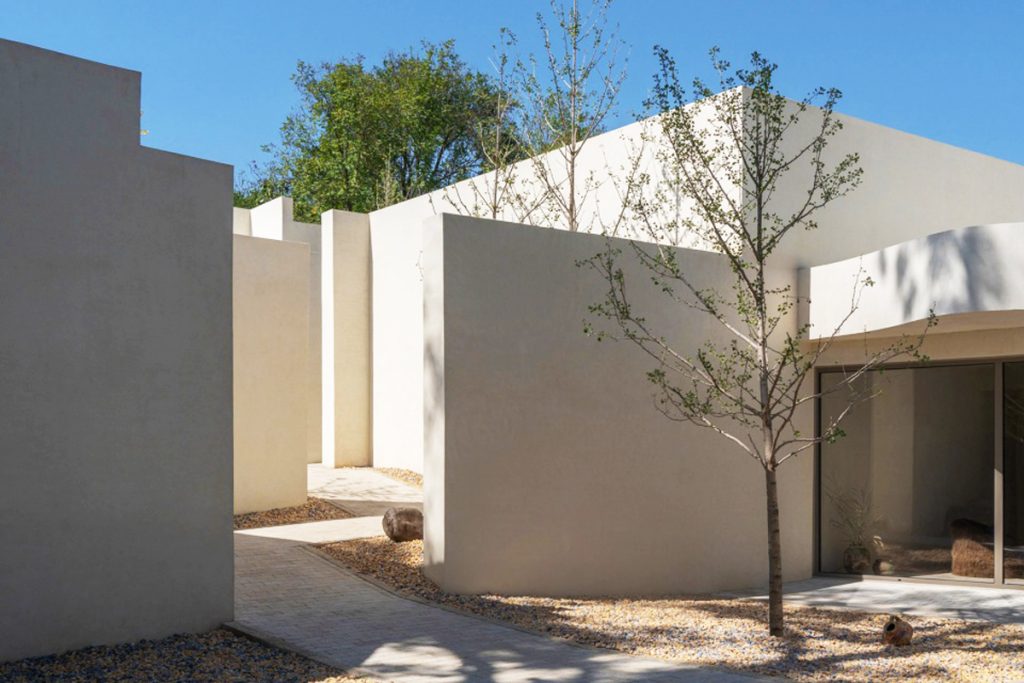
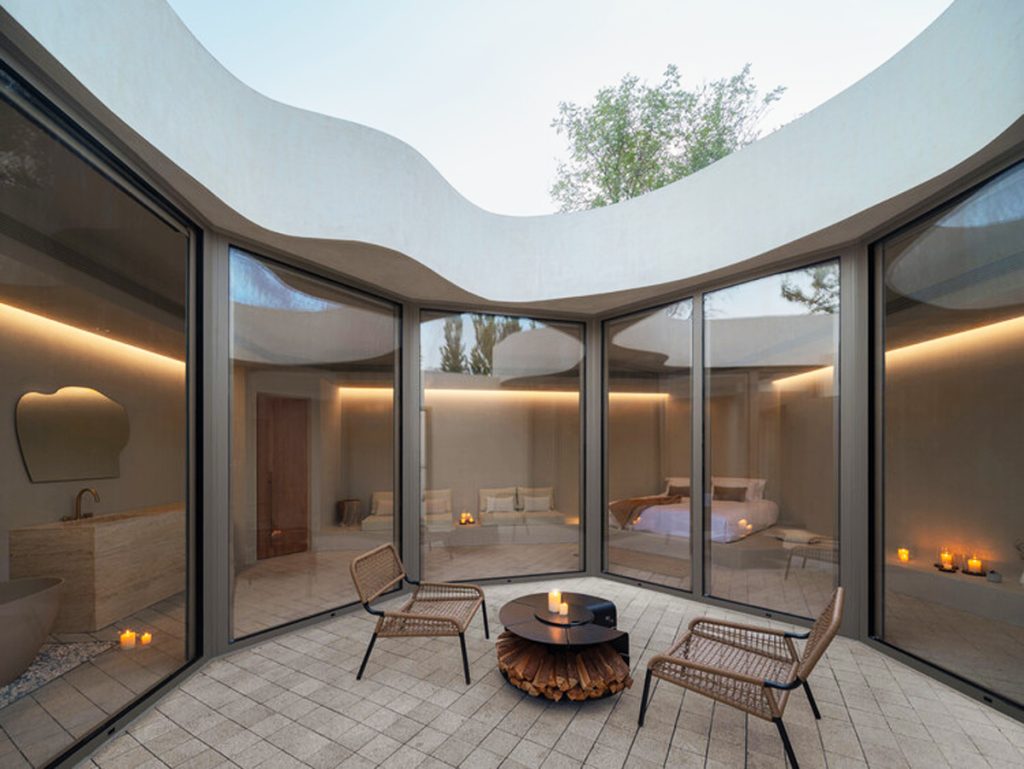
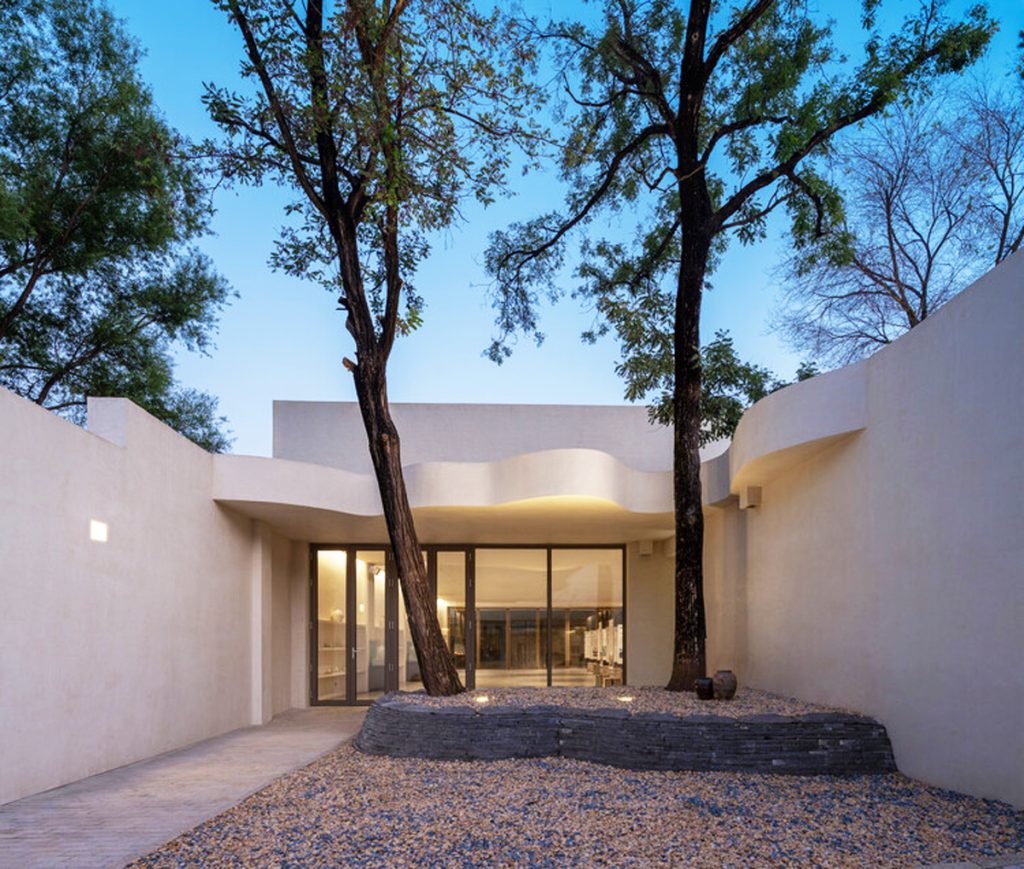
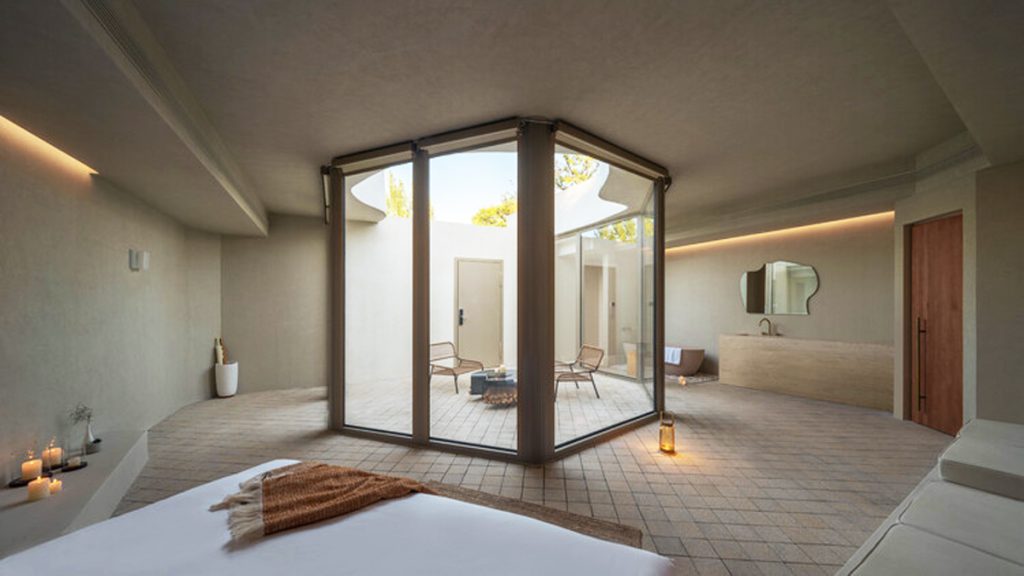
The resort spans approximately 1,300 m² of footprint. Rather than a single monolithic building, the master plan consists of a cluster of small, single-storey volumes dispersed across the site and connected through courtyards, pathways, and open vistas. Each of the 50 guest rooms enjoys a private courtyard, with interiors arranged in a semi-enclosing horseshoe shape that references the kiln-chamber layout of the archaeological site.
The project was led by Domain Architects’ Xu Xiaomeng and Hannah Wang, with Yang Jie as part of the design team. Local landscape consultants integrated the slope, stream, and remains of the old village walls, supported by structural and engineering partners specializing in low-rise resort construction.
Key components include:
- Guest accommodation villas with private courtyards.
- A network of alleys and open courtyards that blur indoor–outdoor boundaries.
- Communal amenities such as a restaurant, lounge, and spa designed with the same palette and spatial language.
- Landscape interventions preserving fragments of the old village walls and using the natural slope and stream for ambience.
Development & Investment Potential
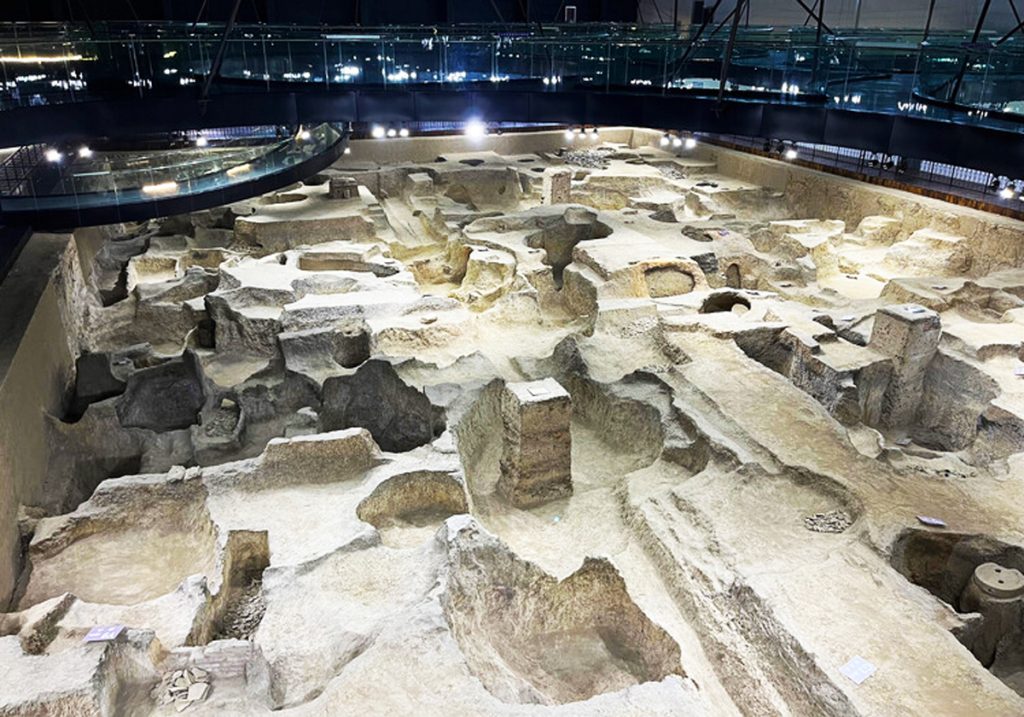
Positioned in a historically rich region near the historic Xing Kiln Ruins, Hermit Resort taps into multiple value drivers: heritage tourism, high-end experiential hospitality, and architecture-as-destination appeal. The concept of creating “a new relic” ensures it stands apart from generic resort developments. From an investment standpoint, the low-rise village model reduces risk while offering guests a deeply immersive and intimate experience. Its alignment with cultural heritage and the landscape enhances sustainability credentials and facilitates local approvals — vital factors for long-term value and brand differentiation.
Sustainability & Innovation
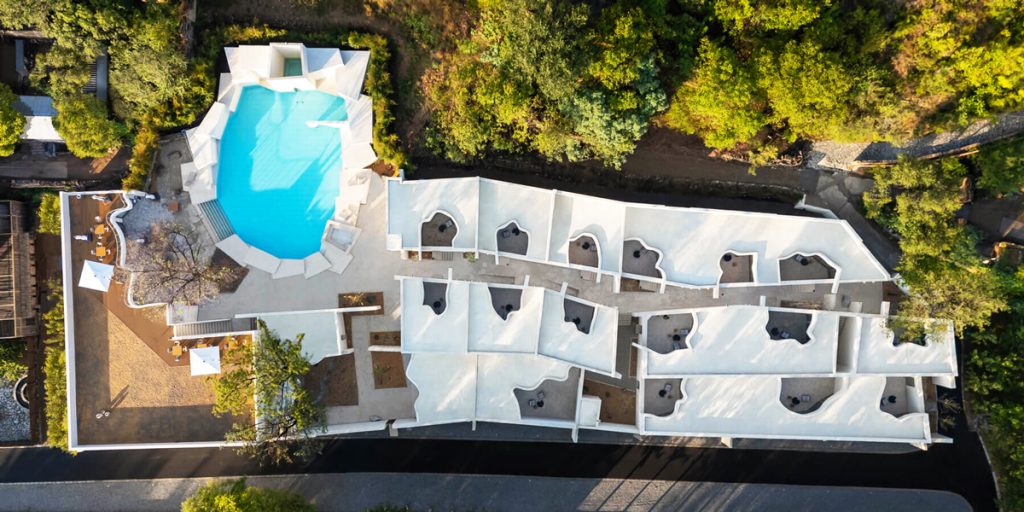
The resort demonstrates strong environmental sensitivity through its integration with the landscape, minimal visual impact, and restrained material palette of concrete and steel. Semi-open layouts and private courtyards reduce mechanical energy loads by optimizing natural ventilation and daylight. The reuse of village remnants and adaptation to the site’s topography minimize new environmental disturbance. Design innovation lies in its reinterpretation of archaeological form — merging ancient typologies with contemporary hospitality needs in a settlement that feels both timeless and new.
Challenges & Considerations
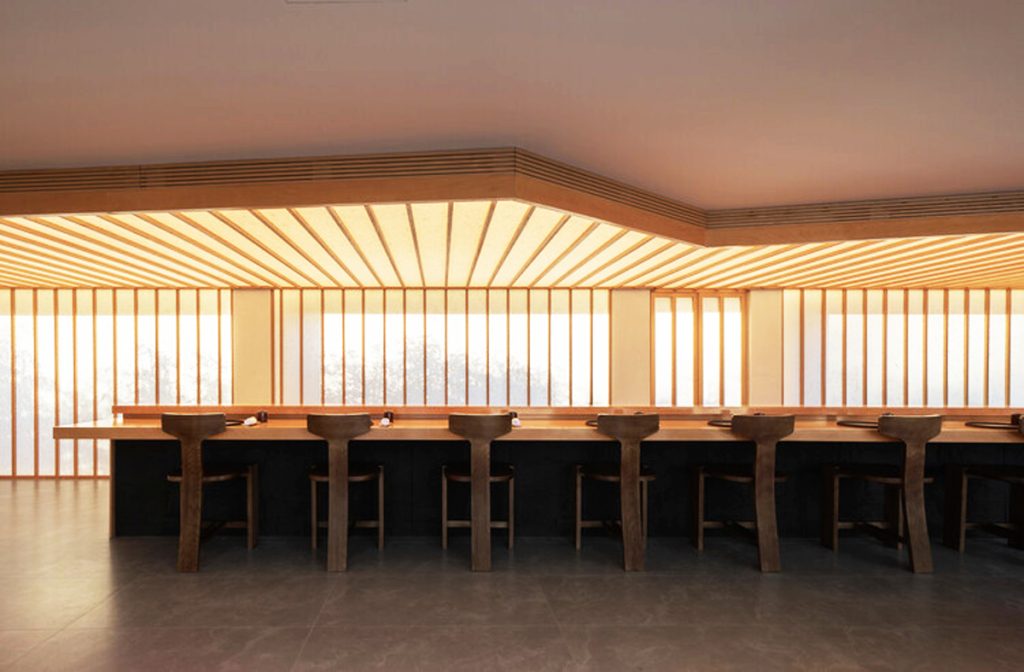
Practical challenges accompany the project’s poetic vision. Ensuring operational efficiency across a dispersed 50-room layout requires careful logistical planning. Balancing the rustic, relic-like aesthetic with luxury expectations is another consideration. The project also demands sensitive management of heritage context to avoid imitation or over-romanticization. Terrain and infrastructure costs may be higher due to its remote, low-density nature, making phased development critical to maintaining ambiance and operational viability.
Urban Impact & Legacy
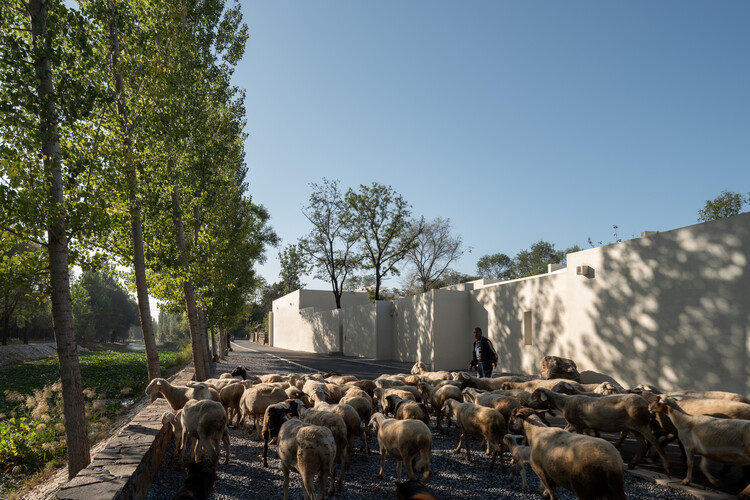
Though situated in a rural context, Hermit Resort contributes to a broader discussion on tourism infrastructure that respects heritage and nature. It sets a benchmark for how hospitality developments can respond to archaeological and cultural sites without overshadowing them. Over time, it may come to be regarded as a “future relic” — a built form whose architecture intentionally anticipates its own aging. The architects’ vision is for guests to “lose themselves in time through a primeval, rustic living experience,” creating an emotional connection between history, nature, and contemporary design.
Summary
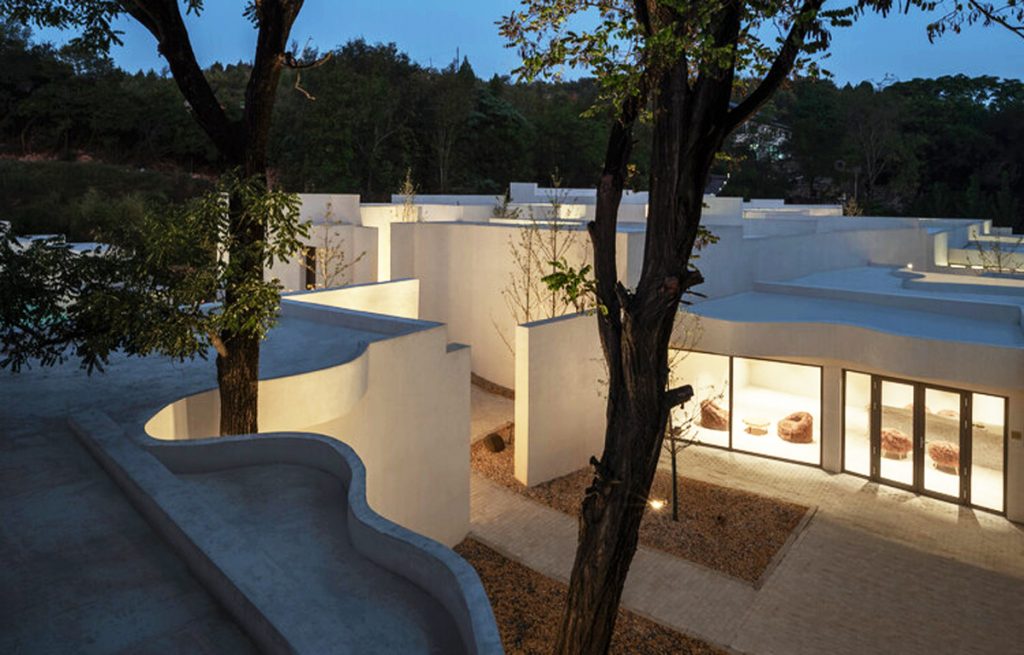
Hermit Resort by Domain Architects is an elegantly conceived hospitality project that redefines resort architecture through heritage integration, landscape harmony, and minimalist expression. Its clustered design of courtyards and pavilions creates immersive guest experiences anchored in both place and time. With strong sustainability and design credentials, it demonstrates how architecture can engage cultural memory while remaining relevant to modern travel. Hermit Resort stands as both a retreat and a reflection — a place where history and hospitality merge in enduring dialogue.
Project Facts & Figures
- Name: Hermit Resort
- Architect: Domain Architects (Lead: Xu Xiaomeng, Hannah Wang; Design Team: Yang Jie)
- Location: Hebei Province, China, adjacent to the Xing Kiln Ruins
- Site Area: Approximately 1,300 m²
- Completion Year: 2025
- Guest Rooms: 50, each with private courtyard
- Architectural Concept: Clustered single-storey buildings referencing the horseshoe-shaped kiln layout; merging interior, exterior, relic, and nature into a cohesive landscape