Rising on the banks of the Huangpu River in Shanghai’s emerging Expo Houtan district, the Shanghai Grand Opera House represents a compelling fusion of cultural vision, architectural ambition, and urban renewal. Designed to host everything from grand-scale Western and Chinese opera to experimental and youth-oriented performances, this landmark is set to become one of the city’s most dynamic public spaces — not only as a house for performance, but as a destination where architecture, landscape, and urban life converge.
Vision & Strategic Positioning
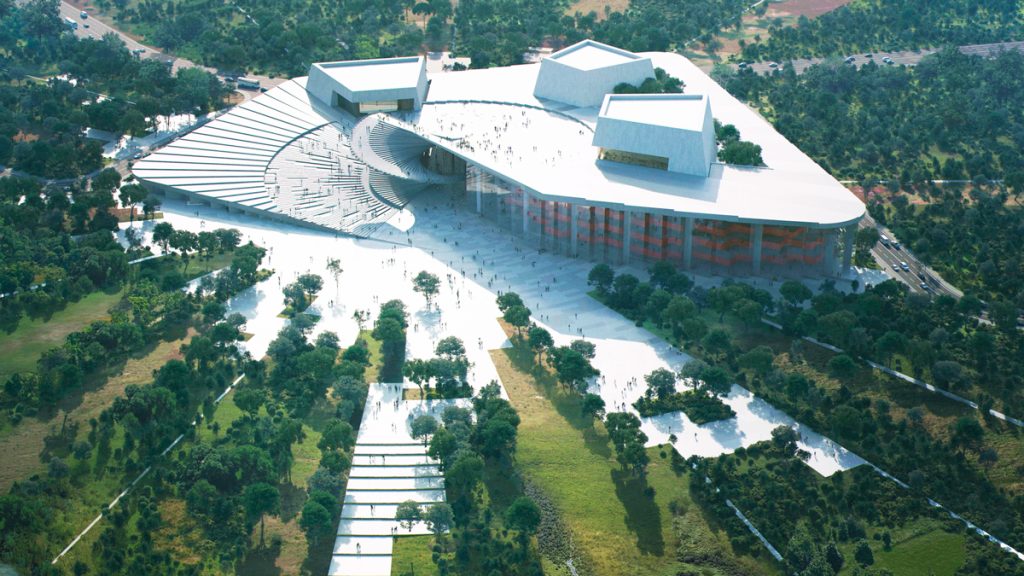
As Shanghai pursues ever-greater global cultural prominence, the Opera House plays a strategic role in elevating the city’s arts infrastructure and expanding its public realm. Positioned along a revitalised waterfront, it is conceived not simply as a venue but as a civic catalyst — connecting the riverfront to the city, engaging residents and visitors, and extending cultural access beyond traditional audiences.
Key objectives include:
- Establishing Shanghai as a premier international arts and performance hub
- Transforming the Expo Houtan area into a vibrant cultural corridor
- Expanding access to the performing arts through inclusive public spaces
- Strengthening Shanghai’s cultural diplomacy and global influence
Master Plan & Core Components

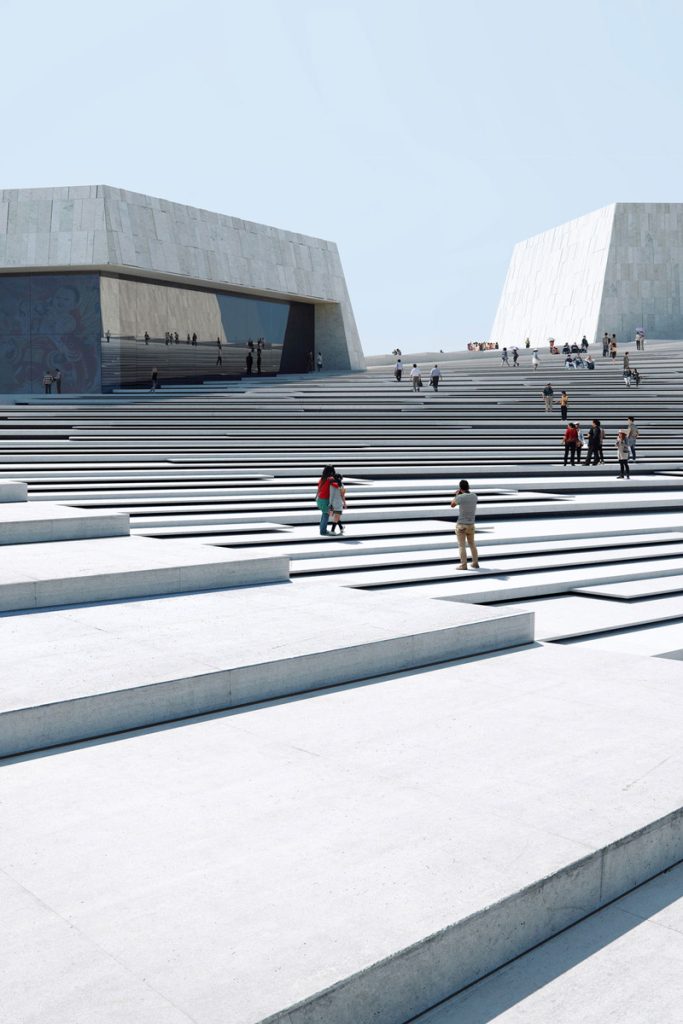
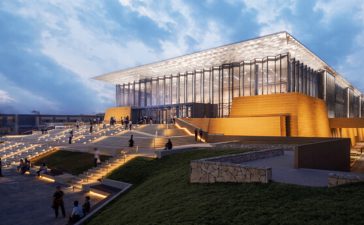
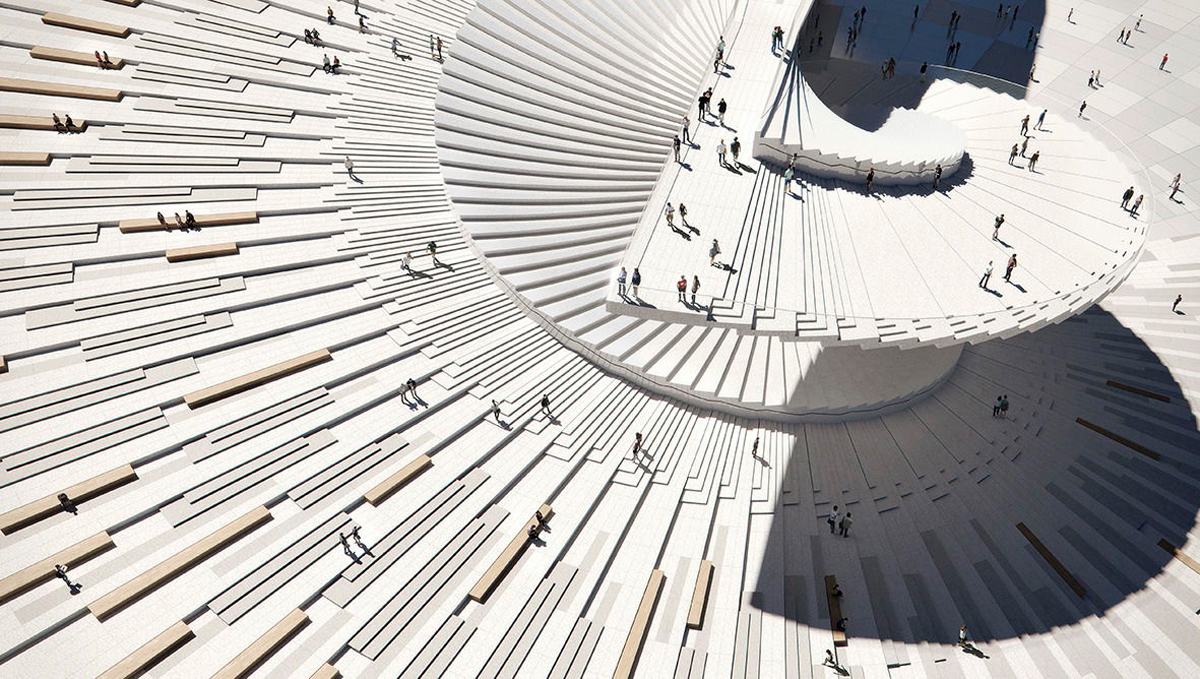
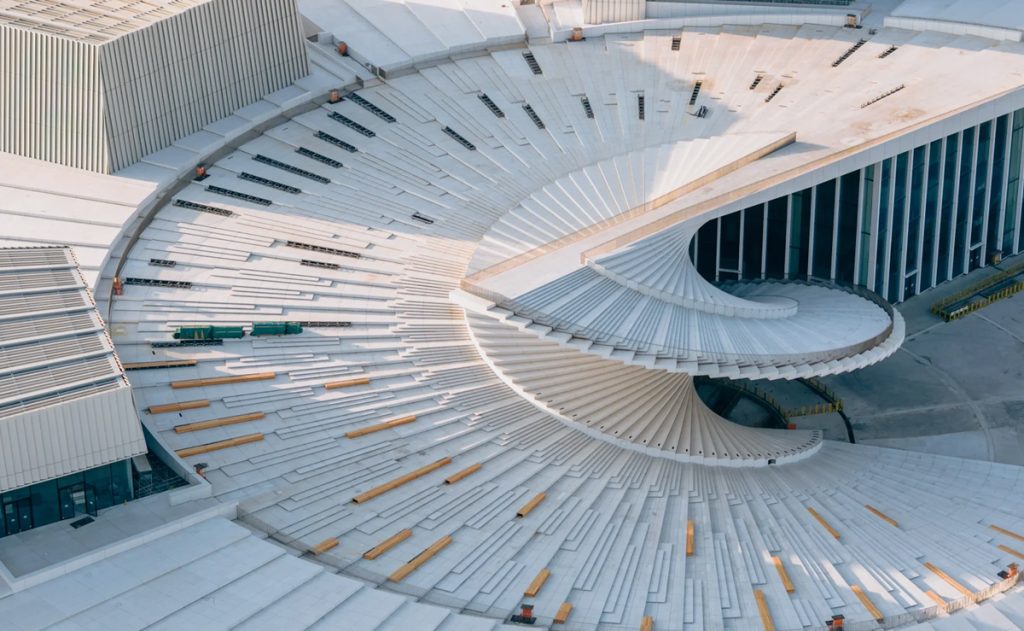
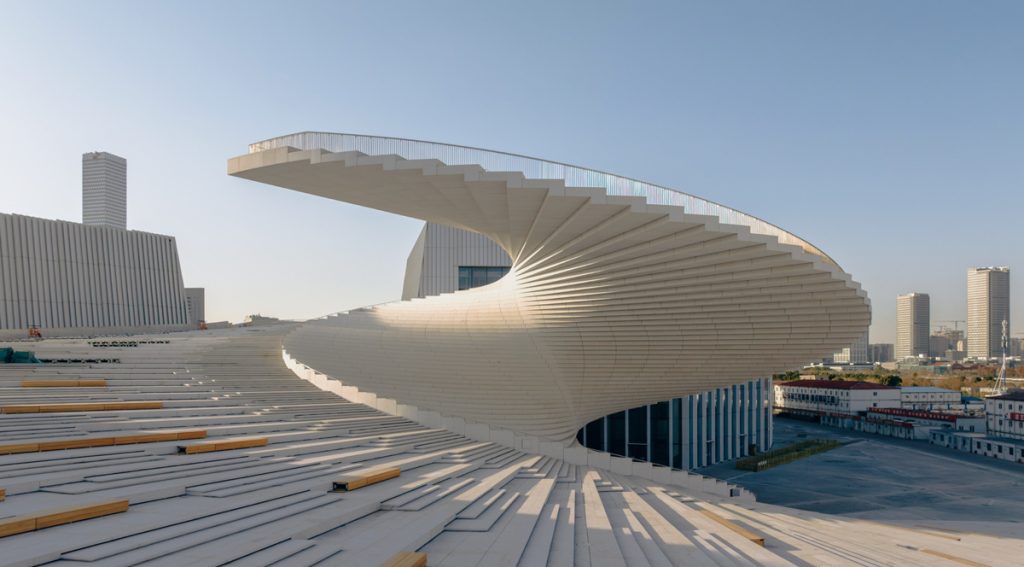
The Shanghai Grand Opera House anchors the master plan for the Expo Houtan waterfront and integrates multiple layers of program and public realm. The building features a sweeping fan-like roof form that unfolds into an external spiralling staircase and rooftop terrace, linking ground level, plaza, and skyline. Internally, three principal performance spaces of approximately 2,000, 1,200, and 1,000 seats accommodate a wide spectrum of productions — from grand Western opera and Chinese traditional works to more intimate or experimental offerings.
The design is led by Snøhetta in collaboration with East China Architectural Design & Research Institute (ECADI). Key project partners include Nagata Acoustics and Theatre Projects, ensuring world-class sound and performance design integration. Together, the team delivers a cohesive approach across architecture, landscape, interior, and brand identity.

Main design features:
- Three world-class performance halls with advanced acoustics
- Rooftop terrace and spiralling public staircase for city views
- Integrated plaza and riverside promenade
- Sustainable, daylight-driven façade and public-access spaces
Development & Investment Potential
From a development standpoint, the Opera House signals renewed investment in the Expo Houtan area, transforming a former World-Expo zone into a cultural corridor. Its construction triggers ancillary development — restaurants, galleries, retail, and hospitality — which in turn elevate the land value and activate the waterfront precinct.

Investment highlights:
- Stimulates local economic growth and real estate value
- Anchors mixed-use developments in the surrounding area
- Creates ongoing revenue through cultural tourism and events
- Reinforces Shanghai’s identity as a modern global metropolis
Sustainability & Innovation
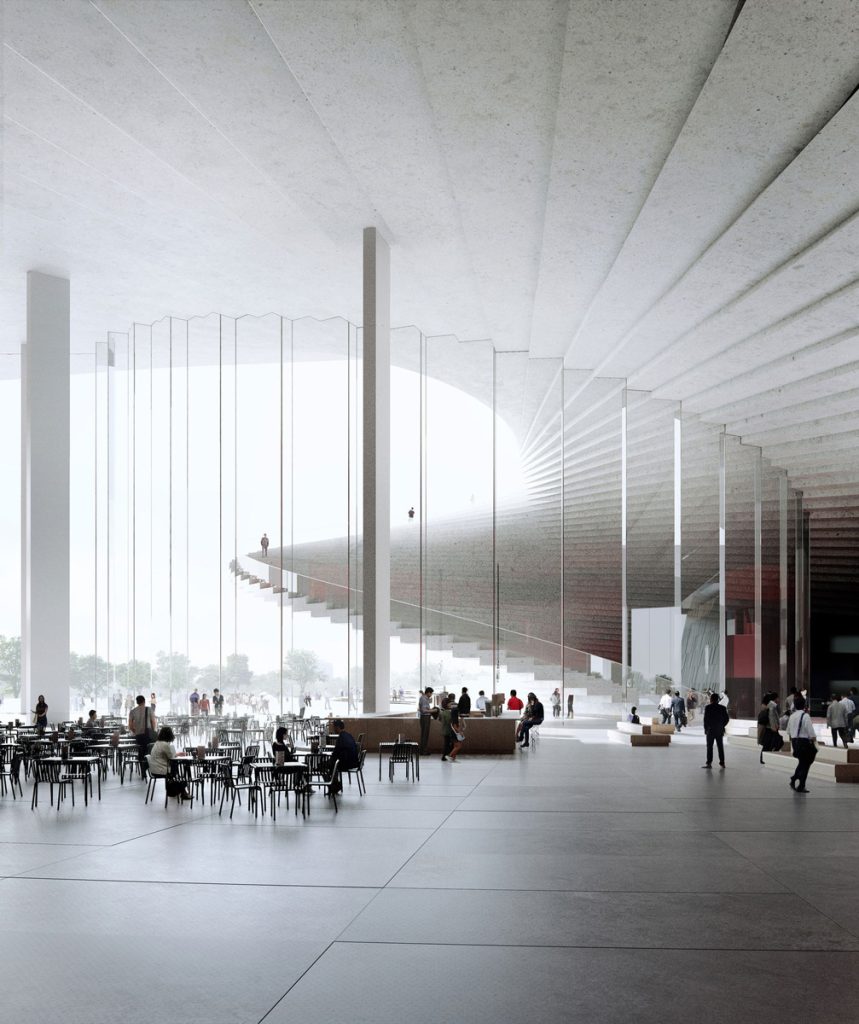
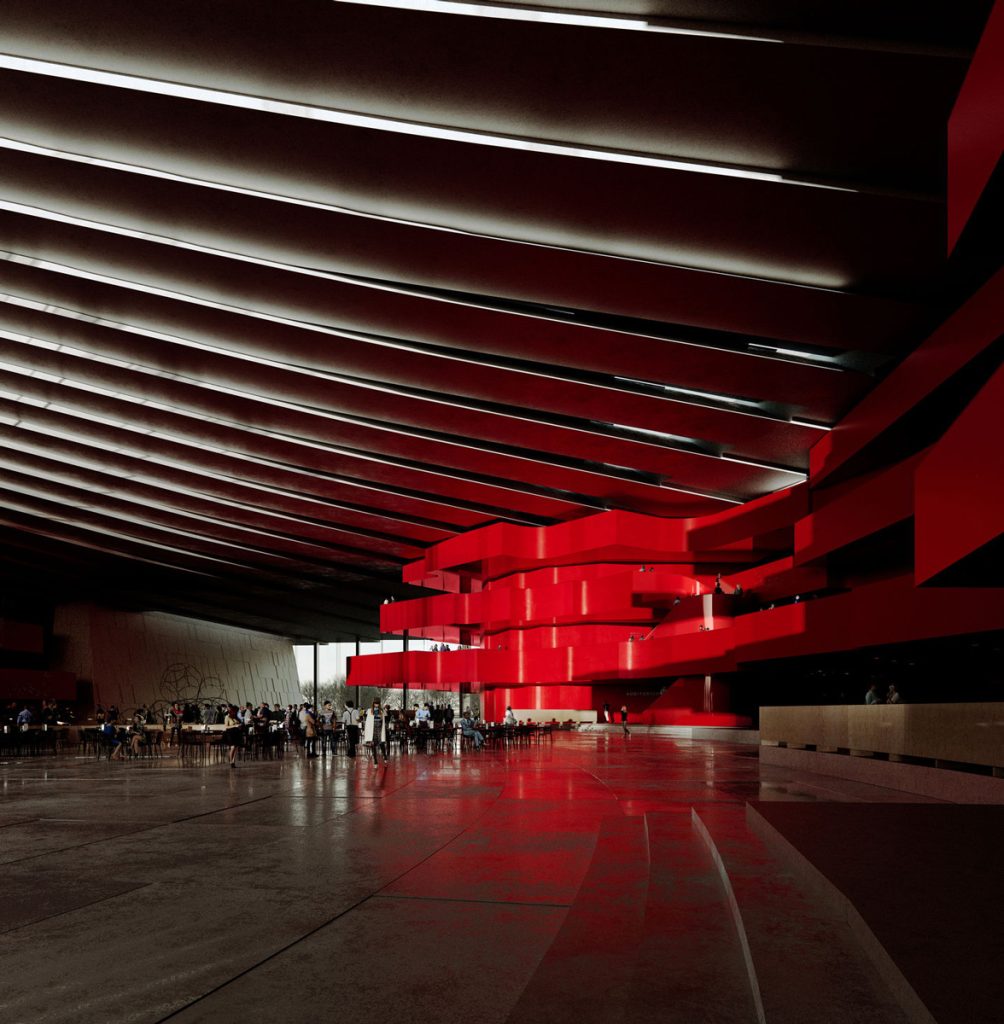
Sustainability and public access are central to the Opera House’s concept. The building envelope harnesses daylight through expansive glazing, while the external terraces and rooftop are open to the public year-round. The structural form — a composite steel-and-concrete roof system — supports large cantilevers and a dynamic staircase, showcasing engineering precision.
Innovative features:
- Natural ventilation and daylight optimization
- Publicly accessible rooftop park and observation areas
- Multi-functional cultural spaces beyond performance halls
- Energy-efficient façade and advanced building systems
Challenges & Considerations
Delivering a project of this scale and complexity presents several challenges:
- Engineering precision for the massive spiral roof and open terraces
- Achieving acoustic excellence across multiple auditoria
- Balancing public access with operational efficiency
- Maintaining high year-round utilisation and cultural diversity
Ensuring long-term vibrancy will depend on programming that embraces both blockbuster performances and community events, fostering an open, inclusive cultural ecosystem.
Urban Impact & Legacy
When complete, the Shanghai Grand Opera House will redefine Shanghai’s waterfront skyline and cultural identity. Its rooftop terrace and external stairways invite interaction, symbolizing the connection between art, architecture, and the city itself.
Legacy outcomes:
- A new civic landmark bridging art and public life
- Enhanced accessibility to cultural experiences for residents
- Strengthened position of Shanghai as Asia’s cultural capital
- Model for future urban cultural infrastructure in China
Summary
The Shanghai Grand Opera House is more than a performance venue — it is a transformative civic landmark that merges innovation, inclusivity, and architectural expression. From its fan-inspired silhouette to its integrated cultural ecosystem, the project embodies Shanghai’s evolution into a global arts powerhouse and urban model for the future.
Project Facts & Figures
- Location: Expo Houtan waterfront, Shanghai, China
- Architects & Partners: Snøhetta, ECADI, Nagata Acoustics, Theatre Projects
- Gross Floor Area: Approx. 134,000 m²
- Seating Capacities: 2,000 (main), 1,200 (second), 1,000 (third)
- Completion Target: Late 2025
- Site Features: Rooftop terrace, public staircase, waterfront promenade, integrated landscaping