
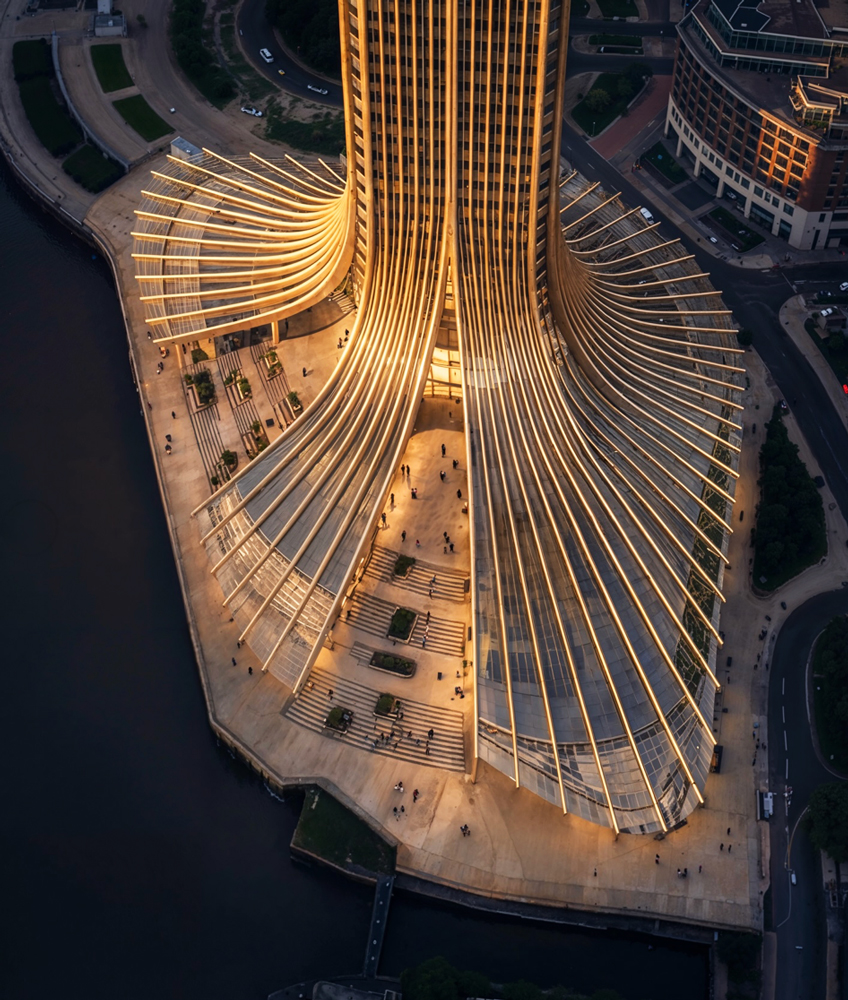
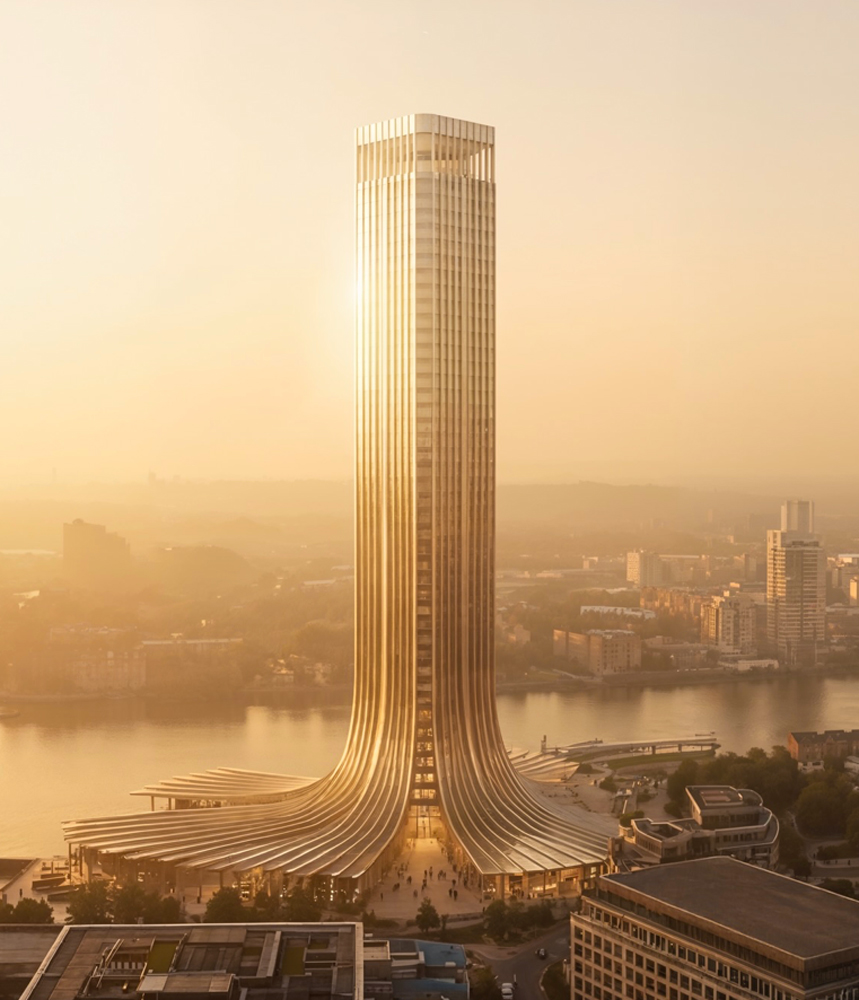
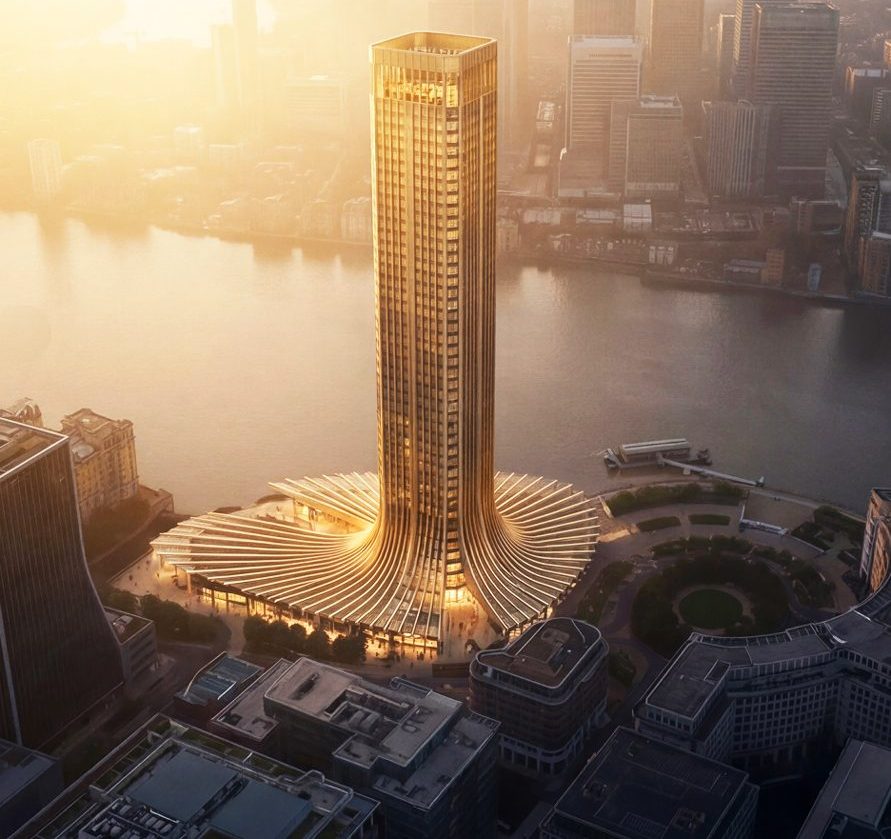
Rising above London’s evolving skyline, The Crownline Tower signals a new era in architecture—one where artificial intelligence and human creativity intersect. Unveiled in 2025/2026 and developed by Studio Tim Fu, the 45-floor mixed-use office tower and retail podium represents a bold exploration of AI-assisted design within one of the world’s most historic urban environments. Positioned as both a commercial landmark and technological statement, the project captures London’s ambition to remain at the forefront of global design innovation.
Vision & Strategic Positioning
The Crownline Tower reflects London’s dual identity: a heritage capital with a future-focused financial core. Key strategic objectives include:
- Reinforcing London’s role as a global business hub post-pandemic.
- Demonstrating the viability of AI-driven architectural workflows.
- Delivering premium Grade A office space tailored to next-generation tenants.
- Activating the public realm through a dynamic retail podium.
By integrating AI tools into concept development, massing studies, and façade articulation, the project positions itself as a test case for computationally optimized urban towers. The ambition is not simply to build taller—but to build smarter.
Master Plan & Core Components
The Crownline Tower is conceived as a vertically integrated mixed-use development combining premium commercial offices with a publicly accessible retail base.
Core Components:
- 45-storey office tower offering flexible, high-performance workspace.
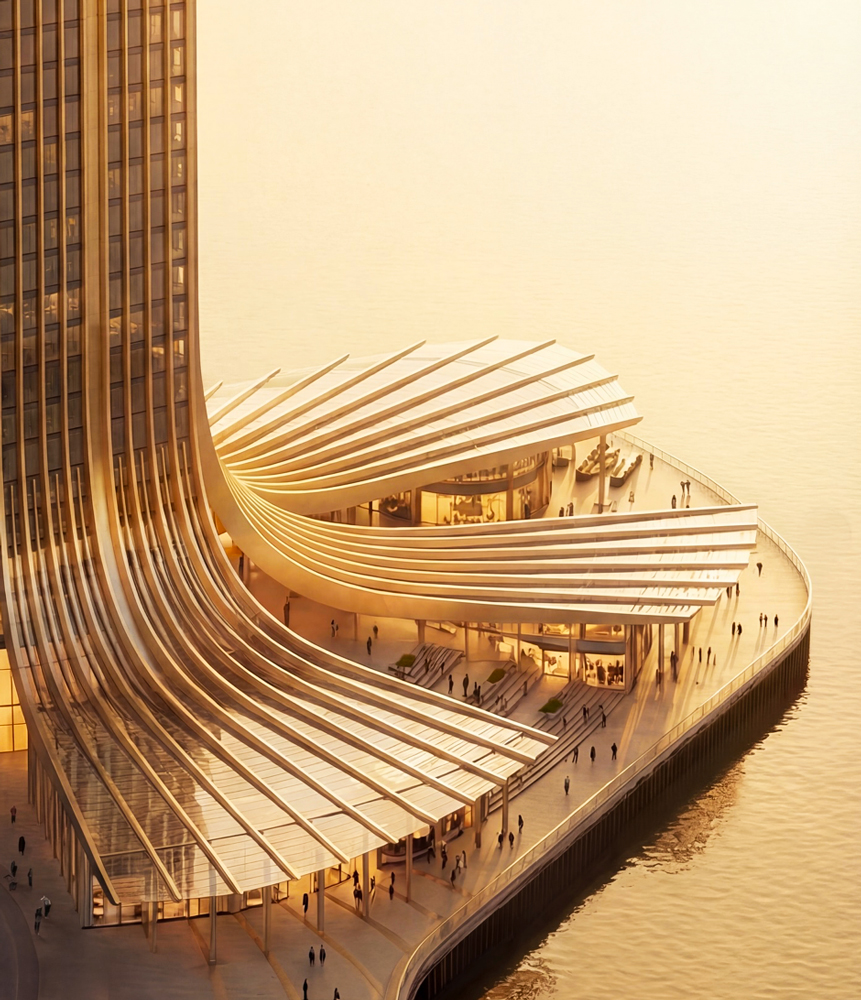
- Retail podium at ground and lower levels, designed to animate the street edge.
- Public realm enhancements, including improved pedestrian connectivity.
- High-efficiency building systems optimized through AI-assisted modeling.
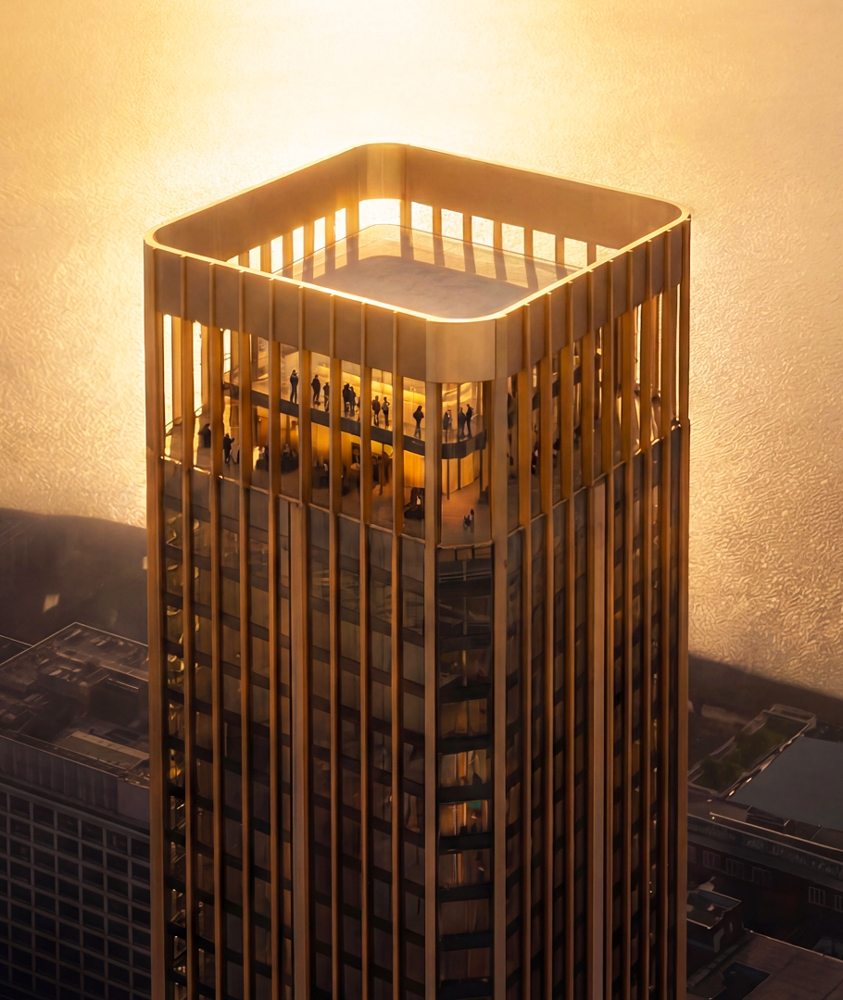
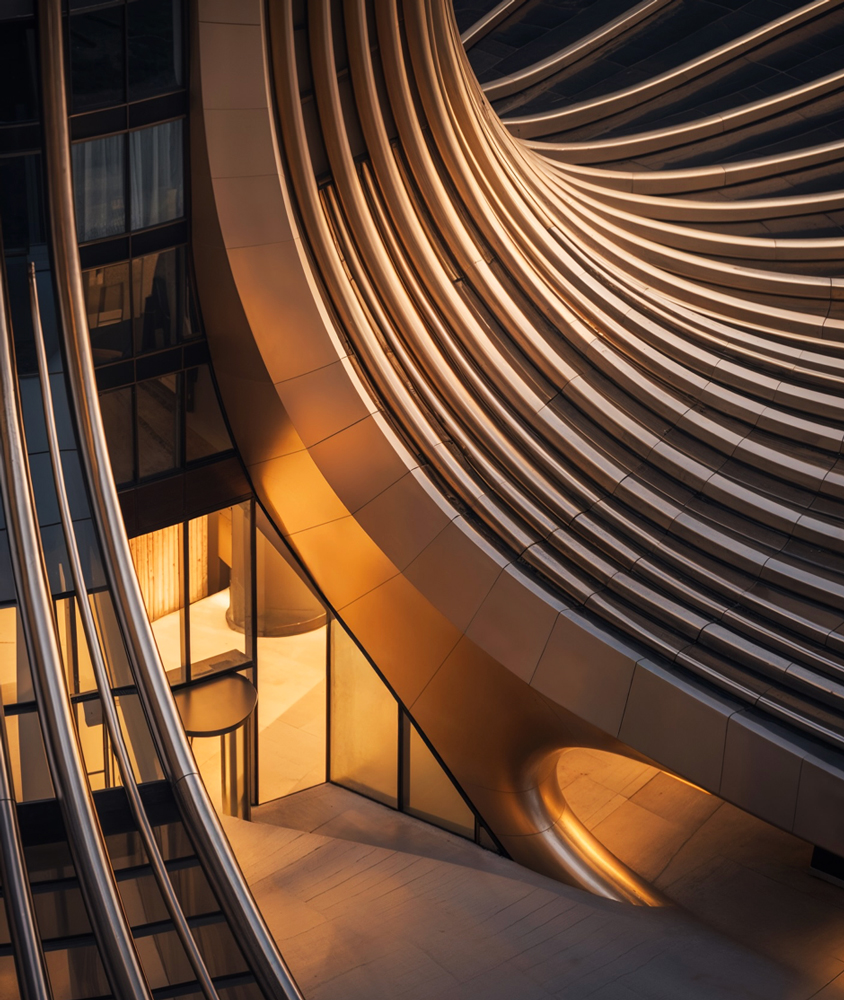
Developed by Studio Tim Fu, the project showcases the firm’s computational design expertise. Studio Tim Fu is known for leveraging advanced parametric and AI tools to generate performance-driven forms while maintaining architectural elegance. The Crownline Tower’s sculpted façade and crown geometry were refined through algorithmic simulations analyzing daylight, wind flow, and energy performance—illustrating a hybrid design process that merges machine intelligence with architectural authorship.
Development & Investment Potential
London remains one of the world’s most resilient office markets, supported by its legal framework, financial ecosystem, and global tenant base. The Crownline Tower aims to attract:
- Financial services firms
- Technology companies
- AI and data-driven enterprises
- Flexible workspace operators
The inclusion of a retail podium enhances long-term asset value by diversifying revenue streams and strengthening placemaking appeal. As corporations increasingly prioritize smart infrastructure and ESG compliance, AI-optimized buildings such as Crownline may command a premium in both leasing and institutional investment markets.
Sustainability & Innovation
Sustainability is embedded into the tower’s computational DNA. AI-assisted modeling informed decisions related to:
- Façade shading and solar gain reduction
- Structural material optimization
- Energy-efficient mechanical systems
- Spatial efficiency and daylight maximization
The project demonstrates how algorithmic design can reduce embodied carbon and operational energy loads without compromising aesthetic ambition. The façade’s geometry is not decorative—it is performance-driven.
Beyond sustainability, the tower serves as a proof-of-concept for AI as a collaborative design partner. Rather than replacing architects, the system expands design possibilities, accelerating iterations while improving environmental metrics.
Challenges & Considerations
As with any landmark development in London, regulatory and contextual constraints present complexity. Considerations include:
- Heritage sensitivity within London’s protected view corridors
- Planning approval processes
- Market competition within the premium office sector
- Public perception of AI-generated architecture
Balancing technological experimentation with civic responsibility remains essential. The project must integrate seamlessly into London’s historic urban fabric while asserting a contemporary identity.
Urban Impact & Legacy
The Crownline Tower contributes to London’s ongoing architectural evolution. Alongside icons such as The Shard and the 30 St Mary Axe(widely known as The Gherkin) it distinguishes itself through its computational origin story. Its legacy may extend beyond its physical presence. If successful, it could:
- Accelerate AI adoption across global architectural practices
- Influence regulatory frameworks for digital design tools
- Redefine how performance and aesthetics are reconciled
In this sense, the tower is as much a technological milestone as it is a real estate asset.
The Crownline Tower encapsulates London’s forward-looking ethos—merging commerce, innovation, and architectural experimentation. As AI continues to permeate the built environment, projects like this illustrate how cities can embrace emerging technologies while preserving their global stature.
Project Facts & Figures
- Project Name: The Crownline Tower
- Location: London, United Kingdom
- Height: 45 storeys
- Use: Mixed-use (Office + Retail Podium)
- Developer / Architect: Studio Tim Fu
- Unveiled: 2025/2026
- Design Approach: AI-assisted computational architecture
- Target Tenants: Financial, technology, and innovation sectors