The China-Singapore Tianjin Eco-City (TEC) is a landmark urban development initiative located in the Binhai New Area of Tianjin, about 40 km from the city centre and roughly 150 km from Beijing. Launched in 2007 as a bilateral project between China and Singapore, the Eco-City sets out to be a model of sustainable urbanisation—socially harmonious, environmentally-friendly, and resource-efficient.
Covering approximately 30 km², the development aims to accommodate up to 350,000 residents and deliver integrated business, residential, and recreational uses on formerly non-arable, saline-alkali land.
Vision & Strategic Positioning
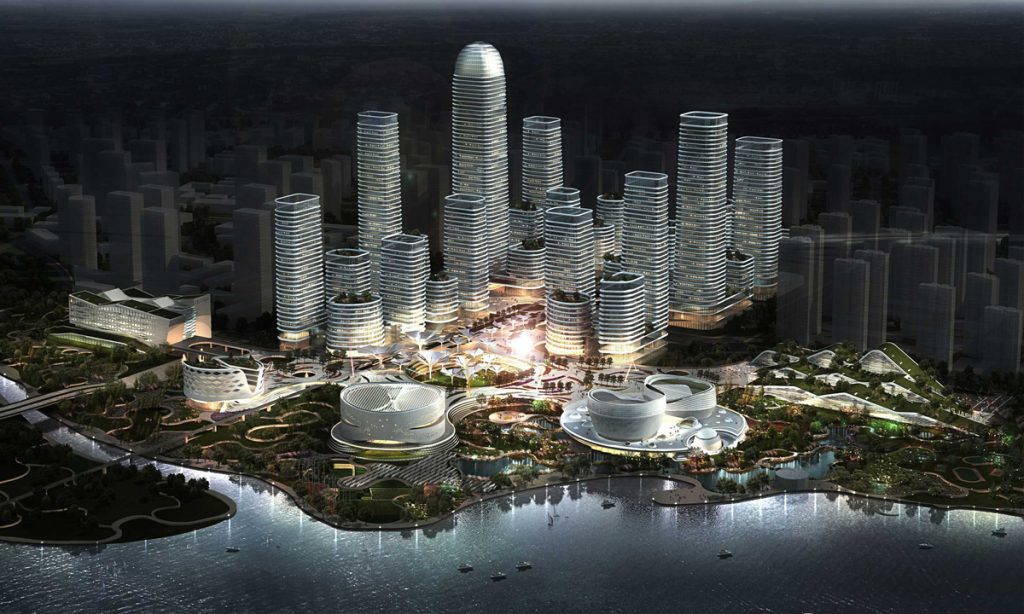
The project is anchored on the “Three Harmonies” (social harmony, economic vibrancy, environmental sustainability) and the “Three Abilities” (practicable, replicable, scalable), reflecting the ambition for a development that is both sustainable and commercially viable.
Strategically, the Eco-City aligns with China’s national agenda for greener urbanisation and low-carbon growth, while leveraging Singapore’s planning and environmental expertise. In 2024, it was officially designated a national demonstration zone for green development through 2035, further solidifying its role as a global sustainability benchmark.
Master Plan & Core Components
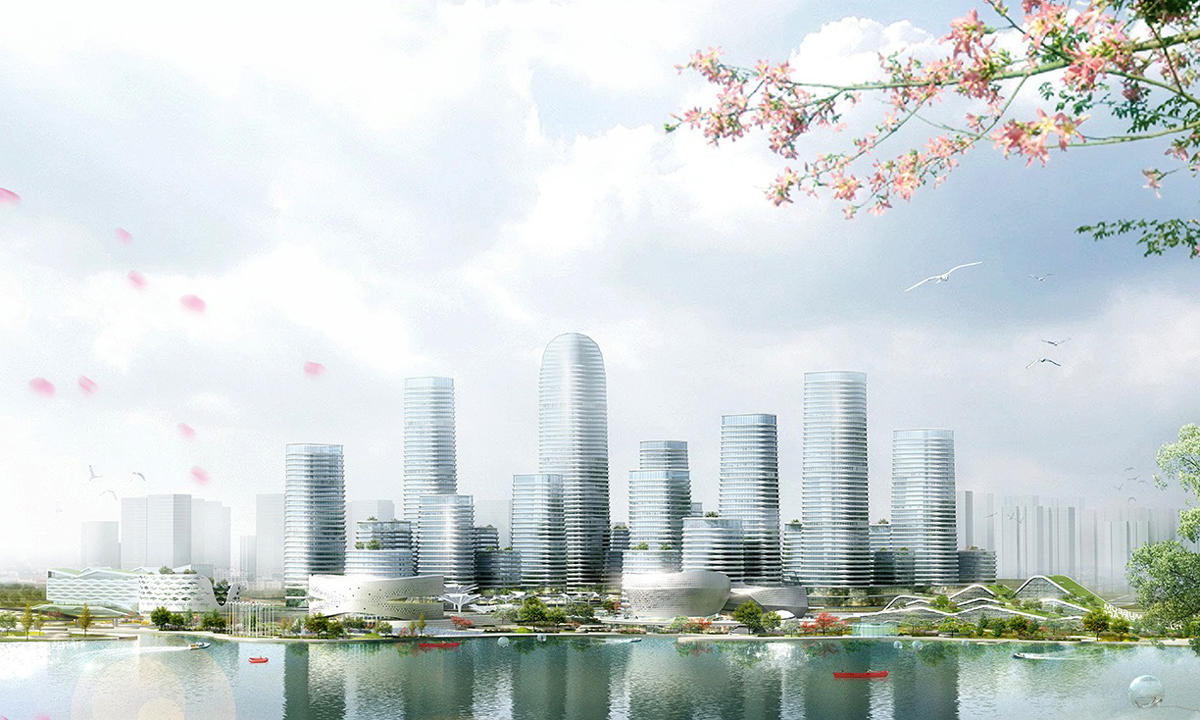
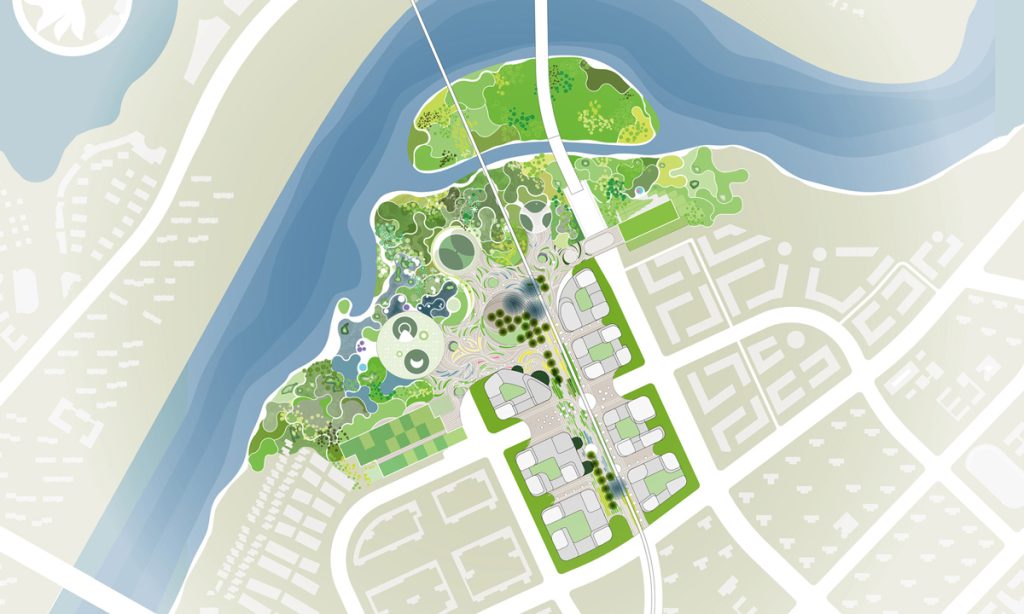
The Master Plan follows a compact, mixed-use structure organised around green and blue ecological networks, pedestrian-friendly mobility, and well-defined urban districts.
Key components include:

- A “1 Axis, 3 Centres, 4 Districts” framework centred on an Eco-Valley axis linking residential and commercial hubs.
- Integrated green and blue systems—wetlands, water recycling, and ecological corridors—to restore the area’s saline-alkali landscape.
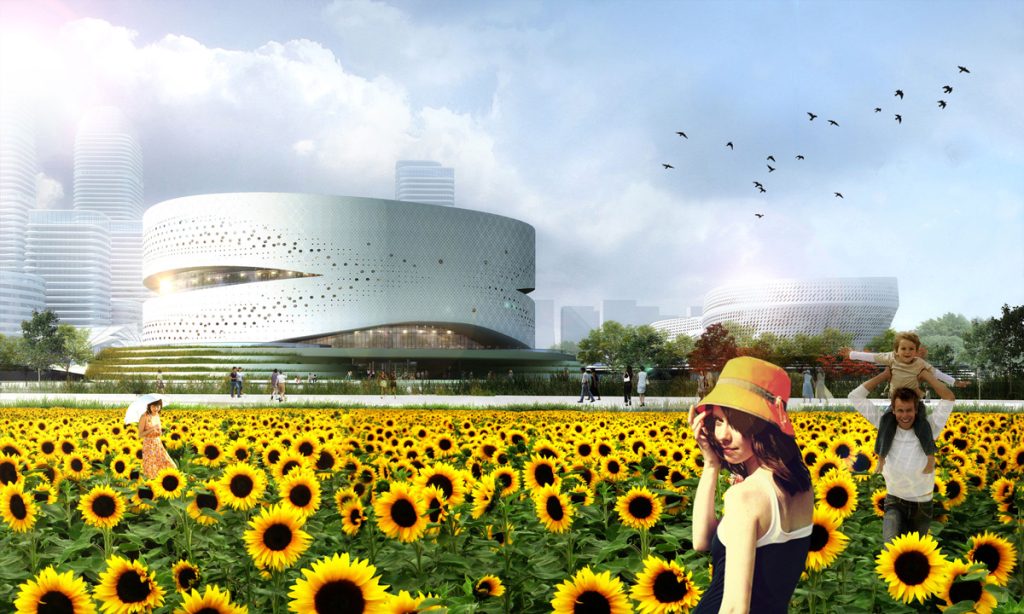
- A Central District serving as the mixed-use core for business, retail, culture, and housing, with architecture led by DP Architects and Surbana Jurong.
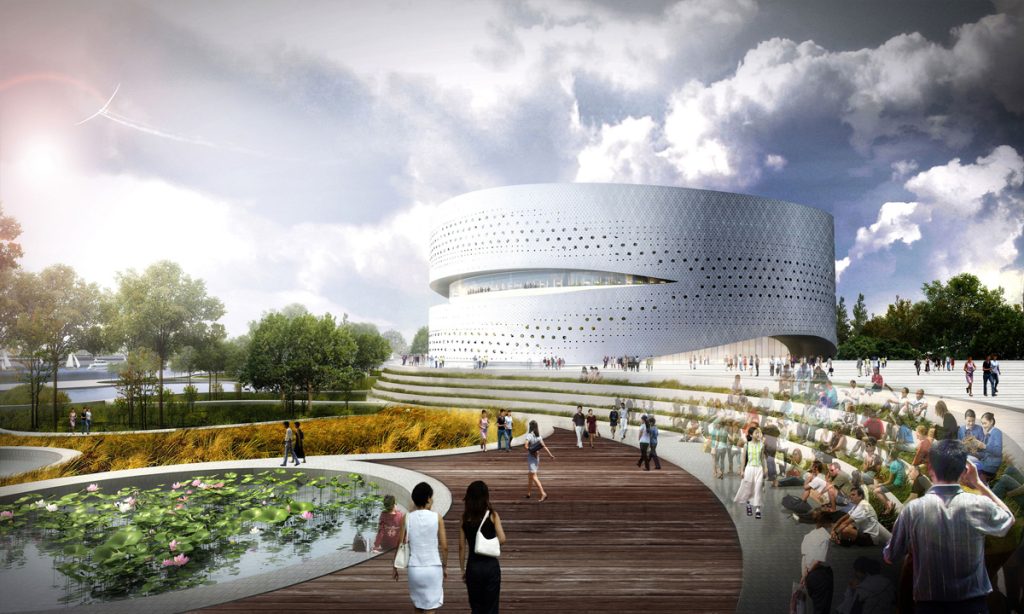
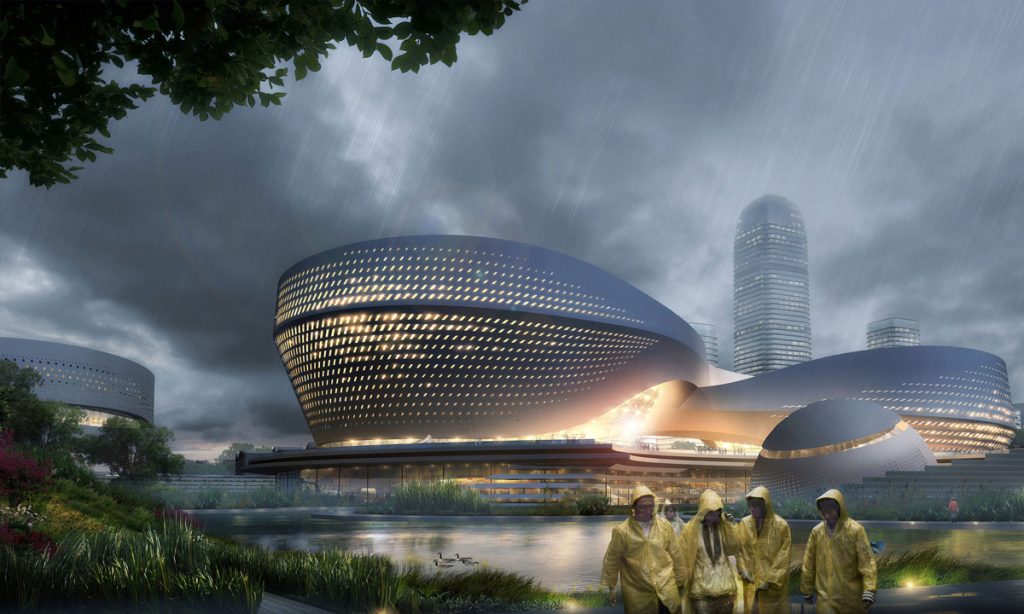
Developers, architects, planners & key partners:
The project is led by the Sino-Singapore Tianjin Eco-City Investment & Development Co. Ltd. (SSTEC), a joint venture between the two nations. Key collaborators include Surbana Jurong, DP Architects, and several infrastructure and smart-technology partners from both countries.
Development & Investment Potential
The Eco-City represents a pioneering platform for green industries, clean technology, and smart-urban infrastructure. Investment opportunities span renewable energy, eco-manufacturing, smart-mobility systems, and environmental services.
SSTEC has introduced innovative financing mechanisms, including international bonds for sustainable urban projects. The 2024-2035 roadmap envisions a world-class business environment focused on high-value industries and globally recognised green-performance indicators by 2035.
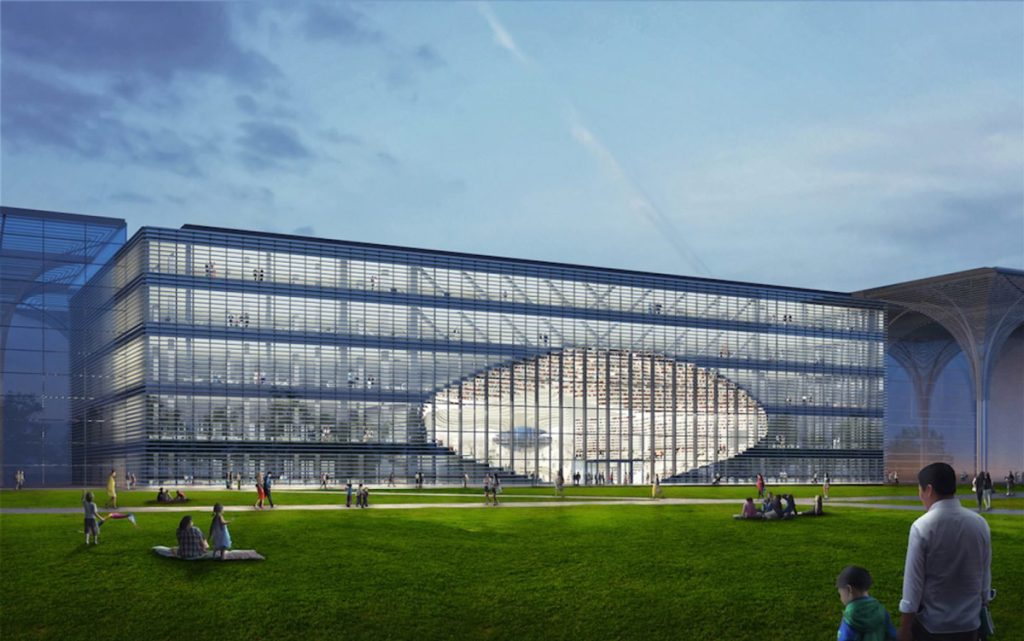

Sustainability & Innovation
Sustainability lies at the heart of the Eco-City’s framework, with strict KPIs on air and water quality, waste recycling, energy efficiency, and biodiversity.
Innovation is driven by a “smart-eco” approach combining digital governance, clean-energy systems, and data-driven operations. The Eco-City integrates smart-mobility networks, desalination and wastewater reuse, green architecture, and advanced building-energy management, all guided by the principle of being practical, replicable, and scalable.
Challenges & Considerations
While widely celebrated, the Eco-City has faced challenges including slower-than-expected population growth and the need for stronger community integration. Aligning economic growth with environmental and social targets has required adaptive governance and continuous public-private collaboration.
Balancing investment momentum with liveability remains key to maintaining the Eco-City’s long-term appeal.
Urban Impact & Legacy
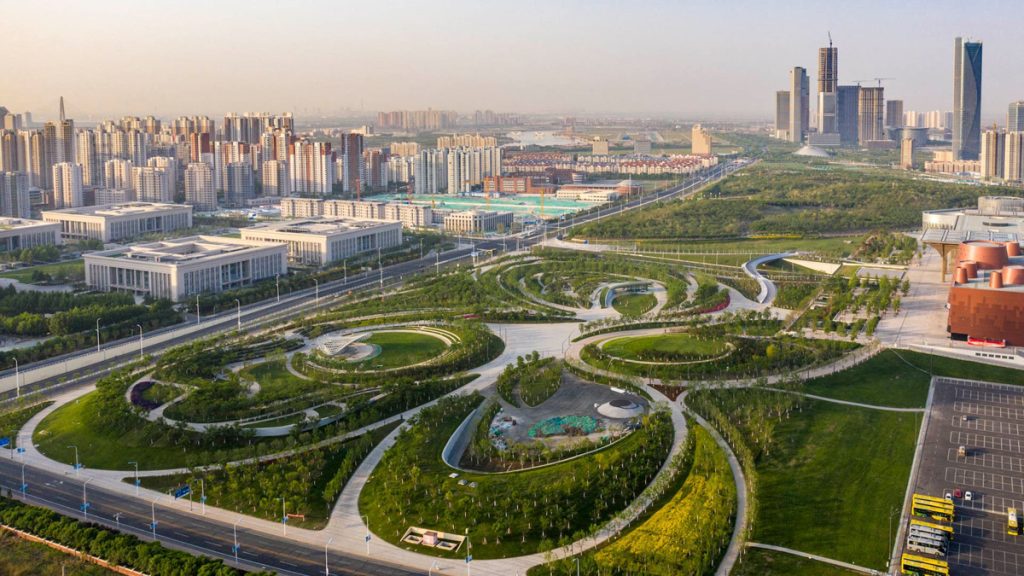
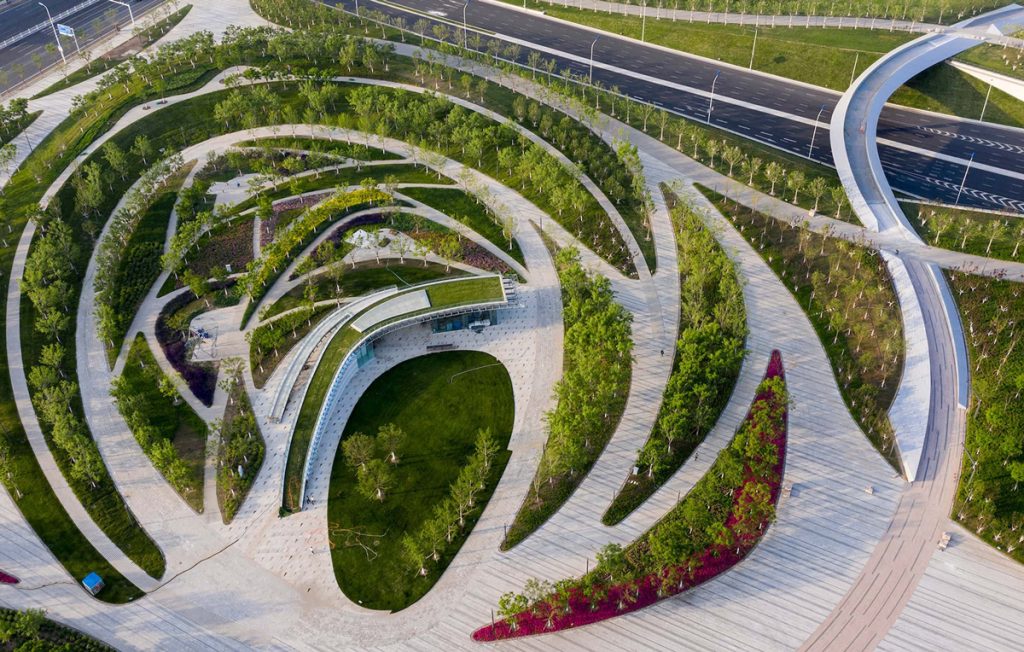
The Tianjin Eco-City stands as a prototype for sustainable urbanisation—its model and metrics replicated across other Chinese and international projects.
Beyond its own footprint, it fosters cross-border collaboration in green technology, AI, and smart-city solutions, showcasing the value of bilateral innovation. As Binhai continues to evolve, the Eco-City anchors a new generation of low-carbon, high-quality urban growth that contributes to the Bohai Rim’s economic and ecological balance.
Summary
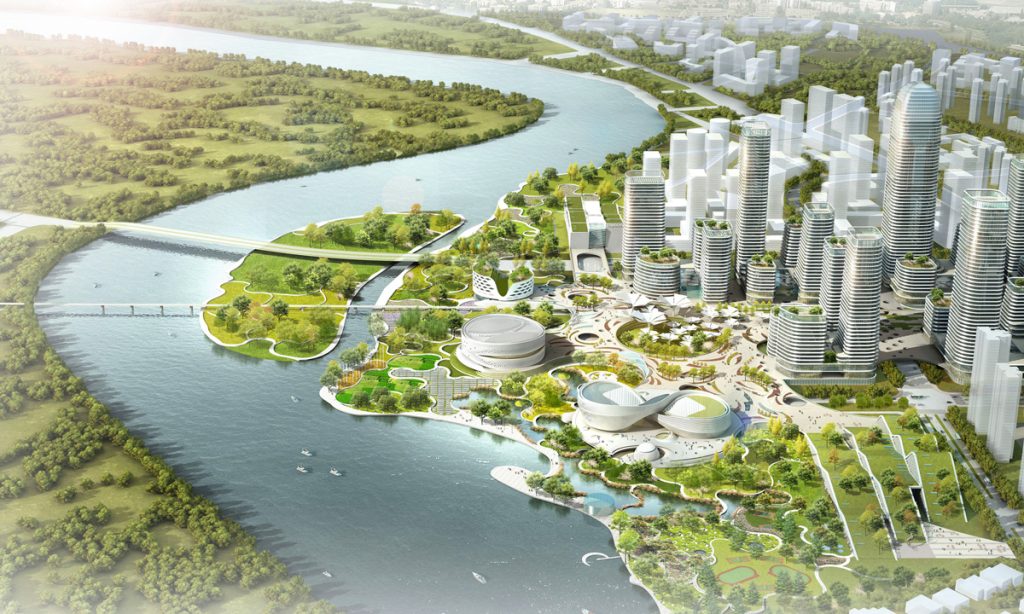
The China-Singapore Tianjin Eco-City is both an experiment and a promise: a future-ready model of sustainable living. With a strong vision, a resilient master plan, and a global outlook, it embodies the next phase of urban development—where technology, ecology, and human wellbeing converge. Its legacy lies not just in its skyline, but in its replicable blueprint for greener cities worldwide.
Project Facts & Figures
- Location: Binhai New Area, Tianjin, China
- Site Area: ≈ 30 km²
- Target Population: Up to 350,000 residents
- Launch Year: 2007
- Lead Developer: Sino-Singapore Tianjin Eco-City Investment & Development Co., Ltd. (SSTEC)
- Design Partners: Surbana Jurong, DP Architects
- Objective (2024-2035): Develop a world-class demonstration zone for sustainable, low-carbon urban living.