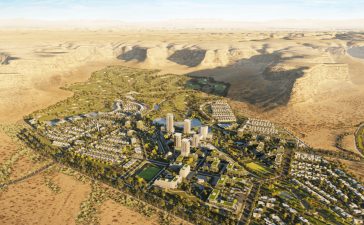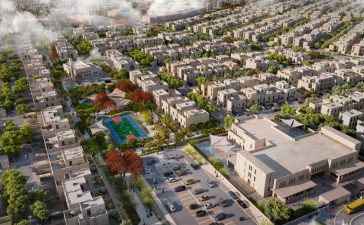
NEOM is the audacious megacity project launched by Mohammed bin Salman in 2017 in northwest Saudi Arabia, designed to redefine urban life for the 21st century. Spanning approximately 26,500 km², it embodies a vision of sustainability, advanced technology, and innovative design that aims to transform how humans live, work, and interact. Positioned along the Red Sea and at the crossroads of three continents, NEOM stands as the flagship of Saudi Vision 2030—symbolizing the Kingdom’s ambition to diversify its economy, attract global talent, and establish itself as a leader in future-oriented development.
Vision & Strategic Positioning
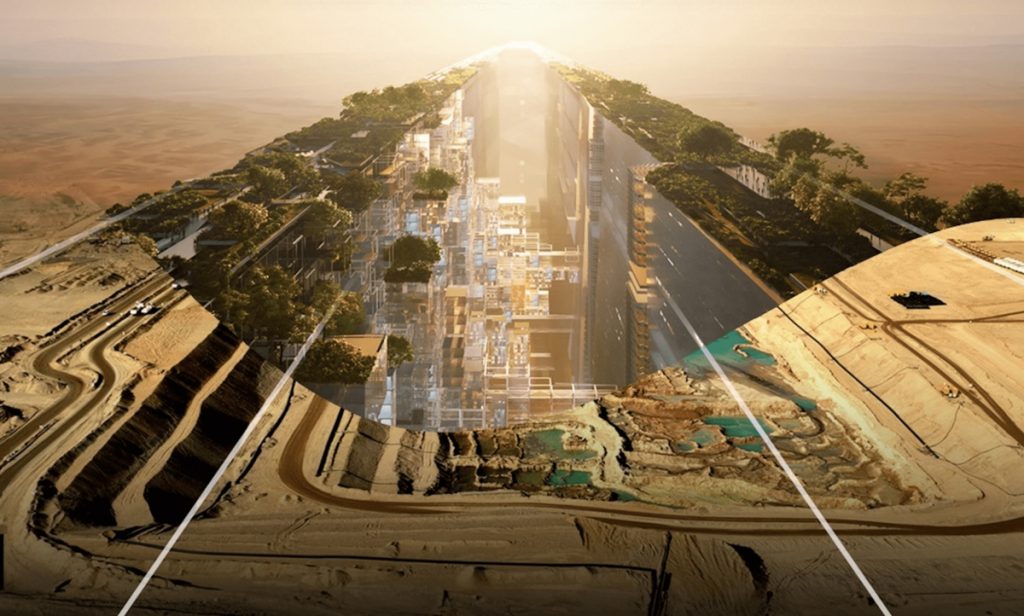
NEOM’s guiding principle, “Made to Change,” captures its commitment to creating a new model for sustainable, human-centric living. The city’s strategy is built upon four pillars:
- Economic diversification – Transitioning Saudi Arabia away from oil dependence toward sectors like technology, tourism, manufacturing, and innovation.
- Global attraction – Establishing NEOM as a destination for investors, entrepreneurs, and visitors from around the world.
- Sustainability at scale – Achieving net-zero carbon, renewable energy supply, and circular economy practices while preserving natural ecosystems.
- Geographic advantage – Situated strategically near the Gulf of Aqaba and the Red Sea, connecting Asia, Africa, and Europe through trade and innovation.
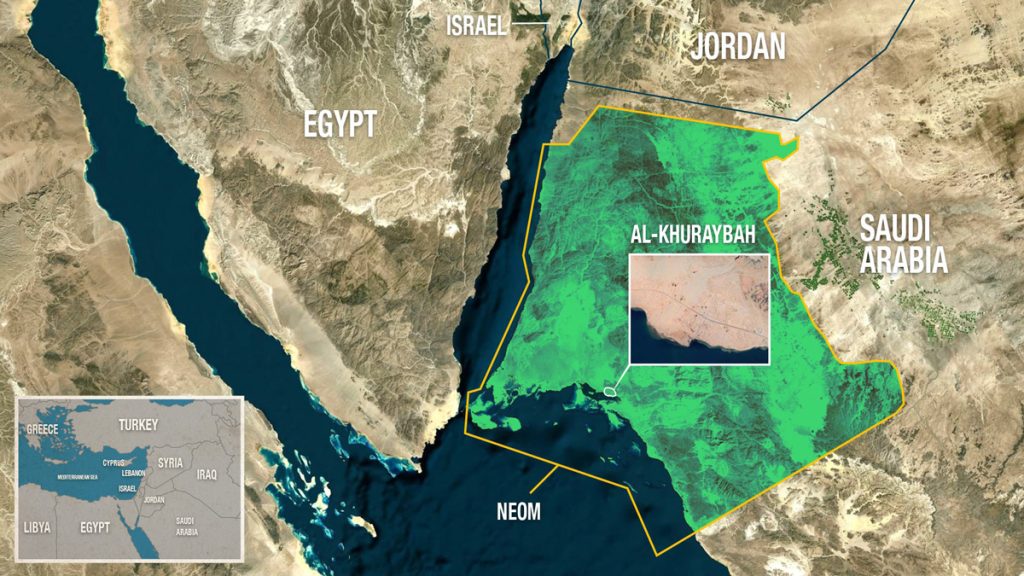
In essence, NEOM is envisioned not just as a city but as a bold reimagining of civilization itself—where innovation meets ecology and progress harmonizes with nature.
Master Plan & Core Components
The NEOM master plan is structured around a network of interlinked regions, each designed for a specific purpose—urban living, industry, tourism, and research. The project is led and financed by the Public Investment Fund (PIF), in collaboration with global developers, architects, and infrastructure specialists.
Key components include:
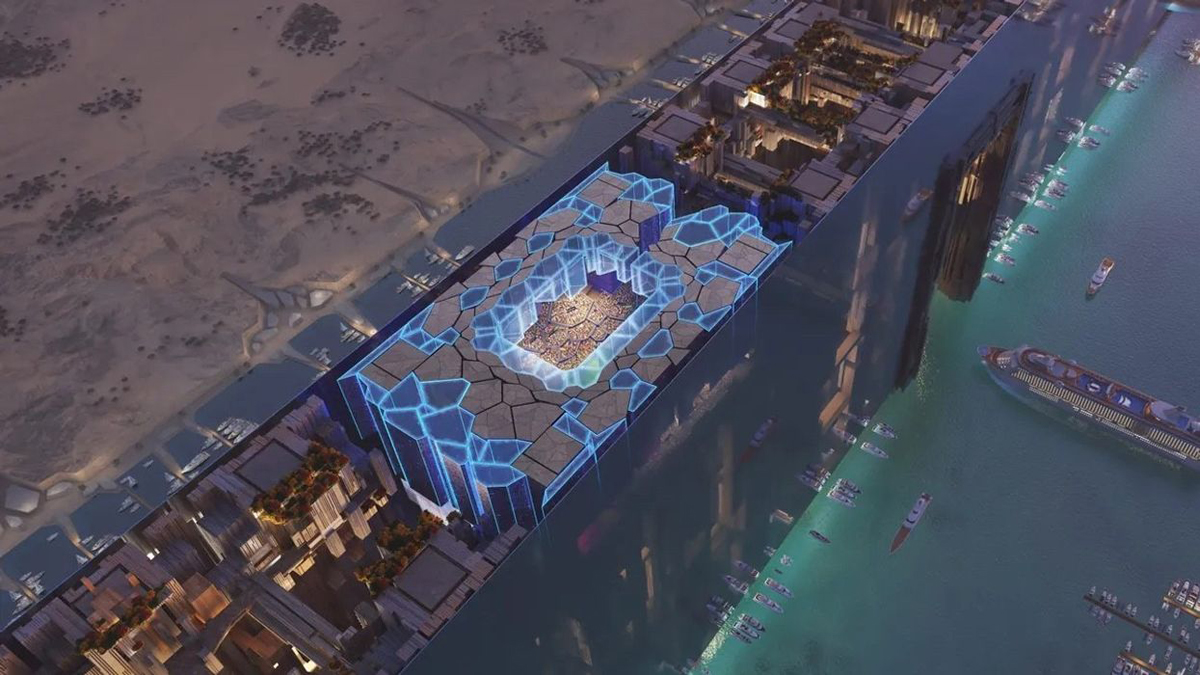
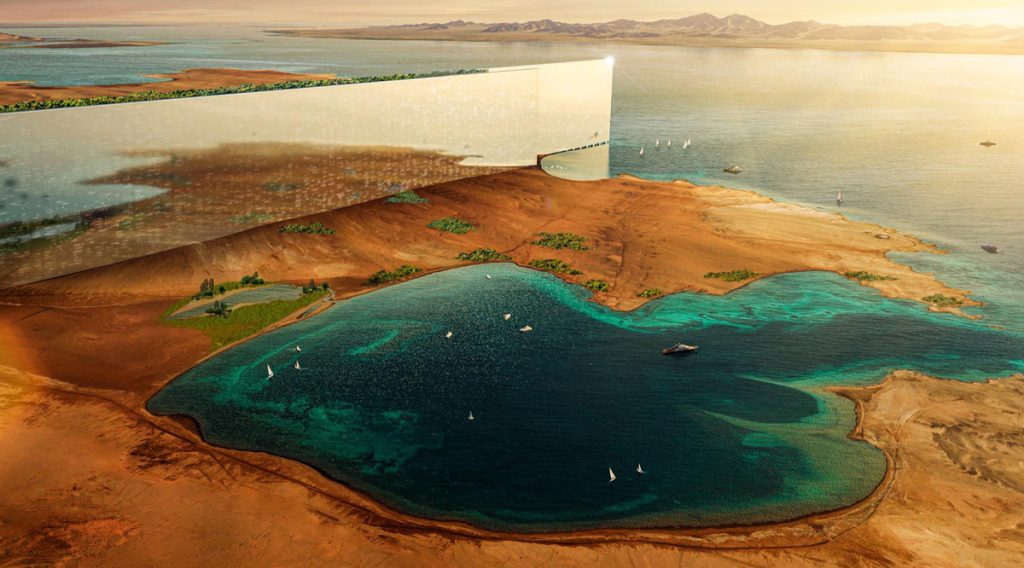
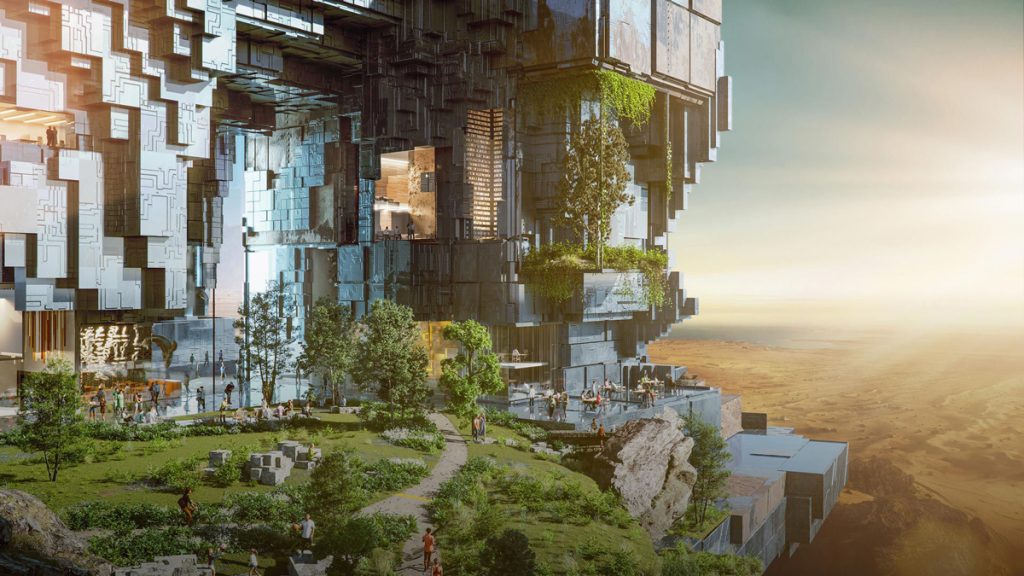
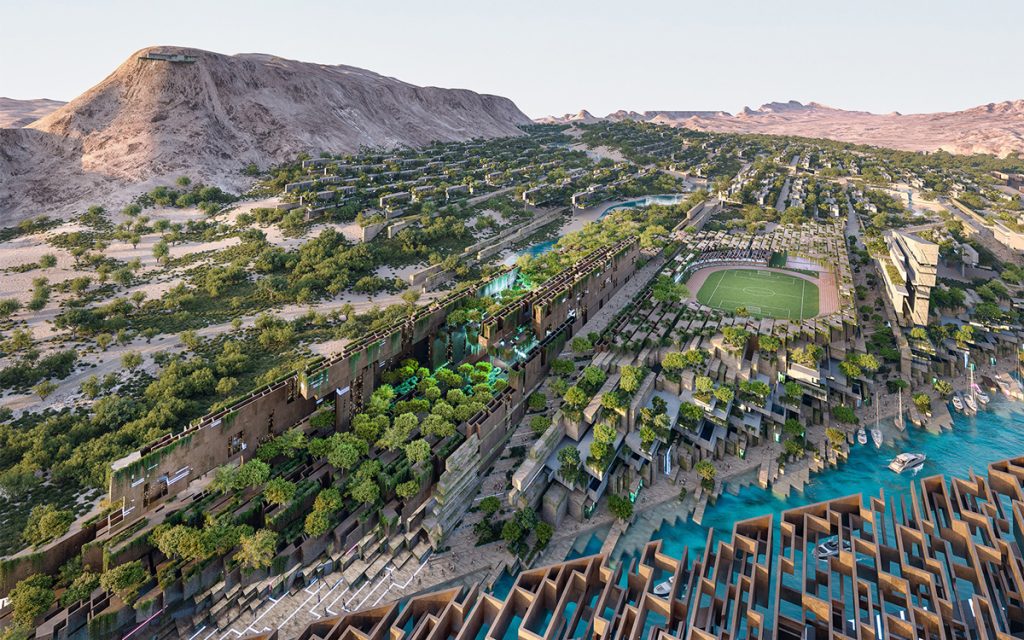
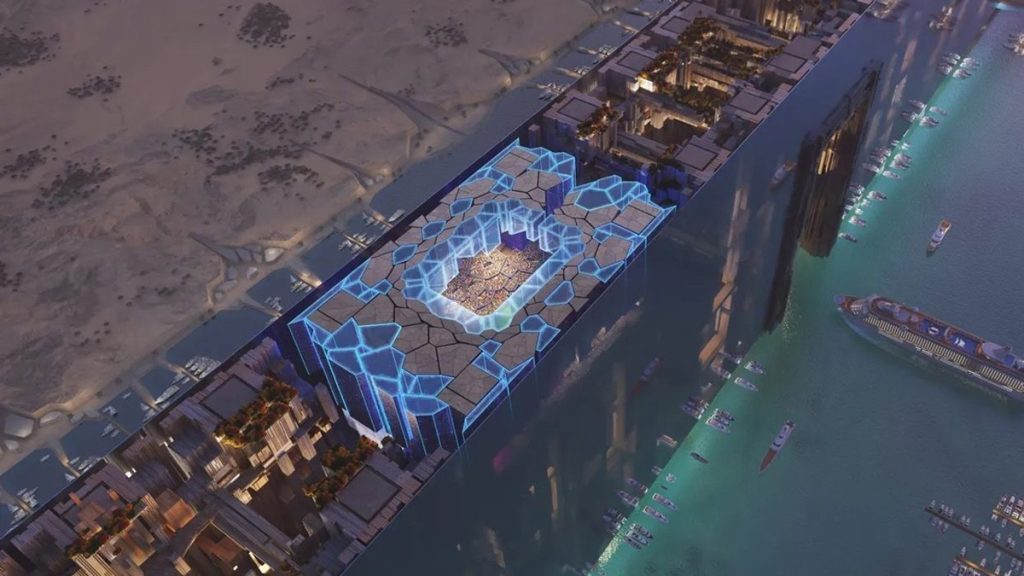
- The Line – A revolutionary linear city stretching over 170 km, designed with no cars, no streets, and 100% renewable energy. This urban corridor will house millions in vertically layered communities while preserving 95% of the surrounding nature.
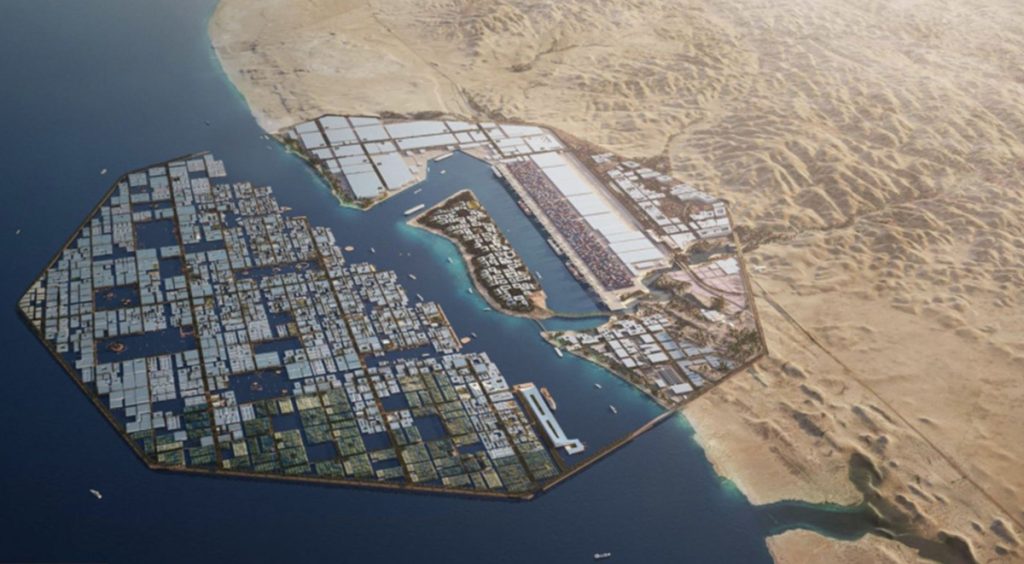
- Oxagon – The world’s largest floating industrial hub, integrating advanced manufacturing, logistics, and clean technologies within a circular-economy model.
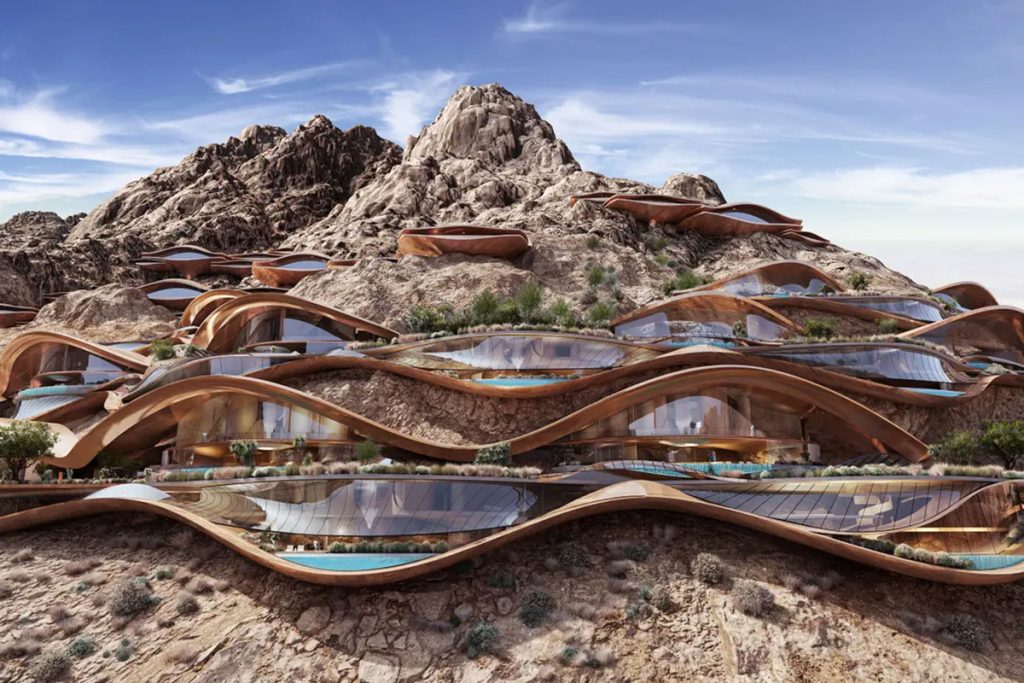
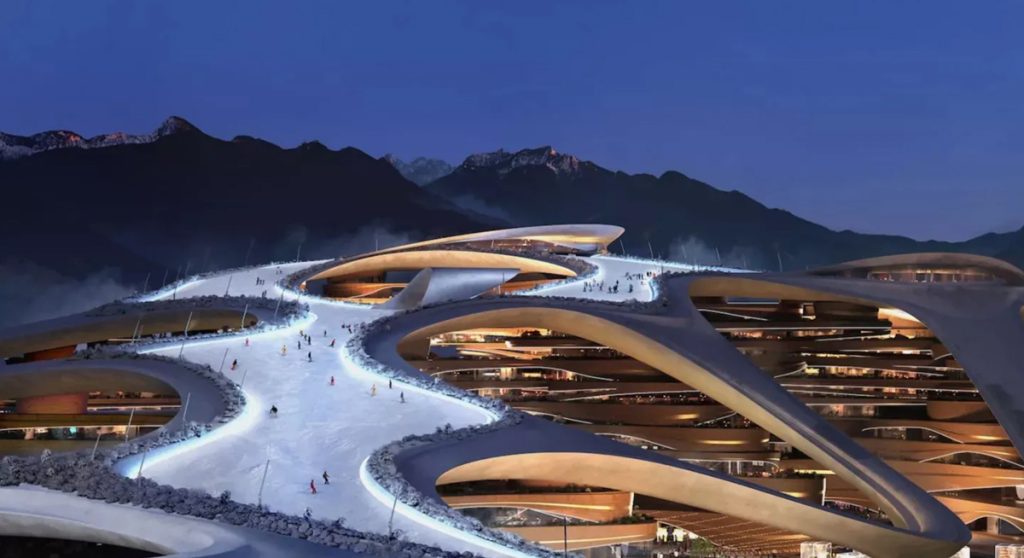
- Trojena – A mountain tourism region offering skiing, hiking, and outdoor recreation in a climate-controlled environment, blending luxury hospitality with alpine design.
- Leyja, Epicon & Aquellum – Futuristic coastal and canyon destinations featuring luxury resorts, wellness retreats, and immersive architecture seamlessly integrated with their natural surroundings.
Developed by NEOM Company under the PIF umbrella, with contributions from leading international architecture firms, urban planners, and sustainability partners, these zones collectively represent the largest coordinated urban development ever undertaken.
Development & Investment Potential
NEOM’s economic potential spans real estate, renewable energy, advanced manufacturing, logistics, and tourism. It represents a rare opportunity to participate in a global prototype for post-carbon cities.
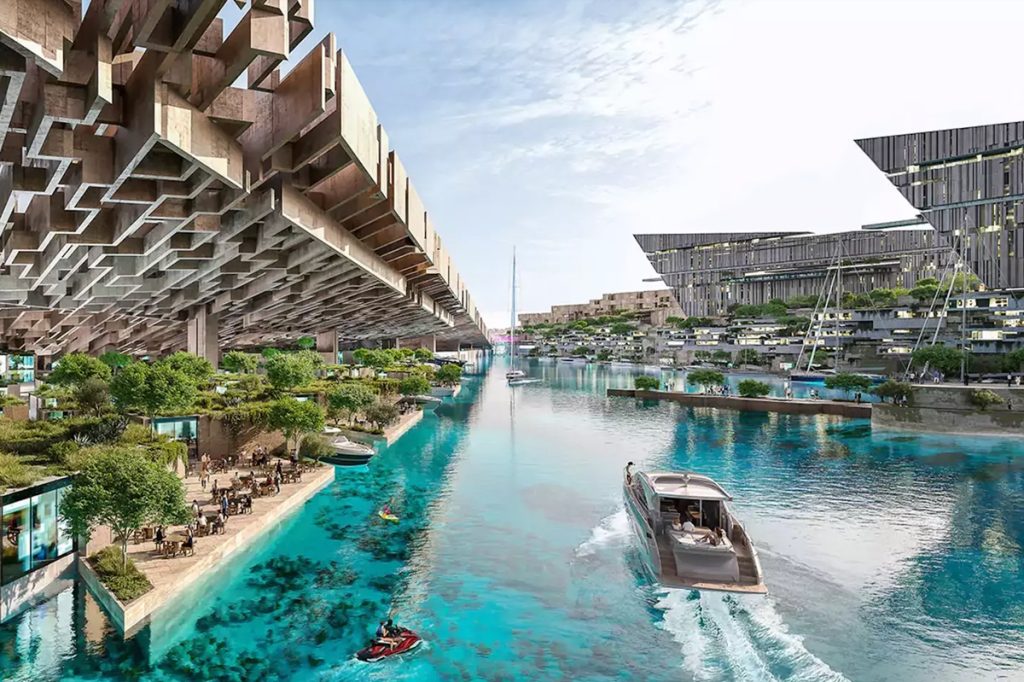
- Tourism & Hospitality – Trojena and coastal resorts will attract premium global travelers seeking exclusive, eco-luxury experiences.
- Advanced Industry – Oxagon positions Saudi Arabia as a hub for clean manufacturing and next-generation logistics.
- Urban Real Estate – The Line and its districts will create demand for innovative housing, office spaces, and smart infrastructure investment.
- Technology & Innovation – NEOM’s emphasis on AI, robotics, and sustainable tech creates new opportunities for partnerships and venture ecosystems.

With sovereign backing and vast capital allocation, NEOM stands as one of the most significant investment frontiers in the global real estate and infrastructure landscape.
Sustainability & Innovation
At its core, NEOM is designed to redefine sustainability. The Line’s car-free, carbon-neutral structure and vertical urban planning reduce land use and emissions dramatically. Renewable energy from solar, wind, and hydrogen will power all operations, while 95% of land is preserved for nature.
Innovation permeates every layer—from AI-driven governance and smart-grid energy systems to autonomous mobility and regenerative agriculture. The city aims to become a living laboratory for next-generation urbanism, where technology enhances livability without compromising the planet.
Challenges & Considerations
Despite its promise, NEOM faces substantial challenges:
- Execution scale – Building a city the size of a small nation demands unparalleled coordination, logistics, and financial oversight.
- Timeline & funding – Project phasing and global market fluctuations may impact delivery schedules and investment pacing.
- Social & governance factors – Balancing cultural integration, workforce management, and community engagement remains essential.
- Environmental sensitivity – Construction in fragile desert and marine ecosystems requires stringent ecological safeguards.
- Population & viability – Attracting long-term residents, companies, and industries will be critical to achieving self-sustaining growth.
These challenges make NEOM both a symbol of possibility and a test of global megaproject execution.
Urban Impact & Legacy
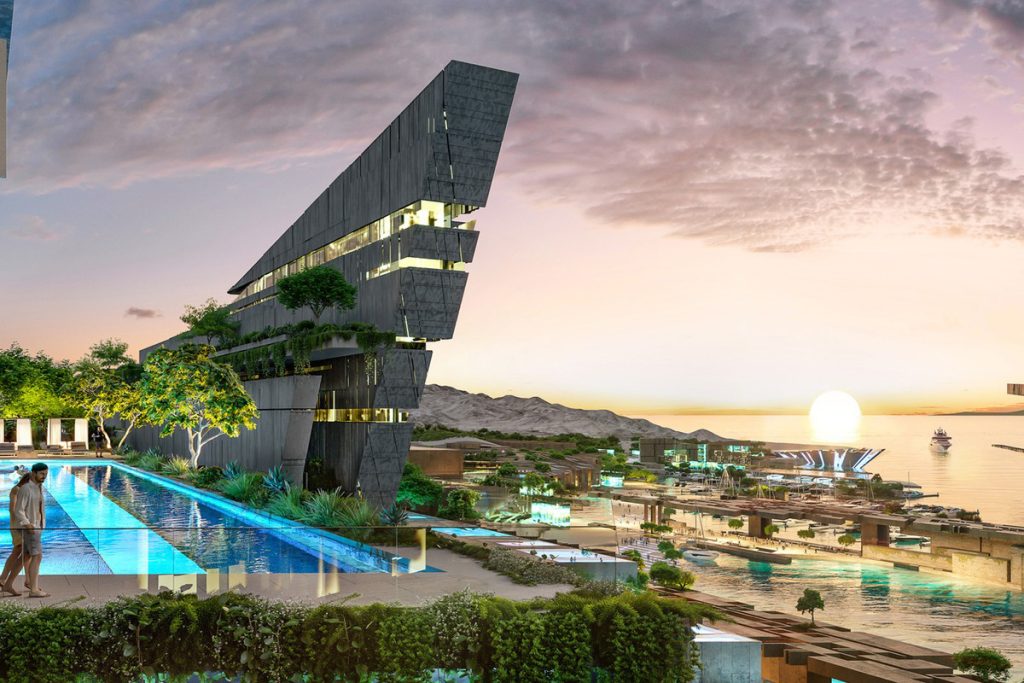
If realized, NEOM could transform global urbanism—proving that high-density, nature-preserving, tech-enabled living can coexist harmoniously. It could inspire a shift in how cities approach climate resilience, mobility, and sustainability, particularly across arid and resource-scarce regions.
Its legacy will depend not only on its physical form but also on its human and ecological footprint—whether it becomes a beacon of innovation or a cautionary tale of over-ambition will define its place in history.
Summary
NEOM represents humanity’s boldest urban experiment—a convergence of architecture, ecology, and technology on an unprecedented scale. Its promise of sustainable progress, renewable energy, and innovation-driven growth makes it a defining project of the 21st century. Yet, its success will rest on the Kingdom’s ability to turn vision into viable reality, balancing futuristic ideals with human and environmental responsibility.

Project Facts & Figures
- Announced: 2017
- Area: Approx. 26,500 km²
- Key Zones: The Line, Oxagon, Trojena, Leyja, Epicon, Aquellum
- Energy: 100% renewable; hydrogen and solar integration
- Sustainability: Car-free design, 95% of land reserved for nature
- Estimated Cost: USD $500 billion – $1 trillion
- Primary Developer: NEOM Company / Public Investment Fund (PIF)
- Status: Construction underway on early phases of The Line and Oxagon
NEOM is not just a development—it is a declaration of intent, a living experiment in redefining the limits of imagination and the future of civilization itself.