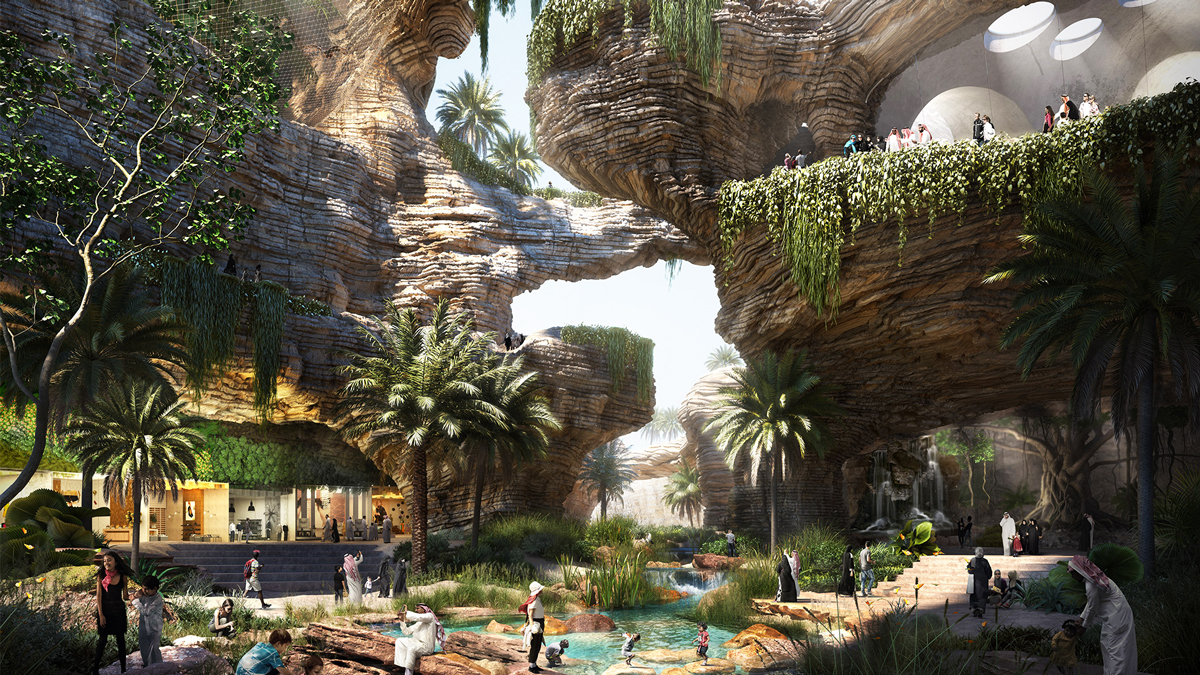
At the heart of Riyadh, King Salman Park is reshaping the city’s landscape into a living emblem of Saudi Vision 2030. Announced in 2019, this 16 km² development rises on the site of the former Riyadh Air Base — a bold transformation from runway to greenway. More than a park, it is a new urban ecosystem merging culture, nature, and innovation, setting a benchmark for sustainable city-building across the Middle East.
Vision & Strategic Positioning
King Salman Park reflects Riyadh’s ambition to become one of the world’s most livable capitals. Centered on the “Salmani” architectural style, it blends Saudi heritage with contemporary design and sustainable principles. The Park connects directly to five metro stations and ten bus hubs, ensuring easy access from every corner of the city.
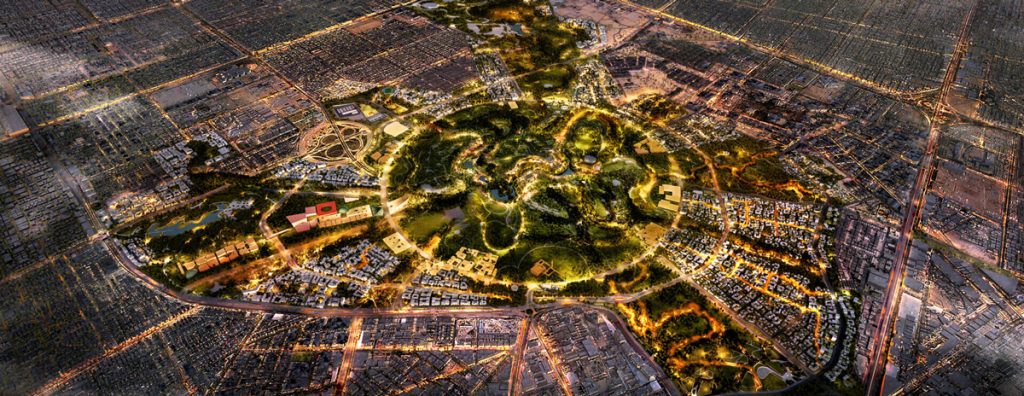
Its purpose is twofold: to elevate Riyadh’s global profile and to create a healthier, more connected lifestyle for its citizens. With its massive scale and urban integration, it will become the city’s new cultural and ecological heart.
Master Plan & Core Components
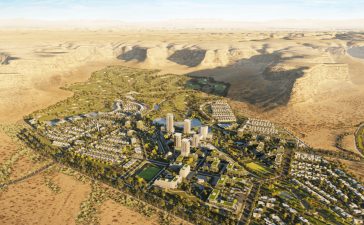
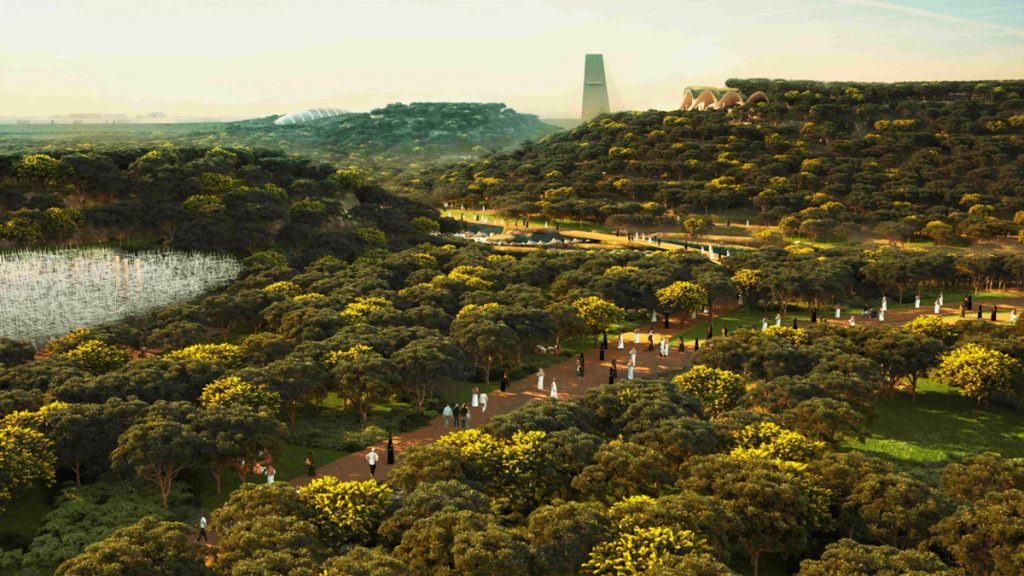
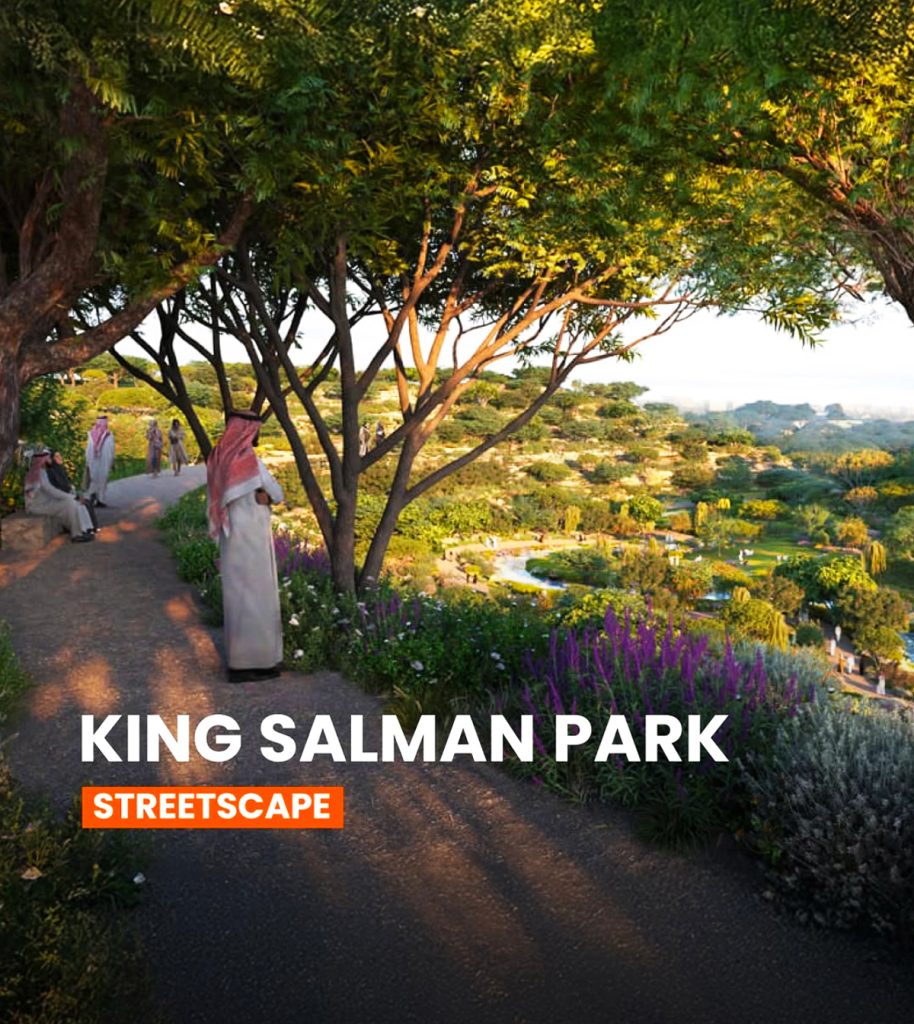
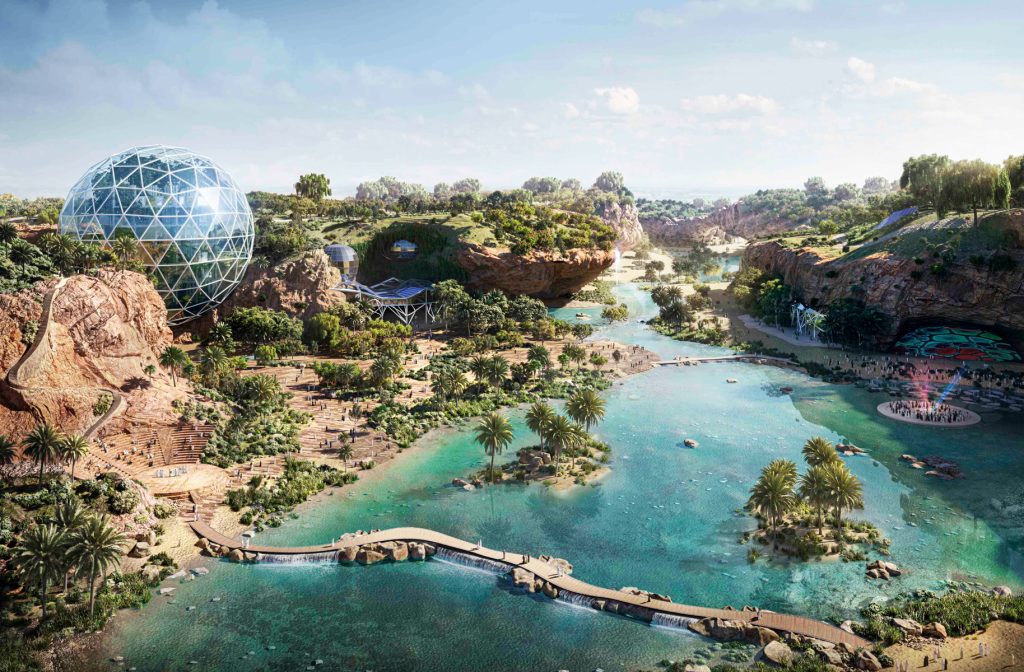
The Park’s master plan transforms vast desert land into a lush, multi-layered urban landscape.
- Green Realm: More than 11 km² of forests, botanical gardens, and meadows.
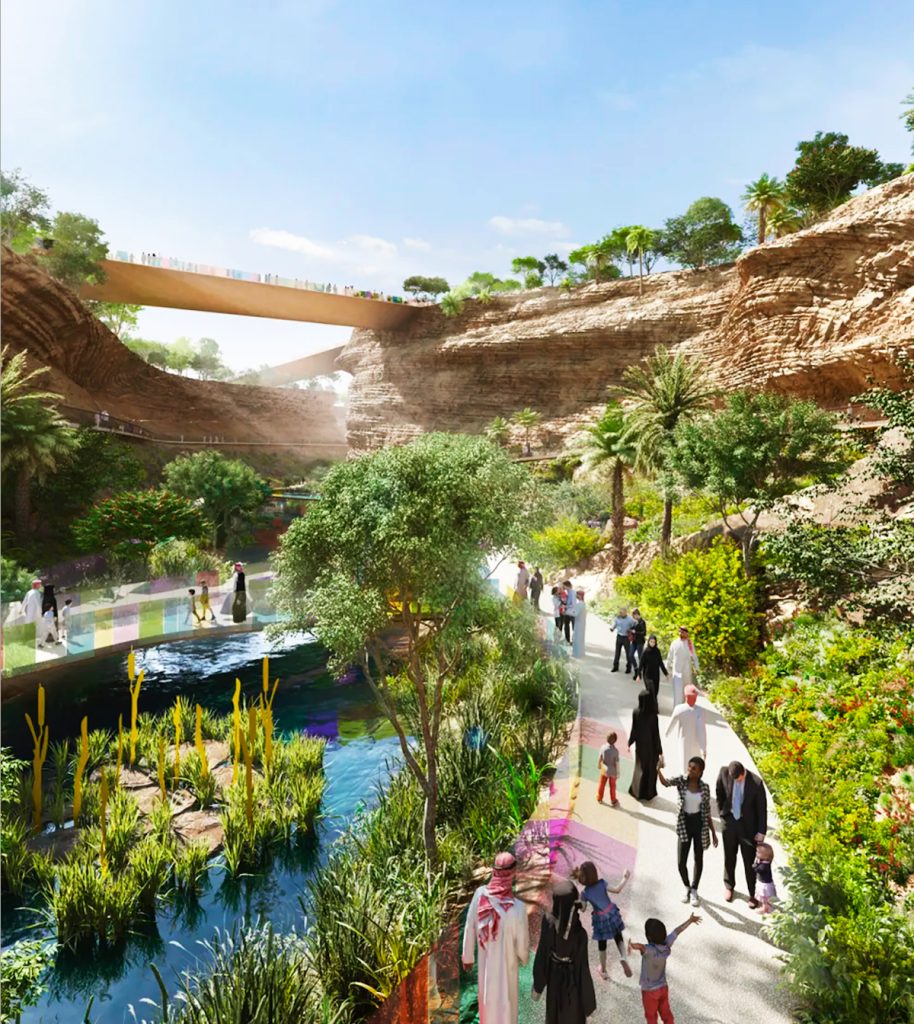
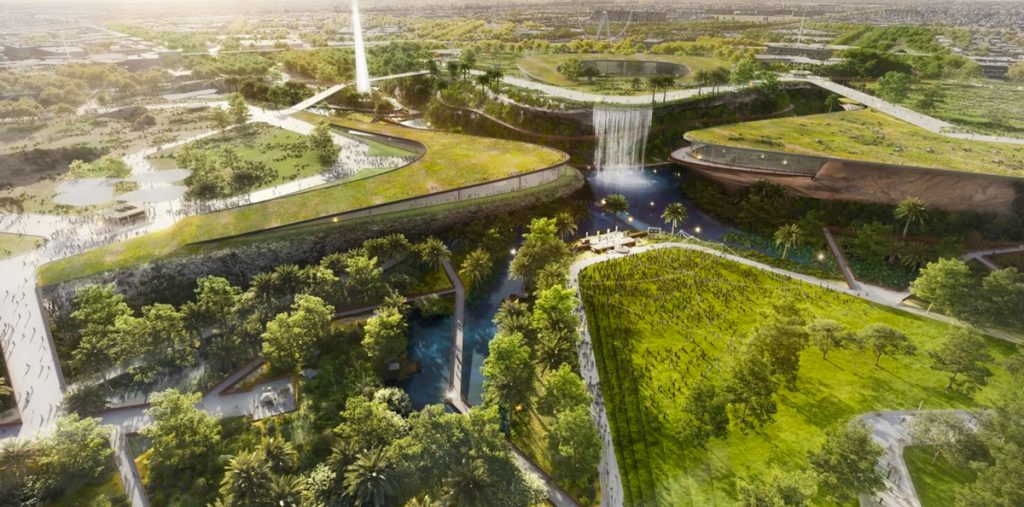
- Central Valley: 800,000 m² of lakes and wetlands to support biodiversity and micro-climate cooling.
- Mobility Loop: A 7.2 km pedestrian and cycling route that encircles the park.
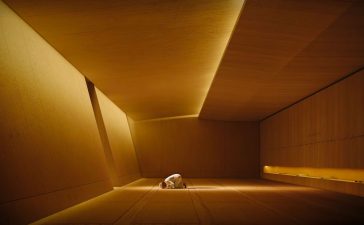
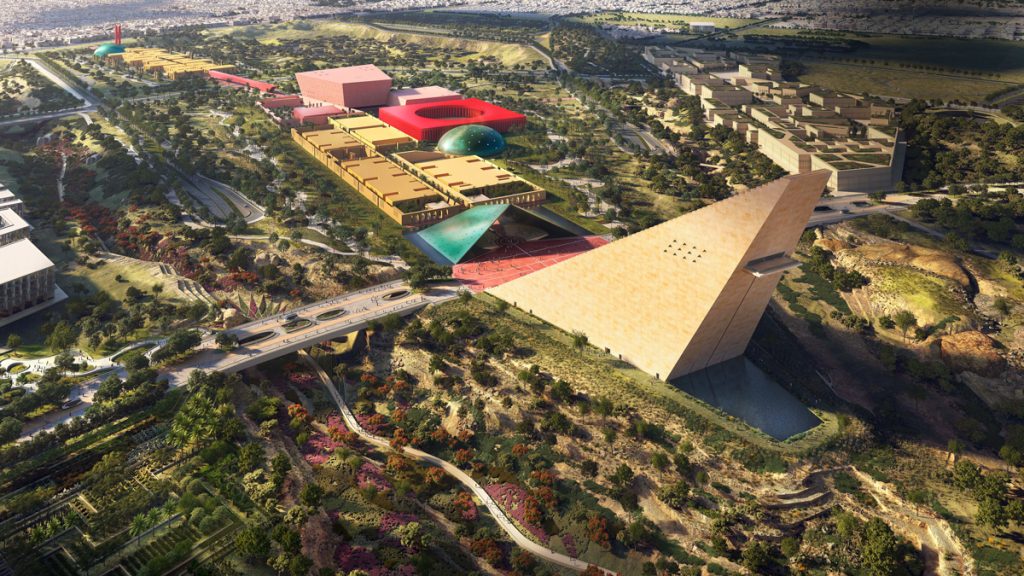
- Cultural Hub: The Royal Arts Complex — with a national theatre, museums, art academies, and open-air stages.
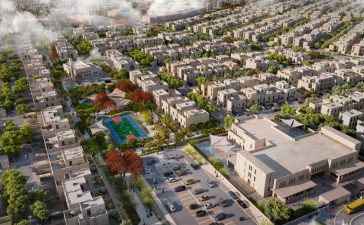
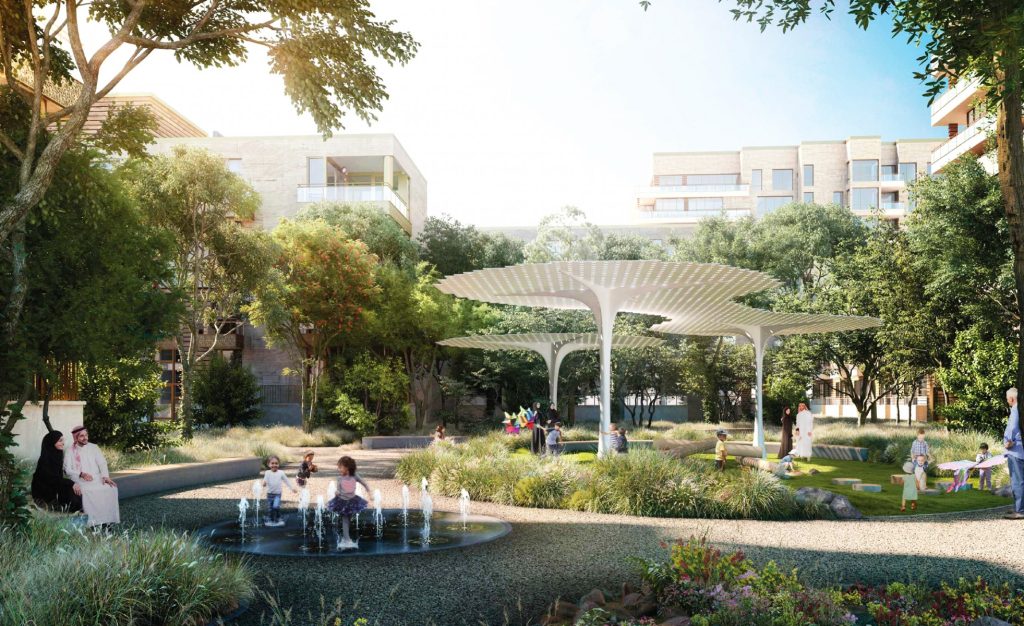
- Mixed-Use Zones: Residences, offices, retail, and hotels (including the TRIBE Hotel by Accor) surrounding the park’s core.
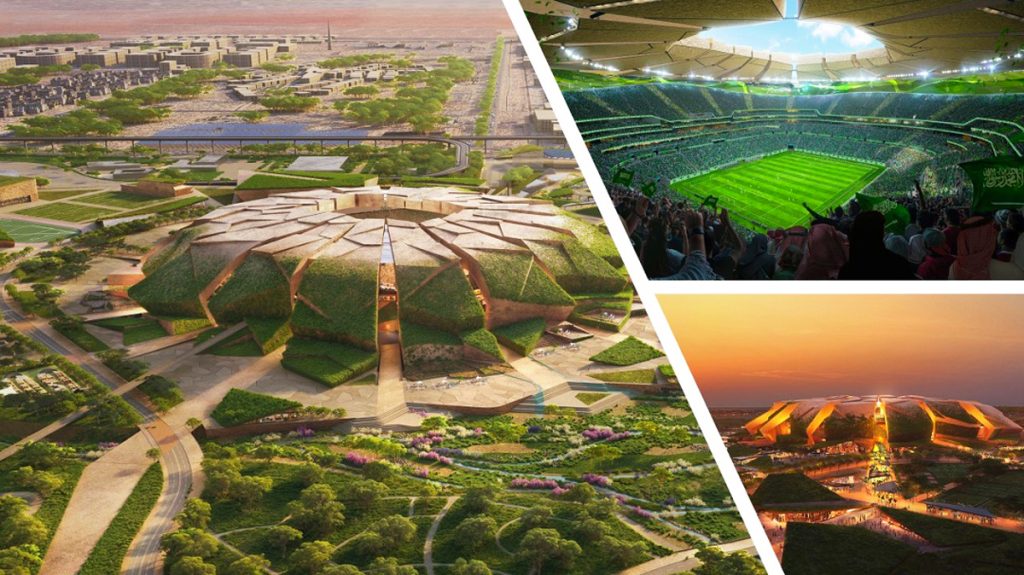
Adjacent to the park’s northern edge, the King Salman Stadium — one of Riyadh’s key venues for FIFA World Cup 2034 — will serve as a global sports landmark and complement the park’s broader entertainment and cultural program. The stadium’s integration reinforces Riyadh’s strategy of clustering major civic attractions within walking distance of green public space, enhancing both accessibility and visitor experience.
The project is overseen by the Royal Commission for Riyadh City (RCRC), which spearheads design, investment, and delivery in partnership with leading Saudi and international firms. Omrania and Henning Larsen Architects serve as principal master planners and architects, combining global expertise with a deep understanding of Riyadh’s landscape and cultural heritage. On the infrastructure side, Saudi Real Estate Infrastructure Company (Binyah) plays a key development role, while hospitality and cultural partners such as TRIBE by Accor bring world-class experience to the Park’s mixed-use vision.
Beneath its peaceful surface, an intricate network of subterranean tunnels redirects major roads underground, ensuring a continuous pedestrian-first environment.k of underground tunnels will divert traffic to preserve pedestrian continuity and air quality above ground.
Development & Investment Potential
For developers and investors, King Salman Park is a once-in-a-generation opportunity. Its location, connectivity, and sustainability credentials give it powerful market appeal.
Investment highlights:
- High-value residential projects overlooking the park’s green corridors will command strong premiums.
- Hospitality & leisure ventures can leverage year-round cultural programming and tourism growth.
- Office & retail developments integrated with public spaces will attract global firms and premium brands.
- GloBuilds Advantage: Partnerships in branded residences, mixed-use clusters, and ESG-aligned commercial projects will align perfectly with GloBuilds’ development philosophy.
Sustainability & Innovation
Sustainability is at the core of King Salman Park’s design. The project introduces advanced environmental systems and smart-city technologies to shape a climate-resilient urban environment.
Key sustainability initiatives include:
- Planting of over one million trees across the site.
- Integration of renewable energy sources and water recycling systems.
- Use of 3D-printing construction and adaptive shading to reduce carbon output.
- Design inspired by wadi topography, using natural landforms to direct breezes and lower heat.
Every structure and public space is conceived to meet international green-building standards, ensuring King Salman Park becomes a global showcase of ESG-driven development.
Challenges & Considerations
The Park’s massive scope demands precise coordination between public agencies and private partners. Managing phasing, cost control, and supply-chain logistics will be critical to maintaining momentum. Balancing open, accessible public spaces with profitable development parcels remains the project’s greatest challenge. Achieving this equilibrium will define King Salman Park’s success as both a civic treasure and an investment catalyst.
Urban Impact & Legacy
King Salman Park will redefine Riyadh’s skyline — not through towers, but through trees. It will improve air quality, expand livable space, and foster cultural and recreational life at an unprecedented scale.
Its long-term impact includes:
- Elevating Riyadh’s global competitiveness as a green capital.
- Stimulating land value growth across neighboring districts.
- Anchoring the city’s cultural economy through arts, tourism, and events.
- Establishing a model for sustainable urbanism replicated across Saudi Arabia’s future cities.
Summary
King Salman Park is Riyadh’s green revolution — a visionary blend of ecology, culture, and commerce. It stands as a symbol of progress under Vision 2030 and a new benchmark for sustainable development worldwide. For GloBuilds, it represents more than an opportunity — it’s a chance to help shape the future of urban living in the Kingdom’s most ambitious open-space project to date.
Project Facts & Figures
- Location: Riyadh, Saudi Arabia
- Total Area: 16 km² (4,000 acres)
- Green Space: 11 km² of gardens, forests & water features
- Cultural Landmark: Royal Arts Complex (400,000 m²)
- Connectivity: 5 Metro Stations + 10 Bus Hubs
- Key Components: Residential, Hospitality, Cultural, Commercial
- Architectural Style: Salmani Design Language
- Status: Under Construction — Phased Delivery to 2030
- Lead Authority: Royal Commission for Riyadh City (RCRC)